












Long-term storage stability matters greatly for buyers who import molded pulp packaging in bulk, build buffer inventory, or supply multiple production cycles from one purchase. A molded pulp tray that performs well immediately after production may not behave the same way after weeks or months of storage. Changes in humidity, compression, stacking pressure, and handling conditions can affect shape, rigidity, and dimensional fit over time. For industrial buyers, long-term storage stability is not a minor technical point. It directly affects packaging usability, product protection, warehouse efficiency, and reorder confidence. A stable molded pulp packaging solution should maintain its structure, protect its function, and remain consistent from production through final use.
Material Choice And Moisture Control Strongly Influence Storage Stability
The first major factor behind long-term storage stability is material behavior. Molded pulp packaging is fiber-based, which means it naturally reacts to moisture in the surrounding environment. If the material absorbs too much humidity during storage, it may soften, warp, or lose part of its dimensional stability. If it becomes too dry in certain conditions, it may turn more brittle. This is why buyers should look carefully at pulp composition, density control, drying quality, and post-production moisture condition.
A well-made molded pulp package should be dried properly before packing and stored in conditions that help maintain stable moisture balance. Buyers should ask whether the supplier controls final drying consistently and whether the packaging is protected during warehousing and transit. Material selection also matters because some fiber mixes hold shape better than others over time. For projects that involve long warehouse cycles or seasonal inventory, the wrong material choice can create hidden problems that do not appear during sampling but become obvious later in storage.
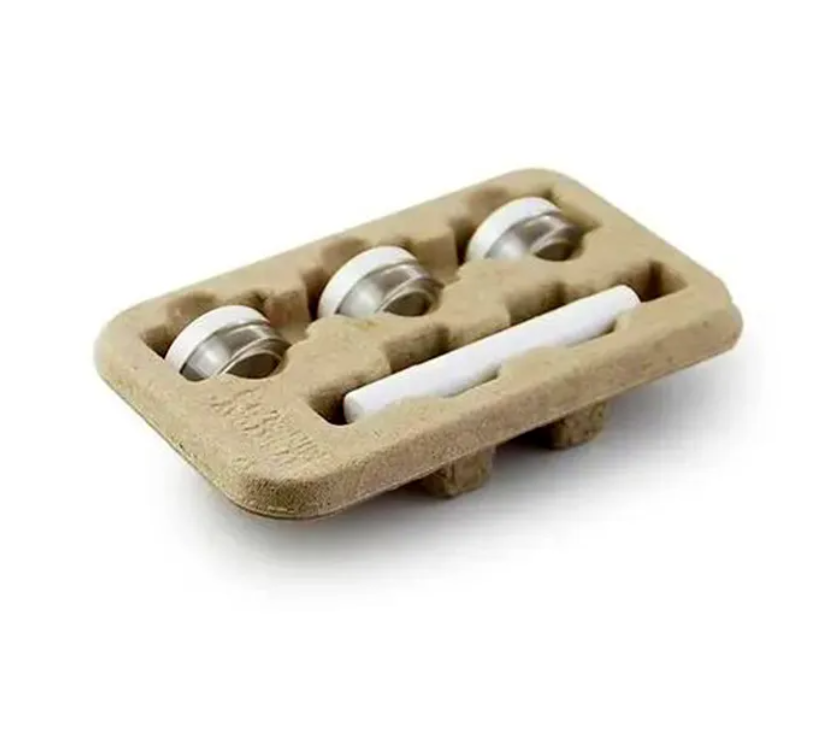
Stacking Pressure, Carton Design, And Packing Density Affect Shape Retention
The second key factor is physical load during storage. Even if the molded pulp tray has good basic strength, long-term stacking pressure can gradually change its shape if carton design or packing method is not appropriate. This is especially true when trays are deeply nested, packed in high quantities per carton, or stored on tall pallets for long periods. Lower layers may experience sustained compression, leading to edge deformation, cavity distortion, or reduced recovery after unpacking.
Buyers should therefore review how the trays are packed, how many pieces are nested together, how pallet height is controlled, and whether the outer carton provides enough protection against load concentration. A packaging solution that saves freight by increasing packing density may reduce long-term storage stability if the compression is too aggressive. Stable warehouse performance depends not only on tray strength but also on how intelligently the product is packed and supported throughout the logistics chain.
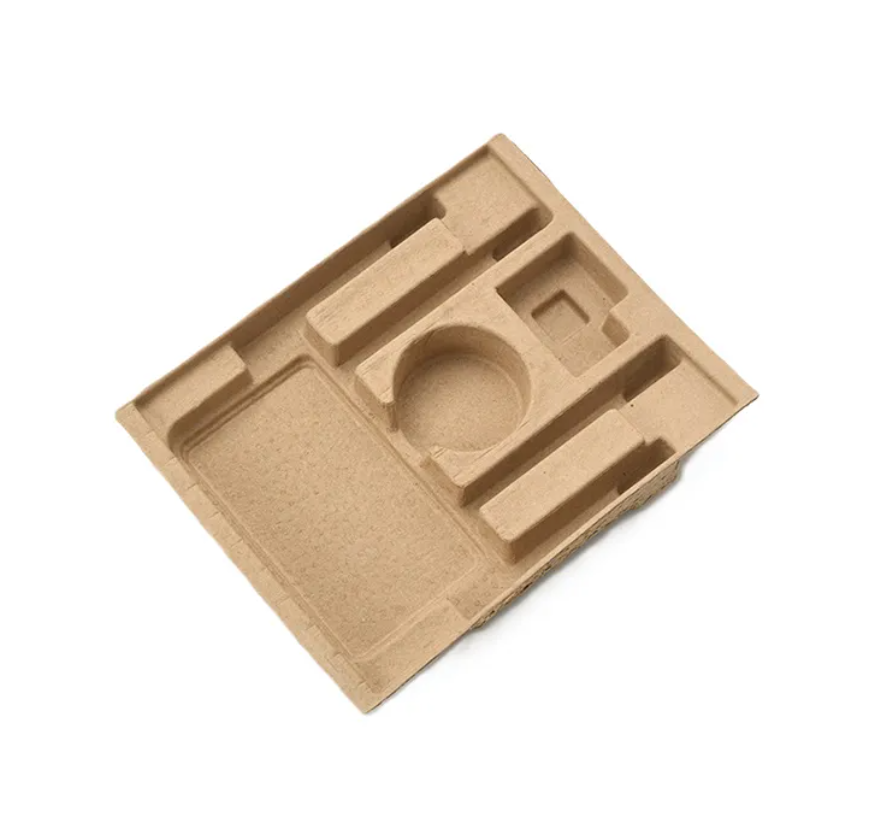
Warehouse Environment And Inventory Discipline Determine Real Storage Results
The third factor is how the buyer or supplier manages warehouse conditions. Molded pulp packaging that is stored in humid, poorly ventilated, or temperature-unstable spaces will face much higher risk of deformation or strength change. In contrast, packaging stored in clean, dry, and well-controlled warehouse conditions is much more likely to remain stable over time. This is why warehouse environment should be treated as part of the packaging-performance system rather than as a separate issue.
Inventory discipline matters as well. Buyers should define storage duration, pallet rotation, inspection frequency, and handling rules for long-term inventory. If cartons are repeatedly moved, over-stacked, or exposed to ground moisture, the risk of damage increases significantly. A reliable supplier can often support this by recommending storage limits, pallet conditions, and incoming inspection points. In long-term procurement, the most stable molded pulp packaging is usually the result of both good manufacturing and disciplined warehouse management.
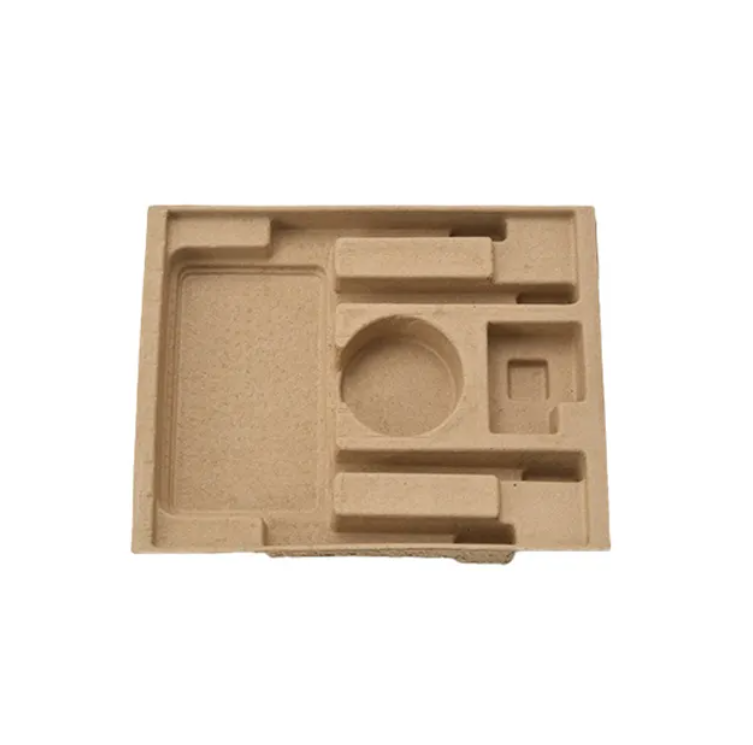
Long-term storage stability in molded pulp packaging depends on material behavior, load management, and warehouse conditions working together. Buyers who only test fresh samples may miss the real risks that appear later in storage. The better approach is to evaluate material, packing density, carton support, and storage environment as one system. That is how buyers reduce inventory risk and protect packaging performance over time.