












Choosing molded pulp packaging for fragile products requires much more than finding a tray that fits the outer dimensions. Fragile items such as glass components, ceramics, precision electronics, coated parts, and delicate assemblies can fail even when the packaging looks secure. The real challenge is to control shock, movement, pressure, and contact points in a way that protects the most vulnerable areas of the product. For buyers, the right molded pulp packaging for fragile products should reduce handling risk, support safe transport, and still remain practical for packing and unpacking. A good solution protects not only the product but also the buyer from costly breakage claims and unstable delivery performance.
Identify Fragility Type And Critical Failure Points First
The first step is to understand what makes the product fragile. Some items are sensitive to corner impact, while others are more vulnerable to surface scratching, bending force, or concentrated pressure. A glass panel may fail at the edge. A ceramic item may crack under shock. A coated device may not break but may still be rejected because of surface marks. This is why buyers should not treat all fragile products the same way.
Before selecting a molded pulp design, buyers should identify the critical failure points of the product. Where is the weakest zone? Which surfaces must not be touched directly? Does the product need suspension-like support or distributed bottom support? Does it require separation from other components in the same carton? Once these points are clear, the packaging structure can be designed around actual risk rather than around general shape. For fragile products, wrong contact points are often more dangerous than insufficient material thickness.
Select A Structure That Controls Shock, Movement, And Pressure
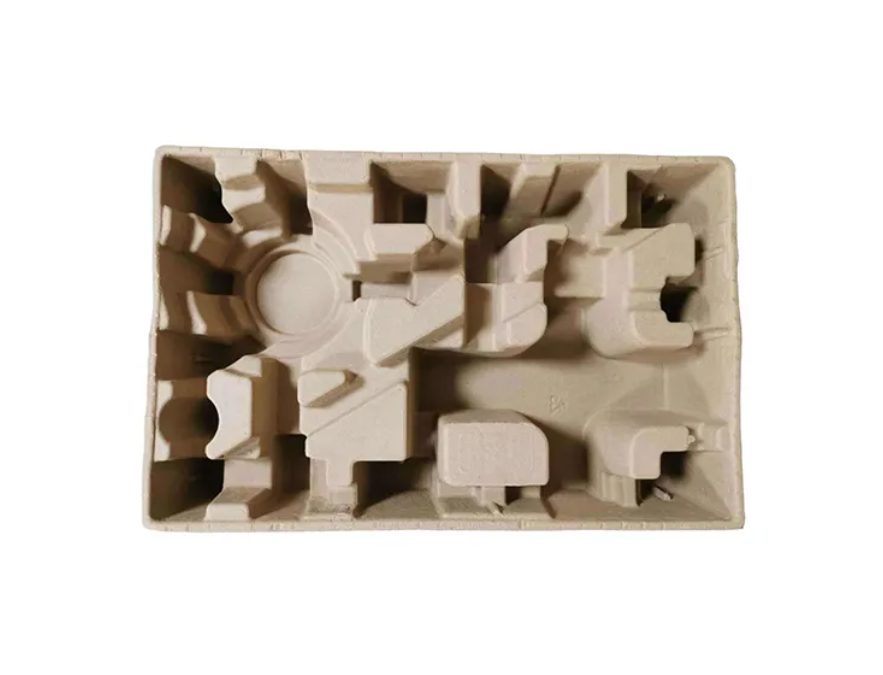
Once the fragile points are known, buyers should focus on structural protection. Reliable molded pulp packaging for fragile products usually combines three functions: it limits movement, cushions shock, and distributes pressure away from weak zones. A tray should not allow the product to roll, shift, or hit the carton wall during handling. It should hold the item securely without creating direct pressure on the most fragile edges or surfaces.
For many fragile products, corner spacing, edge clearance, and bottom support geometry matter more than a deep-looking cavity. A tray that wraps too tightly around a weak edge may actually increase damage risk. A tray that leaves too much empty space may allow impact during transport. Buyers should therefore compare not only how tight the fit is but how the load is transferred through the structure. In real packaging performance, safe support is often about where the product is not touched as much as where it is supported.
Verify Performance With Realistic Testing And Supplier Capability
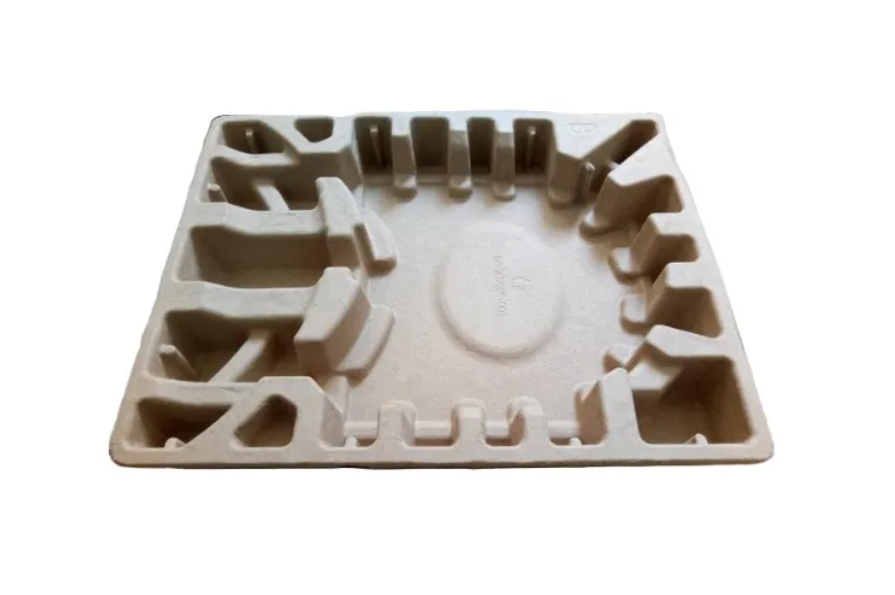
Fragile product packaging should always be validated through realistic testing. Buyers should ask for sample fit checks, drop-oriented evaluation, stacking review, and shipment simulation based on the actual product. A tray that performs well on a desk may still fail in container transport, warehouse handling, or repeated pallet movement. Testing helps reveal whether the structure truly protects the weak zones or only looks correct.
Supplier capability matters just as much. Buyers should prefer suppliers that understand fragile-product packaging logic and can explain why a design protects the item. They should also confirm whether the same protection quality can be repeated in mass production. For fragile products, small variations in dimension, wall thickness, or shape can have a large impact on packaging performance. The right supplier is usually the one that combines correct design, stable process control, and practical logistics understanding.
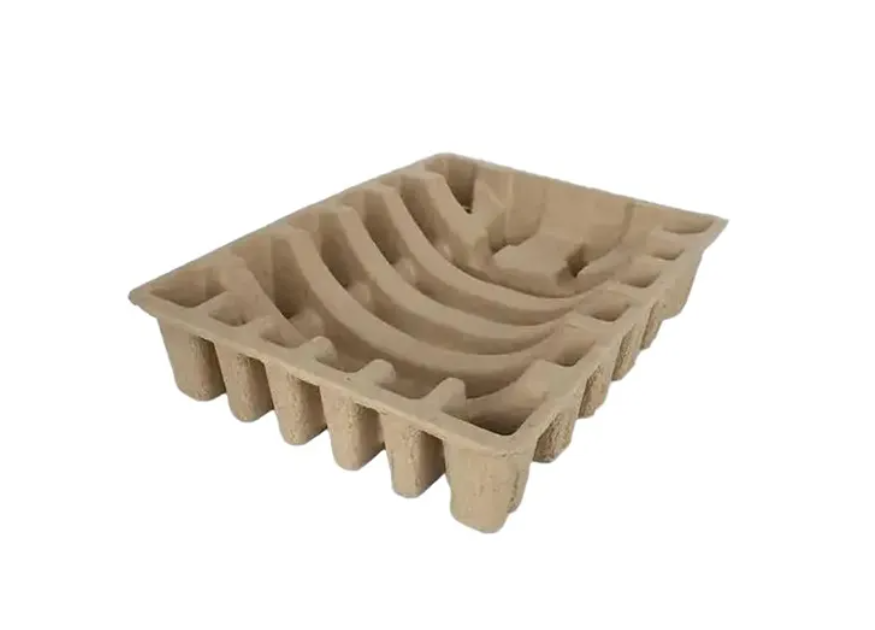
To choose the right molded pulp packaging for fragile products, buyers should first understand the product’s real weak points, then select a structure that manages shock and pressure correctly, and finally validate performance through realistic testing. Fragile-product packaging is not about making the tray look strong. It is about making the protection work where it matters most.