












Recyclable Packaging Materials Buyers Should Compare for Export Products
Export packaging has to perform several jobs at the same time. It must protect the product during handling and long distance transportation, fit efficiently into cartons and pallets, support the buyer's sustainability goals and remain practical for customers to dispose of after use.
This is why recyclable packaging cannot be selected by material name alone. Corrugated paper, paperboard, molded pulp and recycled plastic can all be useful in different situations, but their performance changes according to product weight, surface sensitivity, moisture exposure, order volume and local recycling systems.
Procurement teams sourcing packaging for electronics, appliances, bottles, tools and other export products should compare the complete packaging system before replacing an existing solution.
Compare Materials Based on Product and Recycling Requirements
Corrugated paper is widely used for export cartons, dividers and internal supports. It is easy to cut, fold and print, and paper recycling systems are available in many markets. For products with simple shapes, corrugated structures can provide an economical protective solution.
Paperboard is commonly used for retail cartons, sleeves and presentation packaging. It offers a clean surface and efficient printing, but it normally provides less cushioning than molded protective materials. Buyers may need to combine it with another internal structure when shipping fragile or heavier products.
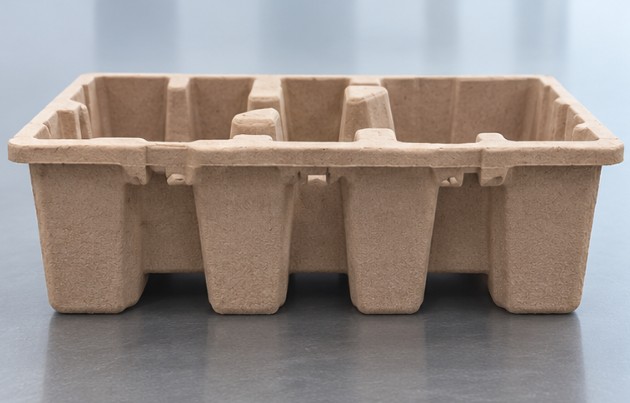
Molded pulp can provide more complex three dimensional support. Recycled paper fiber or selected plant fiber can be formed into cavities, ribs, reinforced corners and product locating points. This makes molded pulp suitable for applications where buyers want recyclable fiber packaging with more structural protection than flat paper materials can provide.
Recycled plastic can reduce the use of virgin resin while maintaining the dimensional accuracy and moisture resistance associated with plastic packaging. However, buyers should confirm whether the specific material and color are accepted by recycling systems in the target market.
Mixed-material packaging requires additional attention. Laminated paper, plastic coatings, metalized films, permanent adhesives and combinations that are difficult to separate may affect the recyclability of the complete package even when one individual component is recyclable.
Recyclability Should Not Reduce Transport Protection
Packaging used for export products may pass through factories, warehouses, ports, distribution centers and last mile delivery before reaching the final user. During this process, the package can experience vibration, compression, drops and changes in temperature or humidity.
A recyclable material is only useful if it continues to protect the product. Buyers should identify the areas that carry product weight, the surfaces that must not be scratched and the components that require clearance from impact or compression.
Molded pulp can be designed around these requirements. Heavy components can receive reinforced support zones, fragile corners can be isolated and accessories can be placed in separate cavities. For export electronics, appliances and industrial products, these design details can reduce movement inside the carton.
Buyers should request product fit checks and relevant transport testing before mass production. Drop, compression and vibration testing may be appropriate depending on the product value, weight and shipping route.
Moisture should also be considered for fiber based packaging. If products will move through humid storage or sea freight conditions, the supplier should understand the expected environment and recommend a suitable material specification and packaging structure.
Evaluate Logistics Cost Material Simplicity and End of Life
The most recyclable material is not automatically the lowest cost option. Procurement teams should compare tooling, material use, packing labor, carton dimensions, pallet quantity and shipping volume together.
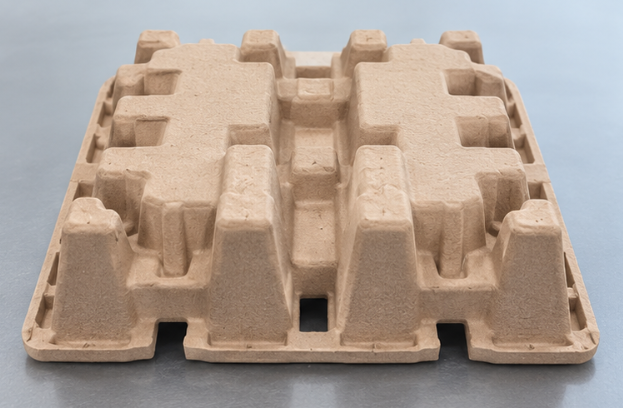
Molded pulp packaging normally requires custom tooling, but it can reduce the number of separate packaging components. A single molded insert may replace several folded paper pieces, plastic spacers or loose void fillers. For stable volume programs, this can improve packing consistency.
Nesting efficiency is another important factor. Empty molded pulp trays can often stack inside one another before use, reducing transport and warehouse volume. For high volume export programs, compact empty packaging can create meaningful logistics savings.
Buyers should also review the end of life in the destination market. Recycling acceptance varies between countries and municipalities, so environmental claims should reflect actual material composition and available collection systems rather than relying on general statements.
Keeping packaging structures simple can make disposal easier. Where possible, reducing unnecessary combinations of paper, plastic, foam and other materials can help users identify how the package should be separated.
For new projects, procurement teams can provide the existing package, product dimensions, weight, annual quantity and target markets to the packaging supplier. This allows material selection, protection performance and logistics efficiency to be considered together before tooling begins.
Choose Recyclable Packaging Around the Complete Export Journey
Corrugated paper, paperboard, molded pulp and recycled plastic can all play useful roles in export packaging. The correct material depends on product protection, surface requirements, moisture exposure, packing efficiency and recycling conditions in the destination market.
For buyers seeking a fiber based protective solution, molded pulp can provide a practical combination of custom geometry, cushioning and recyclable material construction. The strongest packaging projects compare performance, logistics and end of life together instead of selecting a material based on one sustainability claim alone.