












Paper Packaging Design for Fragile Products and Export Shipping
Fragile products need more than an outer carton. Glass bottles, electronics, ceramic items, instruments and delicate consumer products can be damaged by impact, vibration, stacking pressure and repeated handling during export shipping. The internal packaging must therefore control movement and keep vulnerable areas away from direct contact with the carton.
Paper based packaging can provide effective protection when the structure is designed around the actual product. Corrugated partitions, folded paper supports and molded pulp inserts can all be used to replace part of the plastic or EPS foam traditionally found in export packaging.
For buyers, the best design should balance product protection, carton size, packing efficiency and total shipping cost. The goal is not to add as much cushioning as possible but to place the right support in the right areas.
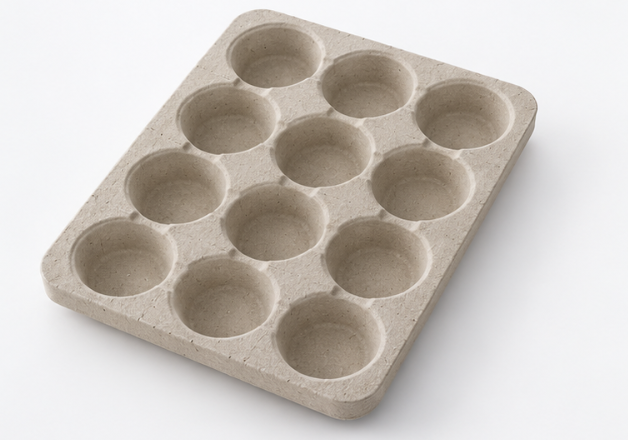
Design Support Around the Fragile Areas of the Product
The first step is to identify how the product can fail during transport. A glass bottle may be vulnerable at the neck, shoulder and base. A ceramic product may crack when pressure is concentrated on one corner. An electronic device may need clearance around screens, buttons, ports or decorative surfaces.
Packaging should transfer load to stronger areas. Molded pulp inserts can create shaped cavities and raised support zones that hold the product without pressing directly on fragile sections. Corrugated paper can also be folded into partitions or suspension structures when the product geometry is simpler.
Separation is especially important for multiple fragile products packed in one carton. Bottles or glass containers should not be allowed to contact each other during vibration. Molded fiber trays can create individual cells, while corrugated dividers can keep products aligned and reduce collision risk.
Buyers should also consider how the product is loaded and removed. Packaging that protects well but is difficult to pack can slow the production line or create inconsistent positioning. A good design should allow operators to place the product quickly and confirm that it is fully seated.
For custom projects, product drawings, dimensions, weight and physical samples can help the packaging supplier identify the correct support points before tooling begins.
Prepare the Packaging for Long Distance Shipping Conditions
Export shipping usually involves more handling stages than local distribution. Cartons may be stacked in a warehouse, loaded onto pallets, transferred through ports, moved inside containers and handled again by distributors before reaching the customer.
This makes vibration and compression especially important. A fragile product that fits correctly at the factory may still move after hours of transport vibration if the internal packaging does not control it securely.
Carton strength should match the internal packaging. Molded pulp may protect the product from local impact, but the outer corrugated carton still needs enough compression strength for the expected stacking height. The complete package should be designed as one system rather than as separate components.
Humidity can also affect paper based packaging during sea freight. Buyers should explain expected storage and shipping conditions so the supplier can consider material density, wall thickness and any necessary moisture related specifications.
For valuable or highly fragile products, sample approval may include drop tests, vibration tests, compression checks and repeated packing trials before mass production.
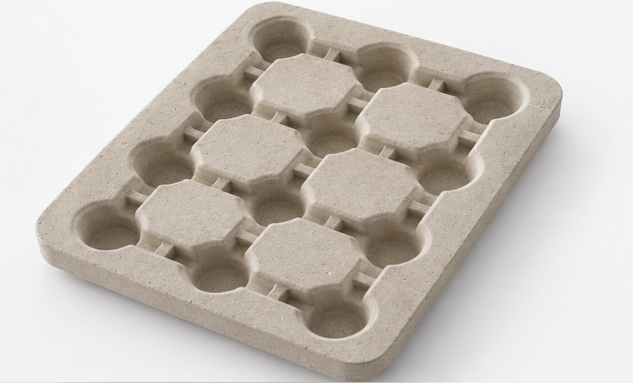
Reduce Damage Without Increasing Carton Size Unnecessarily
Extra packaging does not always mean better protection. Oversized cartons with excessive void space can allow products to move and can also increase pallet and container volume. For export programs, this creates additional freight cost without necessarily reducing damage.
A better approach is to fit the protective structure closely around the product while maintaining controlled cushioning space. Molded pulp can be useful because the insert can follow the product geometry more closely than many generic fillers.
Nesting should also be considered before the packaging reaches the product factory. Empty molded pulp trays can often stack inside one another, reducing the space required for inbound packaging storage and transportation.
Buyers should compare pieces per carton, carton dimensions, pallet quantity and packing labor together with the unit price of the protective insert. A slightly higher insert cost may be justified if the design reduces damage, uses a smaller export carton or improves packing speed.
For glass bottles and other fragile products, repeatable positioning can also reduce quality variation. When every product sits in the same cavity and contact points are controlled, the packaging result is more consistent across large production quantities.
The final decision should be based on total landed packaging cost and product damage risk rather than the price of one individual paper component.
Build Paper Packaging Around the Real Shipping Risk
Paper based packaging can provide effective protection for fragile export products when the structure is designed around product weight, fragile areas, carton strength and transportation conditions. Corrugated paper and molded pulp can work separately or together depending on the level of support and cushioning required.
For buyers, the strongest packaging projects begin with the actual product and expected shipping route. A well engineered paper packaging system can reduce movement, prevent product to product contact, control carton size and support a more efficient export supply chain without relying on excessive plastic or foam.