












Plastic Free Packaging Alternatives to EPS Foam and Plastic Trays
EPS foam and thermoformed plastic trays have been widely used in protective packaging because they are lightweight, easy to shape and relatively economical at scale. However, more brands and procurement teams are now looking for plastic free packaging alternatives that can protect products while supporting recycling and sustainability goals.
Replacing plastic is not simply a material substitution. EPS foam may provide cushioning for a heavy appliance, while a rigid plastic tray may hold an electronic device with precise positioning. Any alternative material has to reproduce the important protection functions of the original package without creating excessive cost, larger cartons or new quality problems.
For buyers, the best approach is to compare packaging materials based on product weight, fragility, surface requirements, order volume, shipping conditions and the way the final package will be handled in the supply chain.
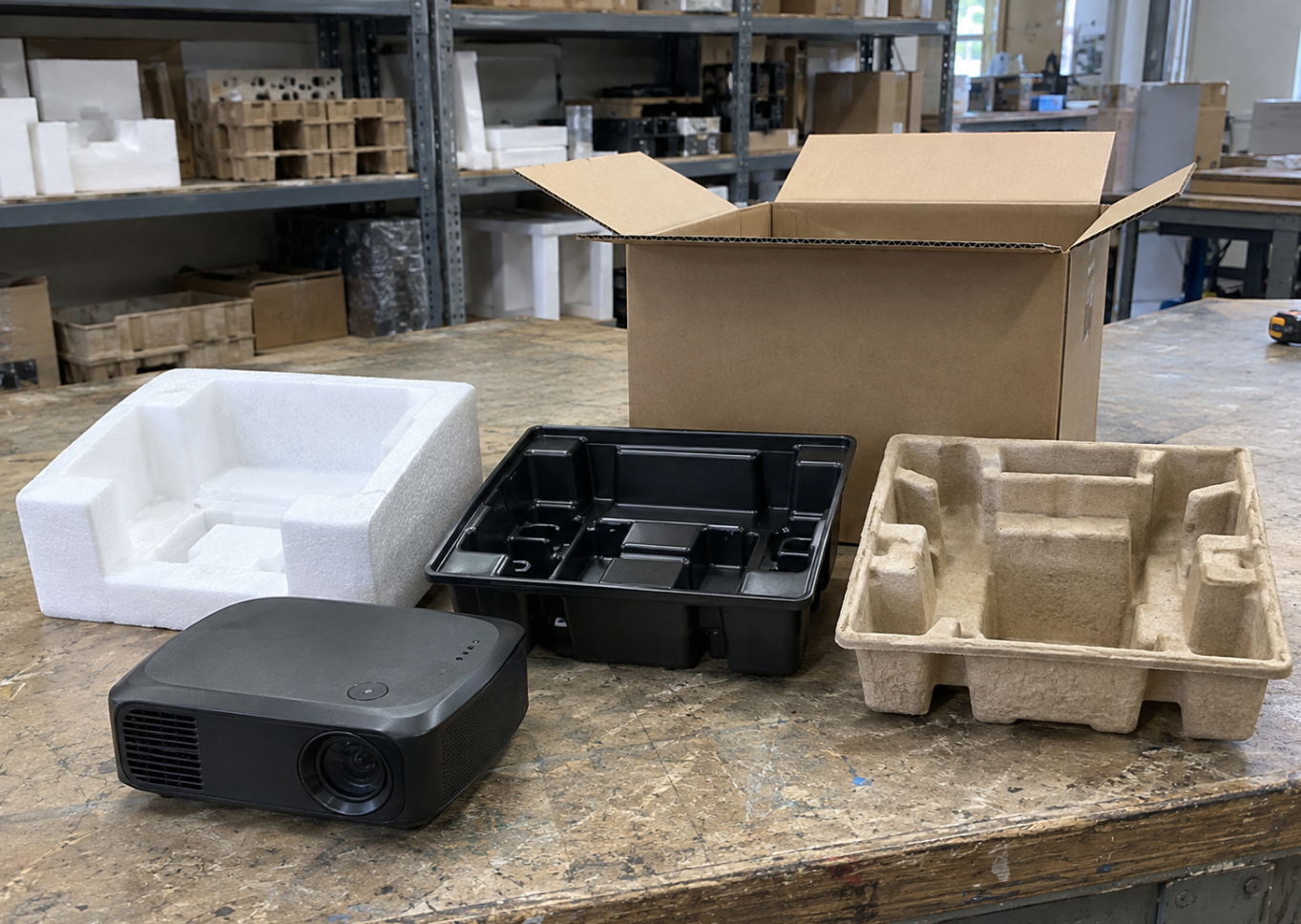
Compare Fiber Based Options With the Original Packaging
Corrugated paper structures are one of the most accessible alternatives to plastic. Folded partitions, die cut supports and layered corrugated pads can protect many products while remaining widely recyclable. Corrugated packaging is especially useful when the product has simple geometry and does not require highly precise cavities.
Paperboard can also replace some thin plastic components in retail packaging. It is suitable for sleeves, dividers and presentation structures, but it usually provides less cushioning than EPS foam and may require additional protective elements for heavier products.
Molded pulp offers a more three dimensional solution. Fiber material can be formed around the shape of the product to create support points, cushioning zones, accessory cavities and reinforced corners. This makes molded pulp particularly suitable for buyers trying to replace EPS foam or plastic trays without losing product positioning.
Wet press molded pulp can provide a smoother surface for premium electronics, cosmetics and consumer products, while dry press molded pulp can be used for appliances, industrial parts and other applications where transport protection and cost efficiency are more important than a refined appearance.
The key purchasing question is not which material looks more sustainable. Buyers should ask whether the new structure can carry the same load, control the same movement and protect the same fragile areas as the existing plastic package.
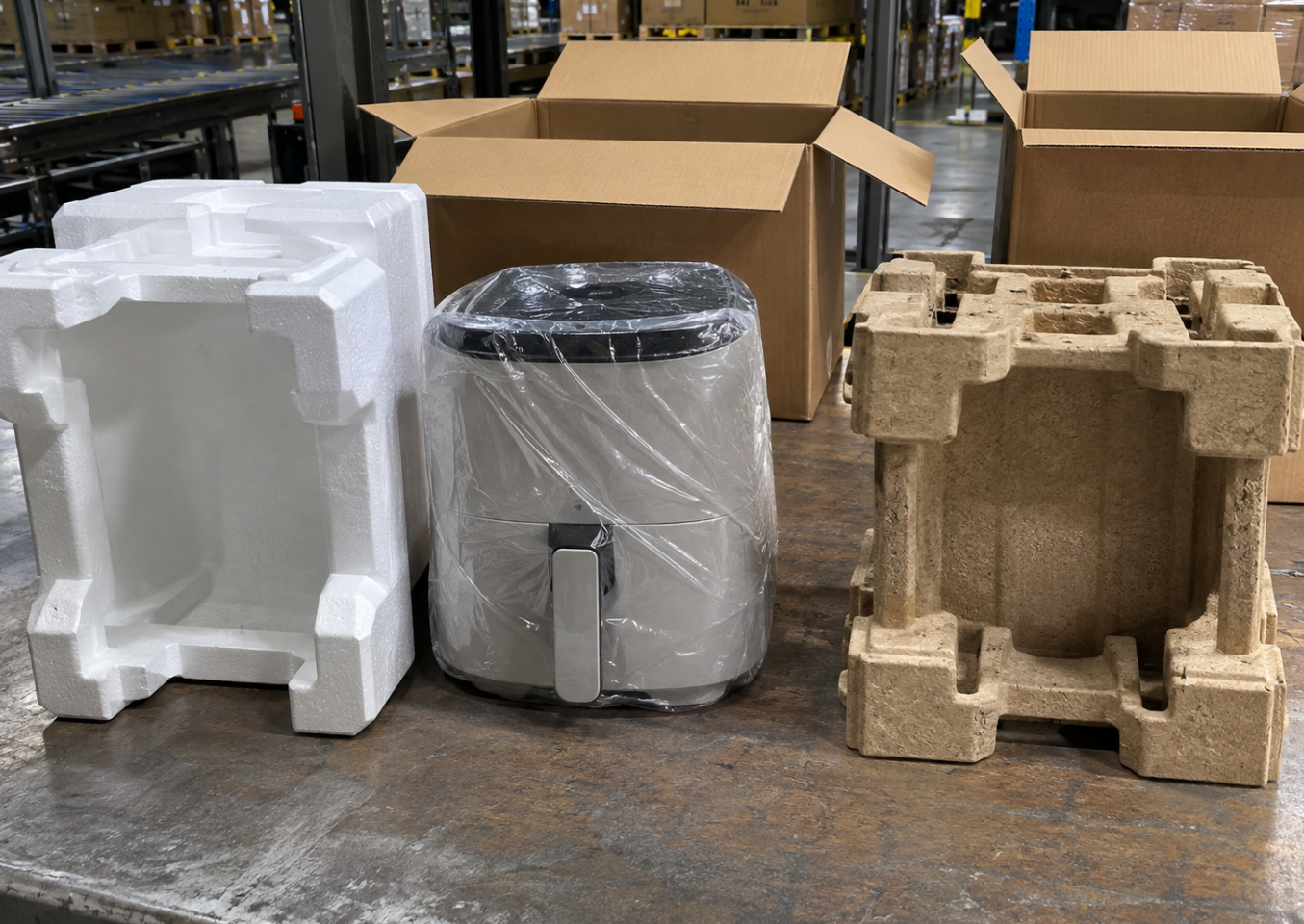
Match Cushioning Support and Product Fit Before Tooling
EPS foam is commonly used because it can absorb impact and protect heavy products. When replacing it, the new packaging should be engineered around the real load path of the product rather than simply copying the outer shape of the foam.
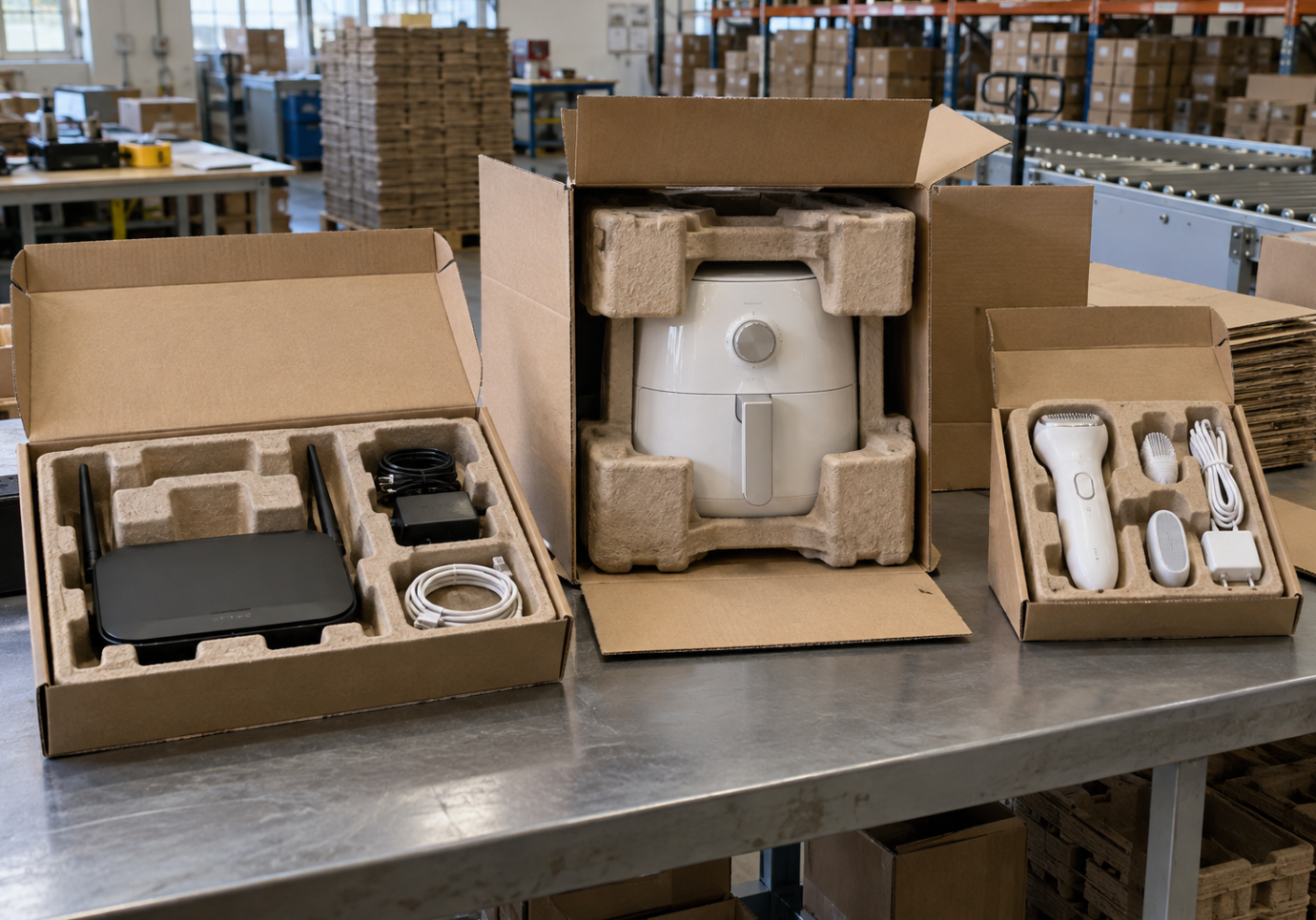
For home appliances, molded pulp can use reinforced corners, structural ribs and thicker support zones to carry product weight. For electronics, molded fiber inserts can create accurate cavities for the main device, cables, adapters and accessories while maintaining clearance around ports, buttons and delicate surfaces.
Buyers should identify which areas of the original packaging are actually performing critical functions. Some sections may absorb impact, some may prevent movement and others may simply fill empty space. Understanding these functions helps avoid overdesign and unnecessary material use.
Product drawings, 3D files and physical samples can help the supplier design more reliable support areas. Buyers should also provide product weight, fragile locations, current carton dimensions and any known drop test or vibration requirements before mold development begins.
Prototype testing is essential. Fit checks, compression evaluation, drop testing and transportation simulation can confirm whether the plastic free structure is ready for mass production or needs further adjustment.
Consider Tooling Packing Efficiency and Shipping Volume
Plastic free packaging can change more than the insert itself. It may affect carton size, packing speed, warehouse space and shipping volume, so procurement teams should compare the total packaging system rather than only the insert price.
Custom molded pulp usually requires tooling, which means annual demand and product life cycle should be considered. For repeat orders or stable product programs, the tooling cost can be spread across larger volumes and become a relatively small part of the total package cost.
Nesting is another important factor. Molded pulp trays can be designed to stack inside one another before use. Efficient nesting reduces the volume of empty packaging during transport and storage, helping buyers control freight and warehouse costs.
Assembly should also be reviewed. A plastic tray may be a single component, while a paper based replacement using several folded parts could require more labor. In many cases, a single molded fiber insert can simplify packing and keep product positioning consistent.
Buyers should compare the current EPS or plastic package with the proposed fiber solution using the same criteria including product damage risk, pieces per carton, assembly time, carton dimensions, pallet quantity and shipping volume.
This total cost approach makes it easier to identify whether the plastic free design creates a real operational improvement instead of only changing the material specification.
Replace Plastic by Engineering the Complete Packaging System
Corrugated paper, paperboard and molded pulp can all help reduce the use of EPS foam and plastic trays, but the correct choice depends on the product and the protection functions required. For many electronics, appliances and consumer products, molded pulp offers a practical combination of custom geometry, cushioning, product positioning and fiber based construction.
The safest way to move toward plastic free packaging is to begin with the existing package, identify the functions that must be preserved and test the new design before mass production. This allows buyers to reduce plastic use while maintaining protection, packing efficiency and a realistic total landed cost.