












EU PPWR Packaging Requirements and What Export Buyers Need to Know
The European Union Packaging and Packaging Waste Regulation has changed the compliance environment for companies selling packaged products into the EU. Regulation EU 2025/40 entered into force in February 2025 and began to apply from 12 August 2026, with a number of requirements taking effect in stages over the following years.
For exporters, importers and packaging buyers, PPWR is not only a recycling regulation. It affects how packaging is designed, how much material is used, how empty space is controlled, what information must be available and how packaging conformity is demonstrated.
Buyers sourcing molded pulp packaging, corrugated packaging or other fiber based solutions should therefore evaluate packaging performance together with future EU compliance needs. Changing from plastic to fiber can support a packaging reduction strategy, but material substitution alone does not automatically make a package PPWR compliant.

Understand the Main PPWR Changes Before Redesigning Packaging
One of the central PPWR objectives is to improve packaging recyclability. From 2030, subject to the timing rules linked to the relevant delegated acts, packaging placed on the EU market will need to meet defined recyclability performance grades. The regulation introduces grades A, B and C, with stricter requirements planned later.
Packaging minimisation is another important area. By 1 January 2030, manufacturers or importers must ensure that packaging weight and volume are reduced to the minimum necessary to maintain packaging functionality. Unnecessary layers or design features that only increase perceived product volume are not intended to justify additional packaging material.
Empty space is also becoming a measurable issue. By 12 February 2028, sales packaging must reduce empty space to the minimum needed for functionality and product protection. For grouped packaging, transport packaging and e-commerce packaging, a maximum empty space ratio of 50 percent is scheduled to apply from 2030 or later depending on the timing of the implementing methodology.
This means that oversized cartons filled with loose paper, air cushions, foam fillers or other void filling materials may require closer review. Under PPWR, many types of filling material are counted as empty space when the relevant calculation is applied.
Harmonised packaging labelling is another part of the transition. Material composition labels are scheduled from 12 August 2028 or later if the related implementing acts enter into force later. Buyers should therefore leave enough flexibility in future packaging artwork and specifications to accommodate harmonised EU labelling requirements.
Ask Suppliers for More Than a Packaging Sample
Export buyers should begin treating packaging documentation as part of the sourcing process. Under PPWR, importers placing packaging on the EU market have obligations to ensure that applicable conformity requirements have been addressed and that required technical documentation and labelling are available.
This makes supplier communication increasingly important. Buyers should ask for clear material composition, packaging dimensions, weight, technical specifications and information needed to support conformity assessment. When a package is custom designed, the supplier should also be able to explain the structural features that are necessary for product protection.
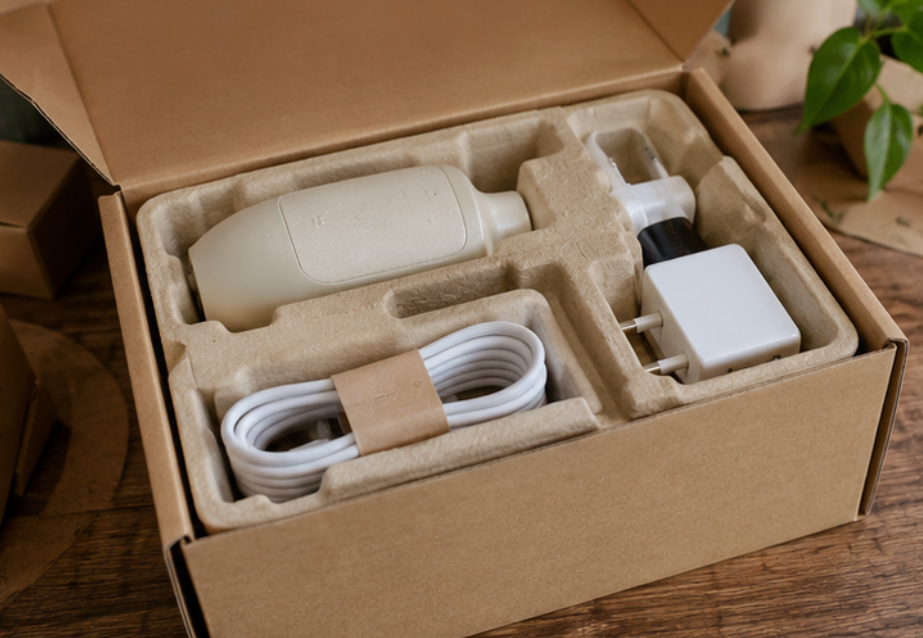
Molded pulp can be useful where buyers want to replace EPS foam or thermoformed plastic inserts. It can create product specific cavities, structural ribs and cushioning zones while reducing the number of separate packaging components. However, the complete pack should still be evaluated for recyclability, minimum necessary material use and performance.
Buyers should also avoid reducing packaging so aggressively that product damage increases. PPWR recognises product protection as a legitimate packaging function. The objective is not simply to make packaging smaller but to remove unnecessary material while maintaining safe handling, storage and transportation.
For this reason, drop tests, compression tests, vibration evaluation and real product fit checks can remain important evidence when explaining why a certain level of cushioning or structural support is necessary.
Build PPWR Readiness Into Packaging Development Now
Buyers do not need to wait until every secondary rule is finalised before improving their packaging. A practical first step is to audit current packaging and identify unnecessary layers, oversized cartons, plastic inserts, difficult material combinations and areas with excessive void space.
The next step is to redesign around the actual product. Custom molded pulp inserts can help hold products more closely, reduce loose void filling and replace some EPS or plastic components. Corrugated structures may be suitable for simpler products, while combinations of paperboard and molded fiber can support both presentation and protection.
Packaging teams should keep records of key dimensions, packaging weight, material specifications and test results. Where packaging cannot be reduced further without increasing product damage risk, the engineering reason should be clear and supported by technical evidence.
Buyers should also plan for change. Several PPWR requirements depend on delegated or implementing acts that define detailed methods, criteria and labels. Packaging specifications developed today should therefore allow reasonable flexibility for future artwork, documentation and design updates.
For companies importing packaged goods into Europe, PPWR preparation should involve procurement, packaging engineering, quality, logistics and regulatory teams rather than being treated as a sustainability project alone.
Suppliers that can provide stable manufacturing, documented specifications and engineering support will become increasingly valuable as buyers move from general sustainability targets toward measurable packaging compliance.
Treat PPWR as a Packaging Design Requirement
EU PPWR is pushing packaging toward better recyclability, lower material use, reduced empty space and more consistent information for consumers and authorities. For export buyers, this means packaging decisions increasingly need to be supported by both engineering performance and technical documentation.
Molded pulp and other fiber based packaging can support plastic reduction and compact protective design, but compliance depends on the complete package rather than one material alone. Buyers that begin auditing packaging now and work closely with suppliers on design, testing and documentation will be better prepared for the phased PPWR requirements ahead.