












Eco Friendly Packaging Alternatives for Electronics and Consumer Products
Electronics and consumer product brands are under increasing pressure to reduce plastic packaging while maintaining product protection and presentation quality. Traditional thermoformed plastic trays and EPS foam have been widely used because they are lightweight and easy to shape, but many buyers are now looking for packaging materials that are easier to recycle and better aligned with sustainability goals.
The challenge is that eco friendly packaging cannot be selected on environmental image alone. A smartphone accessory, WiFi router, beauty device and small home appliance can have very different requirements for cushioning, surface protection, dimensional accuracy and retail presentation.
Procurement teams should therefore compare packaging alternatives based on the complete product journey from factory packing and warehouse storage to transportation and final customer unboxing.
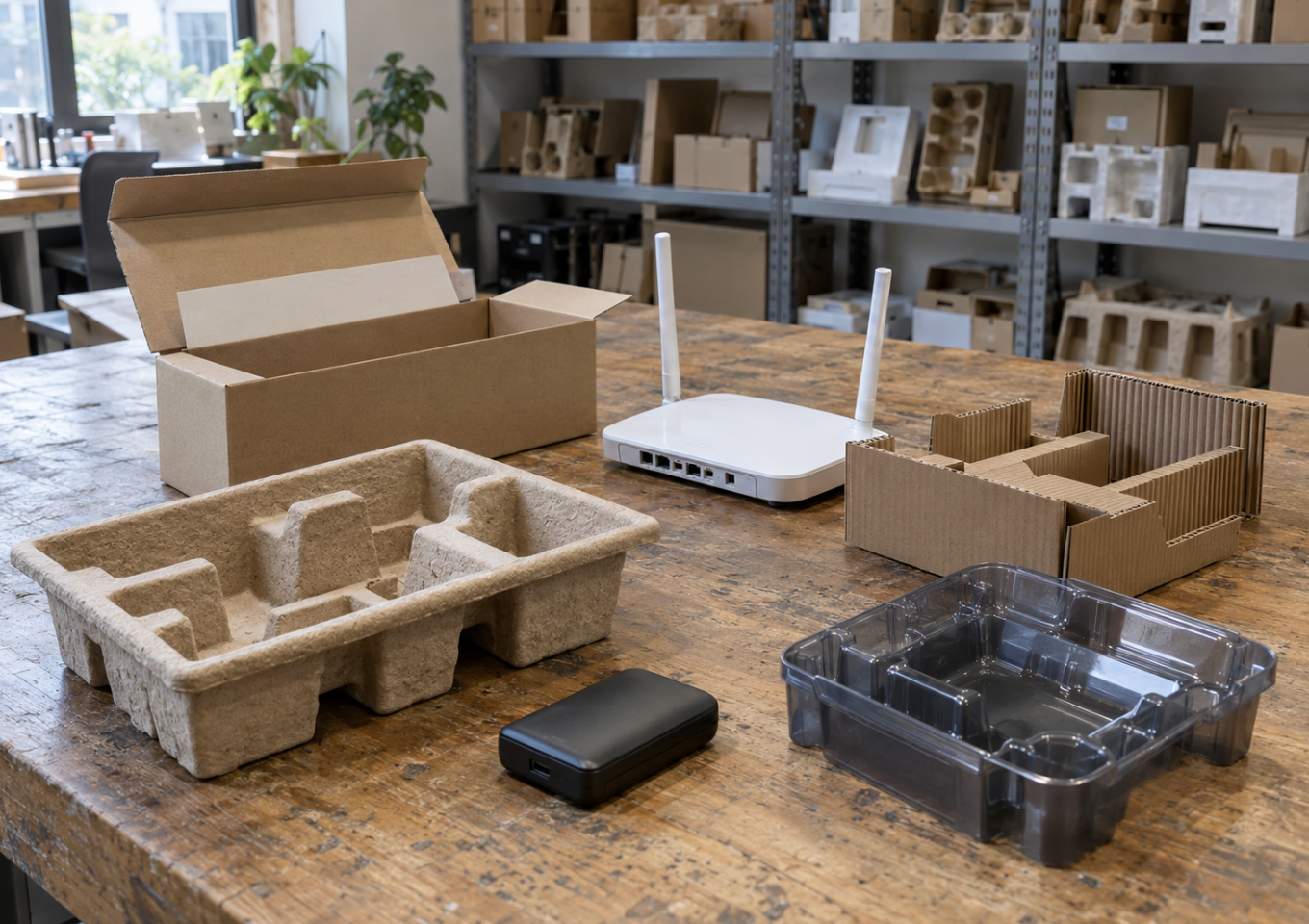
Compare Different Materials Before Replacing Plastic
Corrugated paper is one of the most common alternatives because it is widely available, recyclable and relatively economical. It works well for outer cartons, partitions and simple folded structures. However, complex electronics may require many folded components to create accurate positioning, which can increase assembly time and packaging volume.
Paperboard is another useful option for retail boxes, sleeves and internal presentation structures. It provides a clean printing surface and can support strong branding, but it normally offers limited impact cushioning when used alone.
Recycled plastic trays can reduce virgin plastic consumption while maintaining familiar packaging performance. They can provide smooth surfaces and accurate cavities, but they remain plastic based and may not meet the objectives of brands pursuing plastic free packaging strategies.
Molded pulp and molded fiber packaging offer a different combination of protection and sustainability. Fiber material can be formed around product geometry to create dedicated cavities, ribs, support points and accessory compartments. This makes molded pulp particularly useful for electronics and consumer products that need a custom protective insert.
Buyers should consider whether the packaging needs to provide visual presentation, heavy cushioning, accurate positioning or a combination of these functions before selecting the material.
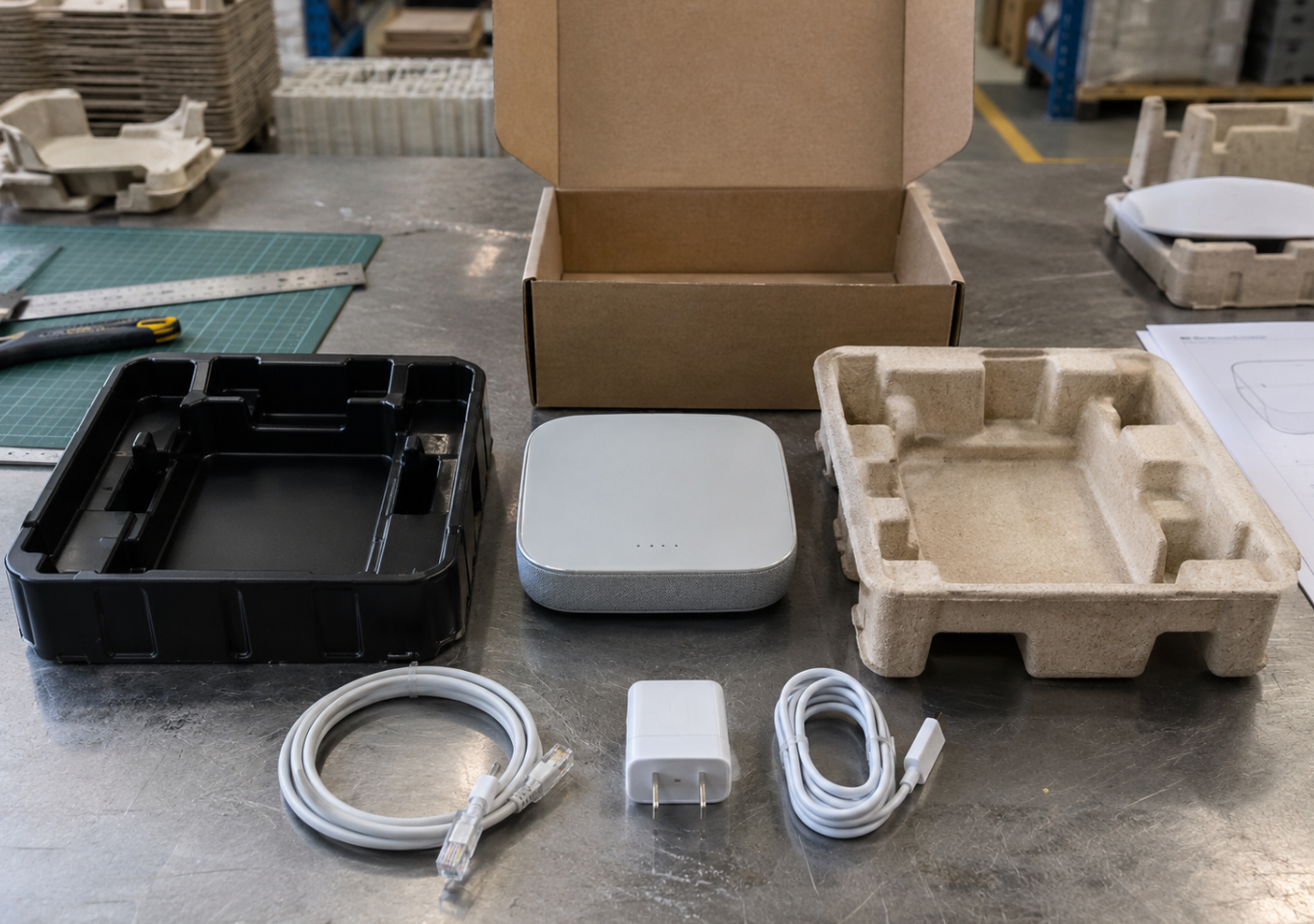
Protect Electronics Without Sacrificing Product Presentation
Electronics packaging must control product movement while protecting sensitive surfaces, ports, screens and accessories. The insert should hold the device securely without creating excessive pressure on fragile areas.
For products such as routers, headphones, cameras, smart home devices and electronic accessories, molded pulp can be designed with separate cavities for the main unit, cables, adapters and smaller components. This reduces movement inside the box and creates a cleaner packing arrangement.
Surface appearance is also important for consumer electronics. Wet press molded pulp can provide a smoother and more refined surface than traditional rough fiber trays, making it suitable for premium retail packaging and branded unboxing experiences.
Buyers should provide accurate product dimensions, weight, accessory layout and fragile areas before tooling begins. A physical sample or 3D file can help the packaging supplier identify support points and design appropriate clearances.
Sample testing should confirm fit, surface contact and transportation performance before the new fiber packaging moves into mass production.
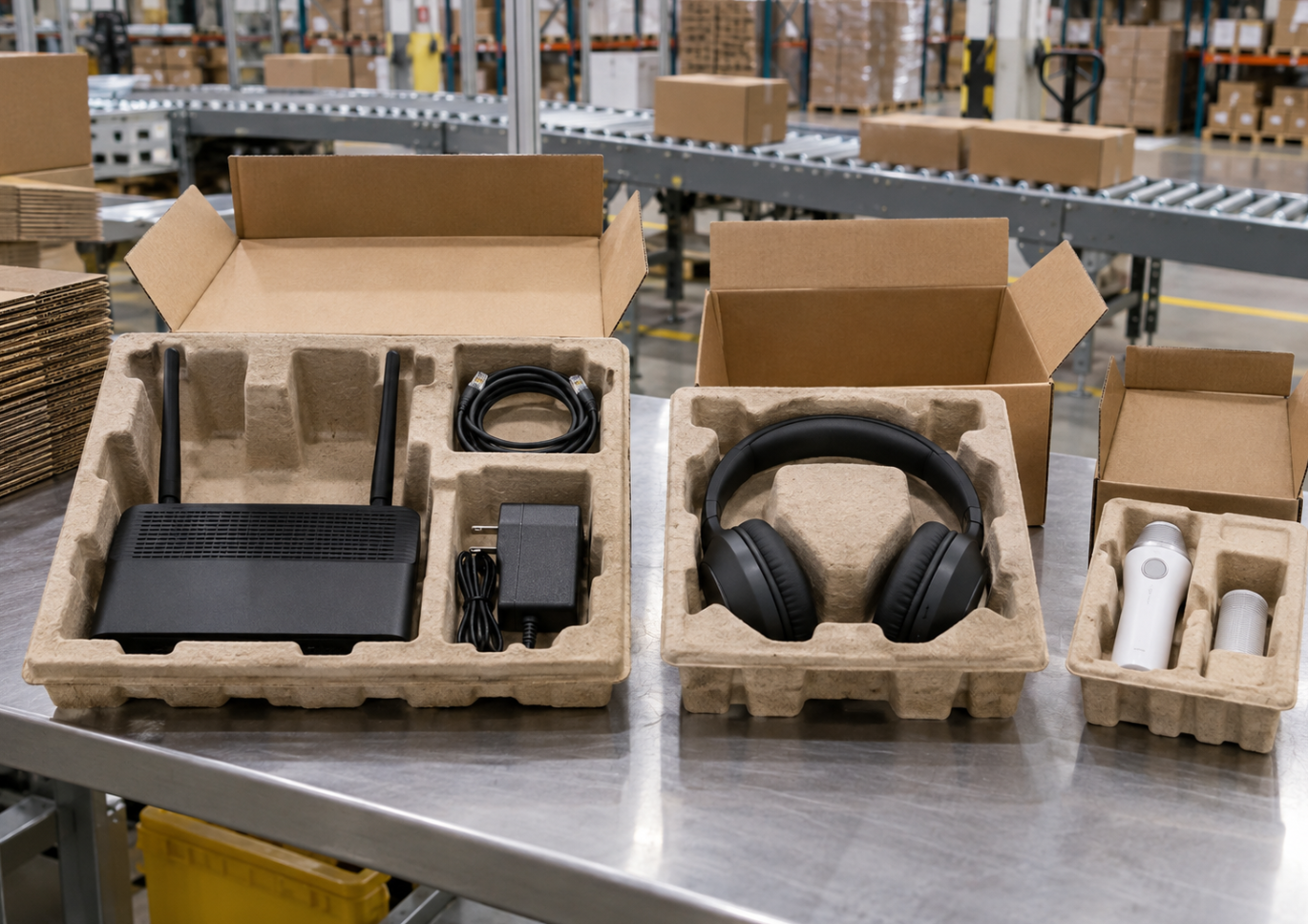
Evaluate Cost Logistics and Mass Production Together
Eco friendly packaging should also make sense commercially. Buyers should compare more than the unit price of the insert because tooling, packing efficiency, carton dimensions and shipping volume can significantly influence total cost.
Molded pulp normally requires custom tooling, so annual order volume and product life cycle should be considered before development. For stable production programs, tooling cost can be spread across larger quantities.
Nesting efficiency is especially important. Empty packaging is often shipped from the packaging factory to the product manufacturer. If inserts stack poorly, buyers may pay to transport unnecessary air. A well designed molded pulp tray can nest more efficiently and reduce carton volume.
Assembly efficiency should also be considered. A packaging solution that requires several folded paper parts may involve more manual operations than a single molded insert. For high volume consumer products, even a small difference in packing time can affect labor cost.
Buyers replacing existing plastic packaging should provide the supplier with the original insert whenever possible. This allows the new design to be compared against the existing product positioning, carton size and assembly process.
The best eco friendly packaging solution should reduce plastic use while maintaining product protection, efficient packing and a realistic total landed cost.
Choose Eco Friendly Packaging Around the Product
Corrugated paper, paperboard, recycled plastic and molded pulp can all play useful roles in electronics and consumer product packaging. The correct choice depends on product weight, protection requirements, appearance, assembly method and logistics.
For buyers seeking to reduce plastic inserts, custom molded pulp packaging offers a practical combination of product specific protection, fiber based materials and flexible structural design. The most reliable transition begins with the existing packaging and uses sampling and testing to confirm that sustainability improvements do not reduce packaging performance.