












Why Molded Pulp Is Becoming a Popular Biodegradable Packaging Material
Buyers across electronics, home appliances, food and beverage, cosmetics and industrial products are looking for packaging materials that can reduce plastic use without sacrificing protection. Molded pulp has become one of the most practical options because it combines fiber based construction with custom three dimensional packaging design.
Compared with EPS foam and many plastic trays, molded pulp can be produced from recycled paper fiber or other plant based fibers and can often enter established paper recycling streams after use. In suitable material formulations and disposal conditions, untreated fiber based molded pulp can also biodegrade more readily than conventional petroleum based plastics.
For procurement teams, however, environmental performance is only one part of the decision. The packaging must still protect the product, work efficiently on the packing line and remain commercially practical at mass production scale.
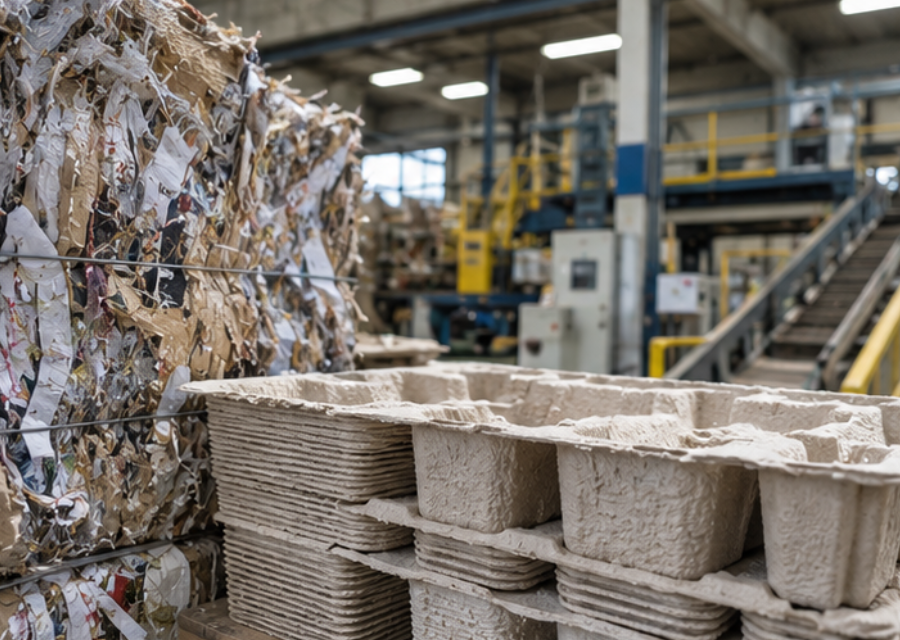
Fiber Based Packaging Offers More Than a Plastic Free Appearance
One reason molded pulp is gaining attention is that the material can be made from recycled paper fiber, virgin plant fiber or selected agricultural fiber depending on the application and production process. This gives packaging developers more flexibility when balancing appearance, strength and sustainability objectives.
Molded pulp is also three dimensional. Unlike a flat paper sheet, it can be formed into cavities, ribs, corners, product support points and accessory compartments. This allows a fiber based material to perform protective functions that were traditionally handled by plastic trays or EPS foam.
For consumer electronics, smoother wet press molded pulp can provide a more refined presentation. For home appliances, industrial components and bottle packaging, stronger dry press structures can provide cushioning and product separation at a competitive cost.
The environmental benefit also depends on the complete material system. Buyers should ask whether coatings, laminations, adhesives, inks or other additives are used because these components may affect recyclability or biodegradation performance.
This is why a good sustainability claim should be based on the actual material specification rather than simply describing all molded pulp packaging as automatically biodegradable under every condition.
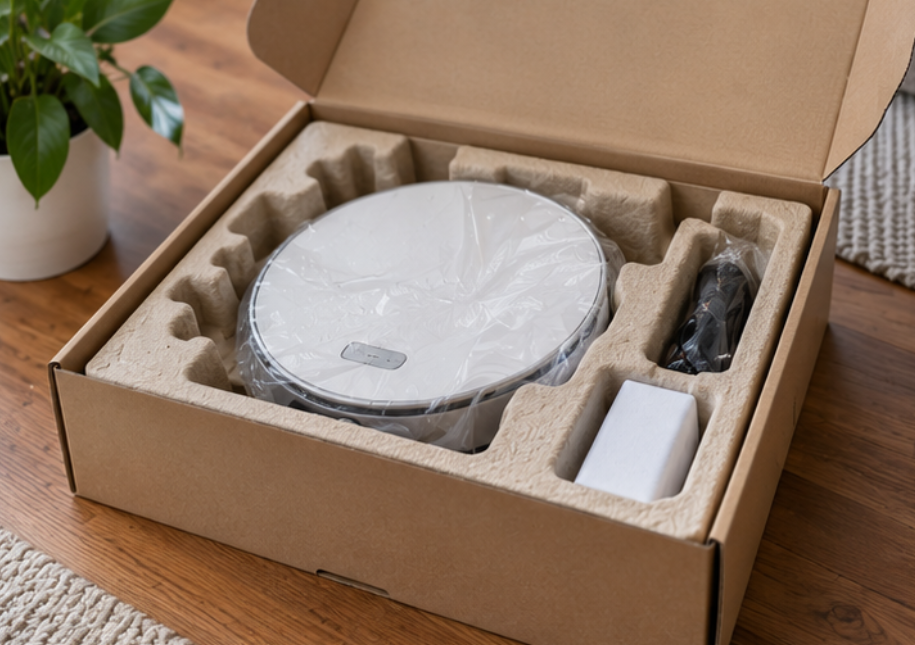
Sustainable Packaging Still Has to Protect the Product
Product protection is the main reason buyers cannot select packaging based only on environmental messaging. If a sustainable package leads to higher damage rates, the environmental and financial cost of replacing damaged products can quickly outweigh the benefit of using less plastic.
Molded pulp can be engineered around the actual product. Heavy areas can receive reinforced support, fragile surfaces can be given clearance and accessories can be separated into dedicated cavities. This makes it suitable for products ranging from routers and headphones to coffee machines, air fryers, glass bottles and industrial parts.
Product weight, center of gravity, carton clearance and transportation conditions should all be considered before tooling begins. A light consumer device may need accurate positioning, while a heavier appliance may need thicker load bearing zones and stronger corner protection.
Sample approval should therefore include product fit checks, stacking evaluation and any necessary drop, vibration or compression testing. Buyers should verify packaging performance before approving large volume production.
This engineering approach allows molded pulp to compete not only as a sustainable material but also as a serious protective packaging solution.
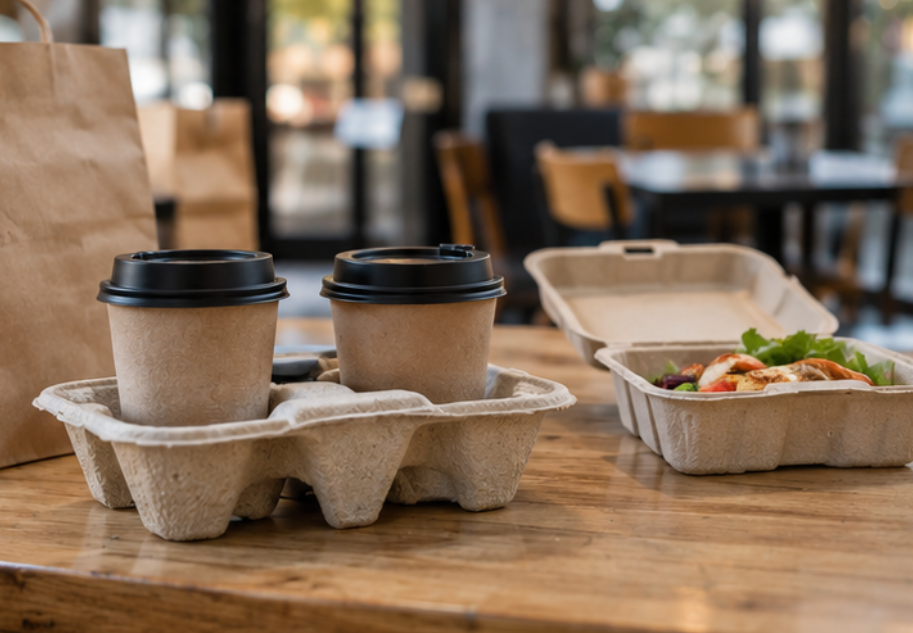
Buyers Should Compare Disposal Cost Logistics and Production Scale
The growing popularity of molded pulp is also linked to practical supply chain considerations. Fiber packaging can often be nested before use, reducing the volume of empty trays during transportation and warehouse storage.
Custom tooling is normally required, so buyers should consider annual order quantity and product life cycle when calculating cost. For stable programs with repeated production, tooling can be spread across larger volumes and become a relatively small part of total packaging cost.
End of life should also be considered. Paper based packaging may be easier for consumers and businesses to identify and separate than mixed material packages. However, buyers should confirm local recycling guidance in the markets where products are sold because collection systems and recycling acceptance can vary.
Biodegradability should be treated with the same care. Untreated natural fiber can break down under suitable biological conditions, but coatings, wet strength additives and other functional treatments may change the result. Procurement specifications should therefore distinguish between recyclable, biodegradable and compostable claims rather than using the terms interchangeably.
For brands currently using EPS foam or plastic trays, the most practical starting point is to send the existing package and product sample to the molded pulp supplier. Engineers can then identify which cushioning, support and positioning functions must be retained in the new design.
A successful project should reduce plastic use while maintaining protection, packing efficiency and a realistic total landed cost.
Molded Pulp Combines Fiber Materials With Protective Design
Molded pulp is becoming a popular biodegradable packaging material because it can combine fiber based construction, custom product protection and reduced dependence on plastic packaging. It can support a wide range of applications while offering buyers more options for recyclable and lower plastic packaging systems.
For procurement teams, the strongest projects are based on verified material specifications, realistic performance testing and clear end of life claims. Molded pulp should be selected because it works for the product and supply chain as well as because it supports sustainability goals.