












How Molded Pulp Packaging is Replacing Plastic in Global Supply Chains
The global supply chain is undergoing a sustainability revolution, driven by stringent environmental regulations and consumer demand for eco-friendly alternatives. Molded pulp packaging, crafted from renewable resources like bamboo, sugarcane bagasse, and recycled paper, is emerging as a viable replacement for single-use plastics. Companies like Suzhou Hanyang Paper Plastic Products Co., Ltd. are at the forefront of this shift, leveraging 25 years of expertise to design customized, biodegradable solutions for industries ranging from electronics to automotive. This transition not only addresses plastic pollution but also aligns with circular economy principles, reducing carbon footprints and enhancing corporate ESG (Environmental, Social, and Governance) credentials.
1. Environmental Advantages: Biodegradability and Carbon Reduction
Molded pulp packaging decomposes within 3–6 months in natural conditions, unlike conventional plastics that persist for centuries. For instance, Hanyang’s trays use agricultural waste (e.g., sugarcane fiber) that sequesters carbon during growth, resulting in up to 72% lower CO₂ emissions compared to EPS or EPE foam. Their production process employs energy-efficient technologies like closed-loop water systems and solar-assisted drying, minimizing waste and fossil fuel dependence. Additionally, certifications like ROHS and EN13432 ensure compliance with global standards, enabling brands to meet sustainability targets (e.g., EU’s Single-Use Plastics Directive).
2. Functional Superiority: Protection, Customization, and Logistics
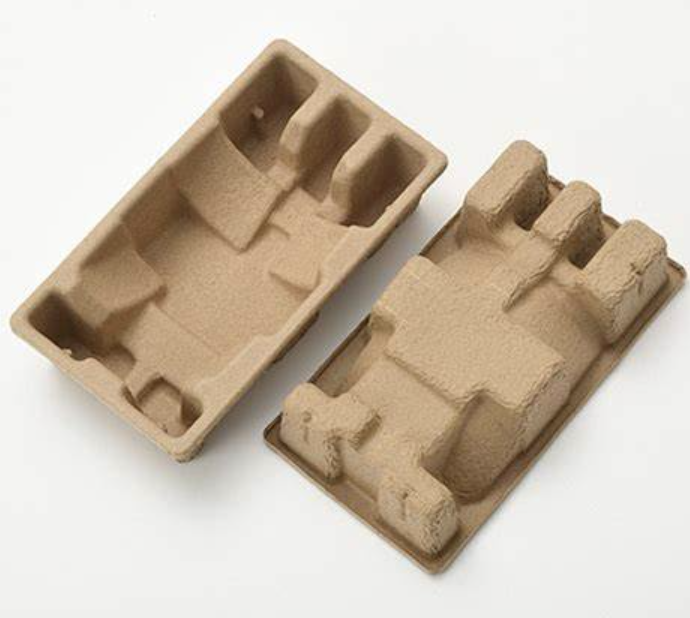
Beyond eco-friendliness, molded pulp offers exceptional functional benefits. Its porous structure provides natural shock absorption, protecting fragile items like electronics or automotive parts from impacts of up to 15G. Hanyang’s dry-press and wet-press technologies allow precise customization for complex shapes (e.g., smartphone casings or EV battery trays), while nestable designs cut storage and shipping volume by over 70%. This lightweight yet durable material also reduces transportation costs and fuel consumption, streamlining supply chain operations.
3. Economic and Regulatory Drivers: Cost Savings and Compliance
The economic case for molded pulp strengthens as plastic taxes and Extended Producer Responsibility (EPR) laws expand globally. For example, Hanyang’s clients report 18–30% lower packaging costs after switching from plastic foam, thanks to reduced material waste and streamlined production. Governments in over 60 countries now ban or tax single-use plastics, making molded pulp a compliant alternative. Corporate ESG commitments further accelerate adoption—brands like Samsung and IKEA prioritize suppliers using biodegradable packaging to enhance their green profiles.
Related product and article resources
For procurement comparison and technical evaluation, readers can continue with these related product pages and supporting articles.