












Wet Press vs Dry Press Molded Pulp Packaging for Different Product Applications
For buyers sourcing custom molded pulp packaging, choosing between wet press and dry press production is one of the most important decisions during the early development stage. Both processes use fiber based materials to create protective packaging, but they can produce noticeably different results in surface quality, dimensional control, appearance, production efficiency and overall cost.
The correct choice depends on much more than appearance. Procurement teams should consider product value, weight, packaging position, annual demand, transportation conditions and customer presentation requirements. A premium electronic device may require a smooth and refined molded pulp insert, while a home appliance or industrial component may need stronger structural protection at a more competitive cost.
Understanding how the two processes differ can help buyers select a more suitable packaging structure before tooling begins and reduce unnecessary modifications during sampling and mass production.
Understanding Wet Press and Dry Press Molded Pulp
Wet press molded pulp is normally selected when the packaging requires a smoother surface and a more refined visual appearance. After the fiber material is formed, the molded product is pressed under controlled heat and pressure. This additional forming process produces a denser structure and creates smoother surfaces and cleaner edges.
These characteristics make wet press molded pulp suitable for consumer electronics, smart home devices, routers, headphones, cameras, watches, accessories and other products where the internal packaging is visible when the customer opens the box. For electrical product molded pulp packaging, precise product positioning and a cleaner surface can also improve the overall presentation of the finished package.
Wet press molded fiber is also frequently considered by brands looking to replace thermoformed plastic inserts. It can provide a more natural fiber appearance while maintaining the clean presentation expected from modern retail packaging.
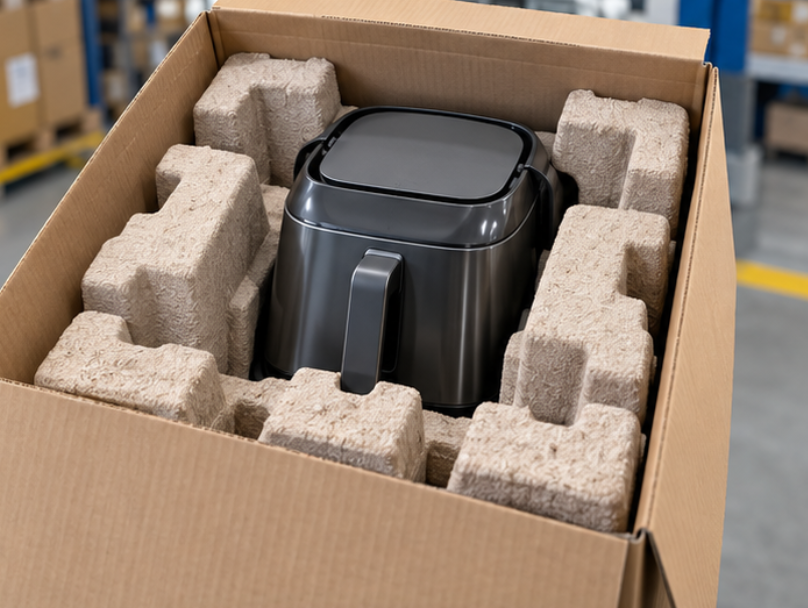
Dry press molded pulp has a different positioning. The finished surface is generally rougher and more natural, but the material can still provide reliable cushioning, product separation and structural support during storage and transportation.
This makes dry press molded pulp suitable for home appliances, industrial components, hardware products, beverage containers and other applications where protection and cost efficiency are more important than premium presentation. When a molded pulp tray is hidden inside a corrugated export carton, a highly refined surface may provide little additional value to the buyer.

What Buyers Should Compare Before Choosing a Process
Surface quality is one of the easiest differences to identify, but buyers should not use appearance as the only selection criterion. The real objective of molded pulp packaging is to hold the product securely and reduce the risk of damage during handling, storage and transportation.
Product weight is especially important. Lightweight electronics may require accurate locating areas and smooth contact surfaces, while heavier appliances may require deeper support structures, reinforced sections and larger cushioning zones.
Packaging engineers should evaluate the product center of gravity, fragile areas, support points, wall thickness, tray depth and carton clearance before determining the final structure. A well designed dry press tray can provide better transport protection than a visually attractive wet press tray if the latter does not support the product correctly.
Cost is another major consideration. Wet press production normally involves additional processing and more demanding forming control, which may increase the manufacturing cost. Dry press packaging can be more economical for high volume projects where visual requirements are lower.
However, procurement teams should also evaluate tooling cost, carton quantity, tray nesting, pallet utilization and shipping volume. A lower priced tray may not create the lowest total cost if poor stackability increases warehousing and freight expenses.
Choosing the Right Process for Different Product Applications
Wet press molded pulp is generally more suitable for products where packaging appearance and dimensional presentation contribute to the customer experience. Smartphones, WiFi routers, headphones, cameras, smart home equipment, electronic accessories and premium consumer products are typical examples.
These products are often packed in compact retail boxes. The molded pulp insert may be visible immediately after the package is opened, making surface finish and product positioning important elements of the packaging design.
Dry press molded pulp is often more practical for larger and heavier products such as air fryers, coffee machines, vacuum cleaners, electric fans, power tools, industrial components and hardware products.
In these applications, the priority is normally impact protection and product stability. Packaging designers can use structural ribs, cushioning areas, reinforced corners and carefully positioned support points to control product movement during transportation.
Some manufacturers may use both processes across different product families. A premium model can use wet press molded pulp to improve presentation, while a standard product can use dry press packaging to achieve better cost efficiency. This approach allows packaging specifications to match the commercial positioning of each product.
Before requesting tooling, buyers should provide product dimensions, weight, annual purchasing volume, fragile areas, surface expectations and transportation requirements. Product drawings or physical samples can also help the molded pulp manufacturer determine suitable support areas and recommend the correct production process.
Choosing the Process Based on Real Packaging Needs
Wet press and dry press molded pulp both have important roles in sustainable protective packaging. Wet press is generally more suitable for products requiring a smooth surface, refined presentation and controlled dimensional appearance. Dry press is often better suited to larger products and industrial applications where protection and cost efficiency are the main priorities.
For procurement teams, the correct choice should be based on product structure, transportation risk, customer expectations and total packaging cost rather than appearance alone. Working with an experienced molded pulp packaging manufacturer during the early design stage can reduce tooling revisions and create a more reliable path from sampling to mass production.