












ESD Protection: The Invisible Shield Against a Silent Killer
The most insidious threat to modern electronics is not physical shock, but an invisible, silent one: Electrostatic Discharge (ESD). A tiny spark, imperceptible to humans, can carry thousands of volts—enough to instantly fry delicate microchips, degrade semiconductor performance, or cause latent failures that only manifest in the customer's hands. This is where advanced molded pulp packaging, like that engineered by Hanyang, steps in as a critical line of defense. Unlike standard plastics that generate and trap static charge, Hanyang's ESD-safe molded pulp trays are manufactured with specially formulated conductive fibers and additives. This gives the material precise surface and volume resistivity, allowing it to safely and gradually dissipate any accumulated electrostatic charge away from the sensitive component, functioning as a static-dissipative shield. This built-in ESD protection is not a coating that can wear off; it is a permanent, homogeneous property of the material itself. For industries dealing with PCBA, semiconductors, and hard drives, this function transforms simple packaging into an active, protective safety system that is fundamental to preserving functionality and yield rates throughout the logistics chain.

Halogen and SVHC Compliance: The Assurance of Chemical Purity
Beyond electrical hazards, electronics are vulnerable to chemical contamination. Substances like halogens (chlorine, bromine) and other Substances of Very High Concern (SVHC) can, over time, migrate from packaging materials. Under heat or humidity, they can cause corrosion, conductive anodic filament growth on circuit boards, or toxic outgassing, leading to long-term reliability failures. This is a critical yet often overlooked area of packaging safety. Hanyang’s packaging solutions are rigorously engineered to be halogen-free and SVHC-compliant. This commitment starts with the careful selection of raw materials—primarily clean, high-grade recycled paper fibers—and extends through the entire manufacturing process, which avoids the use of restricted substances. The final products are verified to meet stringent international standards like RoHS (Restriction of Hazardous Substances). For electronics bound for global markets, especially the EU, this chemical safety compliance is non-negotiable. It ensures that the very packaging meant to protect a device will not become a source of its chemical degradation, safeguarding both product integrity and adherence to global environmental regulations.
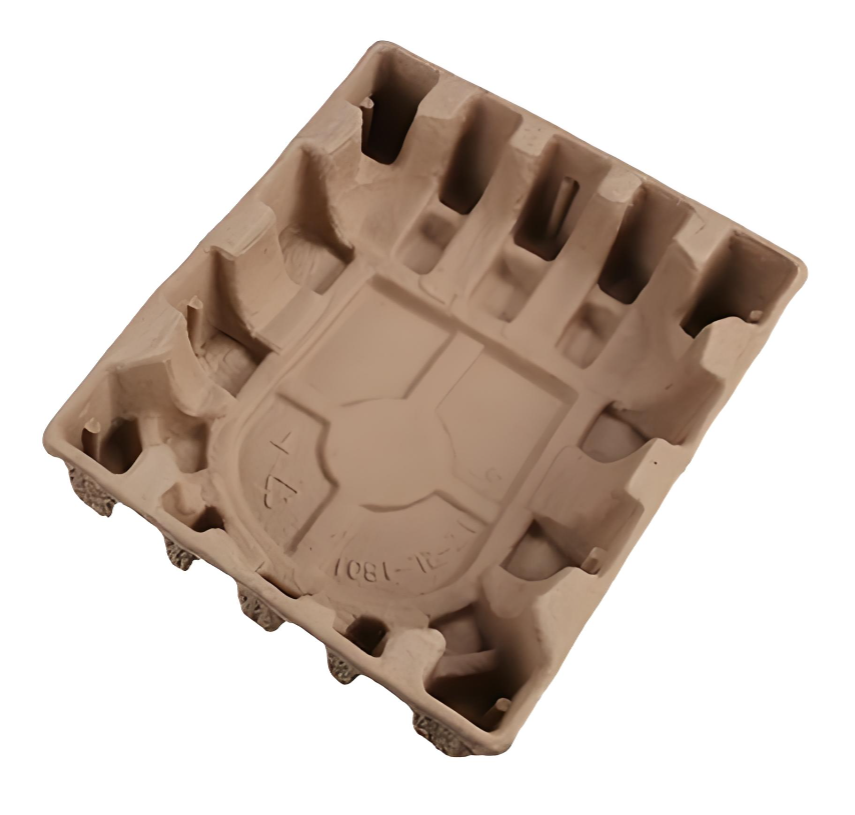
Structural Integrity and Precision Engineering: The Foundation of Physical Safety
While mitigating invisible threats, packaging must also conquer the visible, brutal realities of global shipping. Vibration, impacts from drops, and compression in stacked containers pose constant risks. Hanyang’s packaging acts as a precision-engineered cocoon through structural resilience. Using advanced molding techniques (wet-press/dry-press), engineers can design trays with specific rib structures, wall thicknesses, and geometric contours that absorb and distribute kinetic energy. This custom-fit design ensures components are immobilized, preventing abrasive micro-movements that cause "fretting" damage to pins and connectors. The high compression strength of molded pulp provides superior load-bearing capacity, allowing pallets to be stacked safely without crushing the sensitive units within. Every design is validated through rigorous drop tests, vibration tests, and compression testing, simulating the harsh conditions of real-world logistics. This validated physical protection, combined with ESD safety and chemical inertness, creates a comprehensive, three-fold protective barrier. It ensures that electronics withstand the physical journey, arriving in the same pristine condition as they left the manufacturing line, ready for immediate integration.

The safety of electronics in transit is not a matter of luck; it is a result of meticulous engineering. Hanyang’s molded pulp solutions exemplify this principle, moving far beyond simple containment. By integrating ESD dissipation, guaranteeing chemical purity, and providing validated structural defense, they address the full spectrum of hazards—both seen and unseen. In an industry where a single failure can have monumental costs, this holistic approach to safety transforms packaging from a cost center into a vital component of product quality and reliability. For brands that cannot afford compromise, specifying such comprehensively safe packaging is not an option; it is an essential strategy for risk mitigation and brand protection.