












How Molded Pulp Tray Nesting Design Affects Carton Size and Shipping Cost
For buyers sourcing molded pulp packaging, unit price is only one part of the real packaging cost. The way molded pulp trays stack and nest can directly affect carton size, warehouse space, pallet loading and international shipping cost.
A molded pulp tray may look compact when viewed individually, but if its shape prevents efficient nesting, hundreds or thousands of trays can occupy much more volume than expected. This becomes especially important for export orders, where freight is often calculated according to shipment volume, pallet quantity or container utilization.
For procurement teams, packaging engineers and logistics managers, good nesting design should therefore be considered during the early development stage rather than after the tray has already entered mass production.
Why Tray Geometry Changes Packing Density
Molded pulp trays are three dimensional structures. Their side walls, cavity depth, support ribs and draft angles determine how closely one tray can fit inside another.
When nesting is designed well, multiple trays can stack with controlled spacing between each part. This allows a larger quantity to fit inside one shipping carton and reduces the amount of unused air being transported.
Poor nesting can create the opposite result. Deep vertical walls, protruding supports or insufficient draft angles may prevent trays from sliding into one another. The stack then becomes much taller, meaning fewer trays fit into each carton.
For high volume products such as beverage bottle trays, electronic inserts, appliance packaging and industrial protective trays, even a small difference in stacking height can create a large difference across an annual order.
Buyers should therefore ask suppliers to evaluate nesting performance during the design stage. A tray that protects the product well but cannot be packed efficiently may create unnecessary logistics cost later.
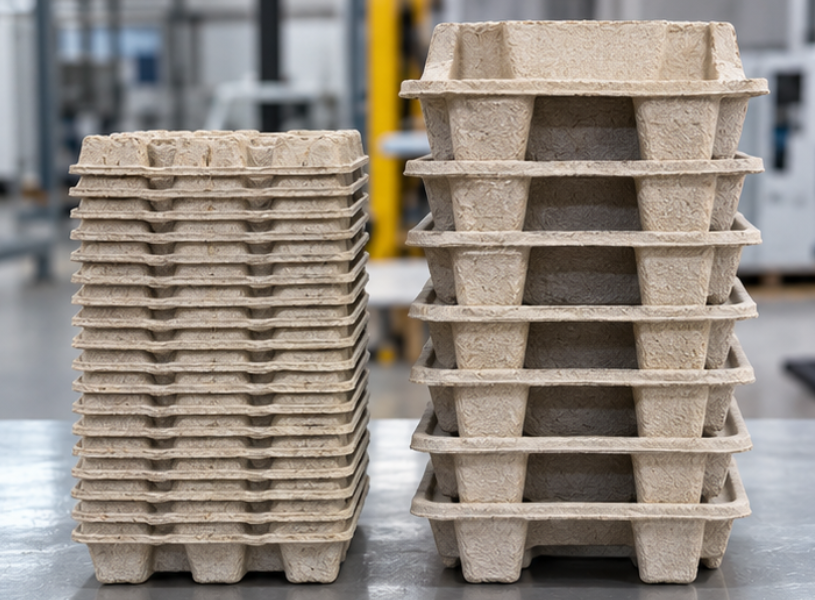
How Nesting Design Affects Carton Size and Warehouse Space
Carton dimensions are often determined by the stacked size of the molded pulp trays. If the trays nest efficiently, the height of a stack can be significantly reduced while maintaining the same quantity per carton.
This creates several benefits for buyers. Smaller cartons require less corrugated board, take up less warehouse space and can improve handling efficiency during packing and storage.
Better packing density can also reduce the total number of cartons required for one purchase order. For example, if a packaging redesign allows more trays to fit into each carton, fewer cartons may be needed for the same production quantity.
Warehouse planning is another important consideration. Large volumes of empty packaging can consume significant floor and rack space before they are used on the production line. A compact nested stack can reduce internal storage pressure and make it easier to supply packaging to assembly areas.
For manufacturers operating multiple production lines or high volume export programs, these savings can become an important part of the total packaging economics.
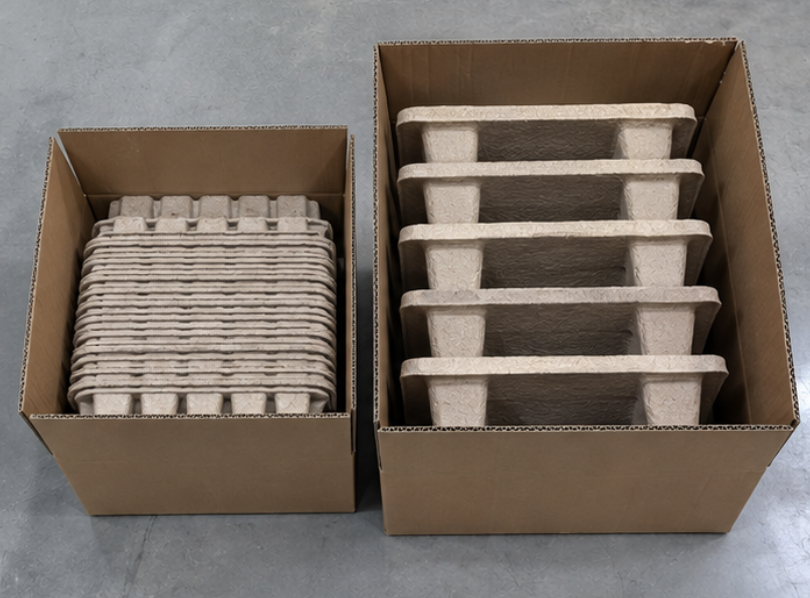
How Better Nesting Can Reduce Shipping Volume
International logistics is where nesting design can create the most visible cost difference. Molded pulp packaging is lightweight, so shipment cost is often influenced more by volume than by actual material weight.
If trays create tall stacks and large cartons, the shipment may reach its volume limit before reaching the maximum allowable weight. This means buyers can end up paying to transport empty space.
A more efficient nesting design can increase the quantity of trays loaded on each pallet and improve container utilization. For frequent export programs, this can reduce freight cost per tray and lower the total landed cost of the packaging.
However, trays should not be designed to nest as tightly as possible without considering handling. If the stack is too tight, operators may have difficulty separating individual trays on the production line. Excessive nesting pressure can also create edge damage or deformation.
Good packaging engineering therefore needs to balance nesting efficiency with practical denesting. The tray should stack compactly but still allow operators or automated equipment to separate each piece reliably.
During sample approval, buyers can ask the supplier to provide stack height, carton quantity, carton dimensions and recommended pallet configuration. These details allow procurement teams to estimate logistics cost before committing to large scale production.
For large annual orders, it may also be useful to compare different tray structures and calculate how much shipping volume could be saved over the complete purchasing cycle rather than focusing only on the price of a single tray.
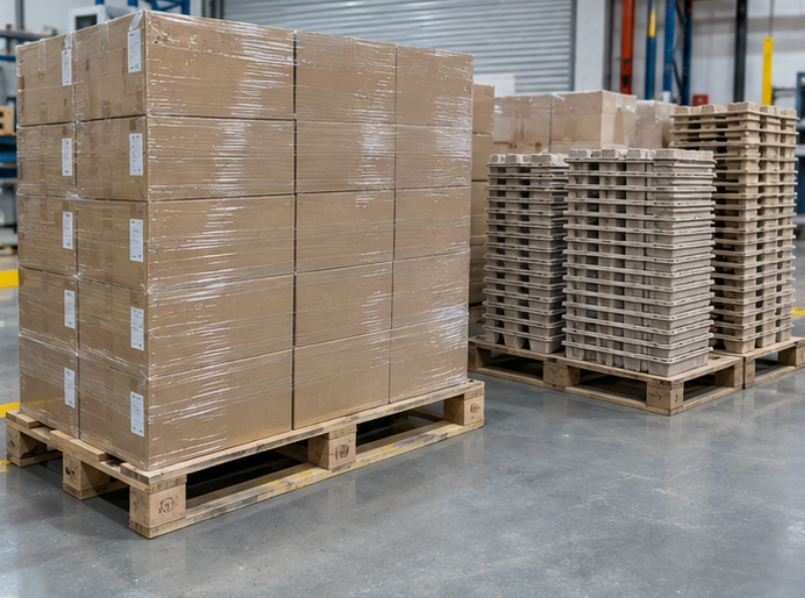
Evaluate Nesting Before Molded Pulp Packaging Enters Mass Production
Molded pulp tray nesting design affects much more than appearance. It can influence carton size, warehouse utilization, pallet quantity, container loading and the final shipping cost of the packaging.
For buyers, the best approach is to evaluate packing density during the early packaging development stage. A well designed molded pulp tray should protect the product, nest efficiently and remain easy to separate during actual production. Working with the supplier on tray geometry, carton quantity and pallet configuration before mass production can help reduce hidden logistics costs and improve the total value of the packaging project.