












For buyers sourcing molded pulp packaging, material selection is one of the most important factors behind both packaging strength and total procurement cost. Many buyers first compare price, tray shape, or sample appearance, but the real performance of molded pulp packaging depends heavily on what material is used and how that material is processed. The same tray design can perform very differently depending on fiber type, pulp quality, density, and moisture behavior. Material choice influences compression strength, cushioning performance, dimensional stability, surface finish, moisture resistance, and even packing efficiency. At the same time, it directly affects raw material cost, production complexity, reject rate, and long-term shipping risk. That is why buyers should understand how material selection impacts both protective performance and total packaging value before placing an order.
Fiber Type And Pulp Quality: Material Choice Directly Shapes Packaging Strength
The first way material selection affects molded pulp packaging is through basic fiber performance. Different pulp materials create different levels of strength, flexibility, density, and surface quality. In general, buyers will often encounter packaging made from recycled pulp, virgin fiber, or a mixed pulp solution. Each option has its own balance between protection, appearance, sustainability, and cost.
Recycled pulp is widely used because it is cost-effective and environmentally attractive. For many standard industrial trays and transport inserts, recycled material can provide sufficient strength when the structure is designed well. However, the performance of recycled pulp depends on source consistency and processing quality. If the material quality fluctuates too much, the tray may show more surface roughness, lower density stability, or reduced structural consistency. For packaging used with fragile, heavy, or high-value products, buyers should verify whether recycled material alone can still achieve the required protection level.
Virgin fiber or higher-grade mixed pulp may improve structural integrity, cleaner surface finish, and dimensional consistency. This is especially important for electronics, consumer devices, premium products, or packaging that needs closer product fit and better presentation. Stronger and cleaner fibers usually help trays resist deformation more effectively and reduce weak spots in repeated production. In short, the material itself sets the baseline for what the packaging can achieve. Before discussing cost, buyers should first ask whether the chosen fiber system is truly appropriate for the weight, fragility, and positioning needs of the product.
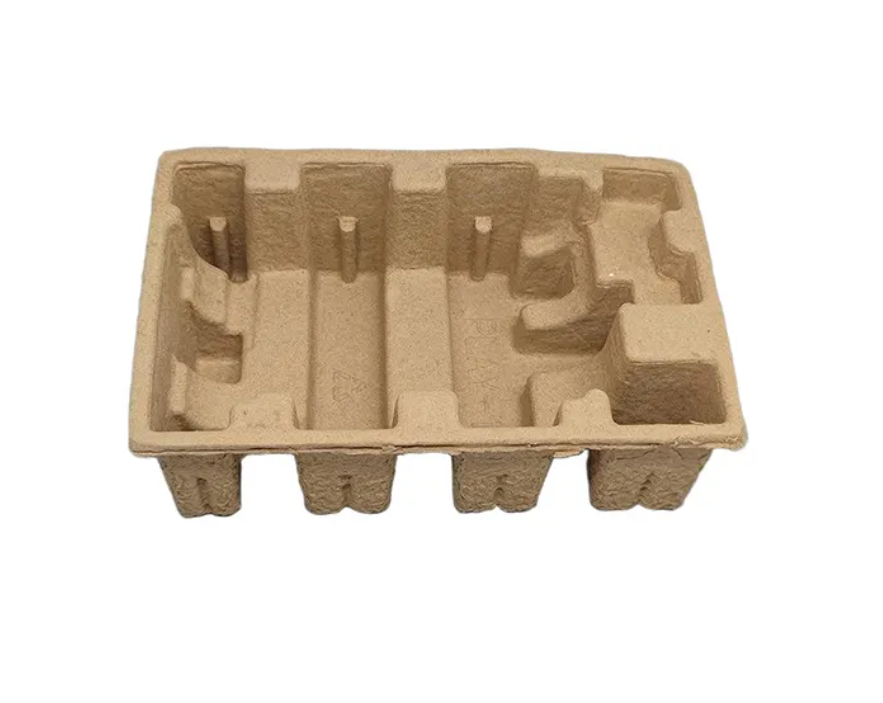
Density, Thickness, And Moisture Behavior: Material Performance Affects Real Protection And Production Cost
Material selection does not only mean choosing a fiber type. It also affects how dense the tray becomes, how thick the walls need to be, and how the packaging behaves in humidity and long-distance shipping conditions. These factors have a direct influence on both protective strength and manufacturing cost.
A higher-density material can improve compression resistance, shape retention, and support performance. This may allow the supplier to achieve better protection without making the tray excessively large or bulky. In many industrial applications, especially for tools, metal parts, glass items, or heavy components, stronger density control can reduce collapse risk during stacking and shipping. On the other hand, if the material is weaker or less stable, the supplier may need to increase thickness or add more structural reinforcement, which raises material usage, drying time, and unit cost.
Moisture behavior is another critical issue. Molded pulp packaging often moves through warehouses, coastal environments, and sea freight conditions. If the selected material absorbs moisture too easily or loses rigidity under humid conditions, its protective value drops quickly. Buyers should therefore ask how the supplier controls moisture content, drying process, and post-production stability. In some cases, a slightly more expensive material solution can reduce warping, softening, and shipping damage, which lowers the real total cost later. This is why the cheapest raw material is not always the most economical packaging choice.
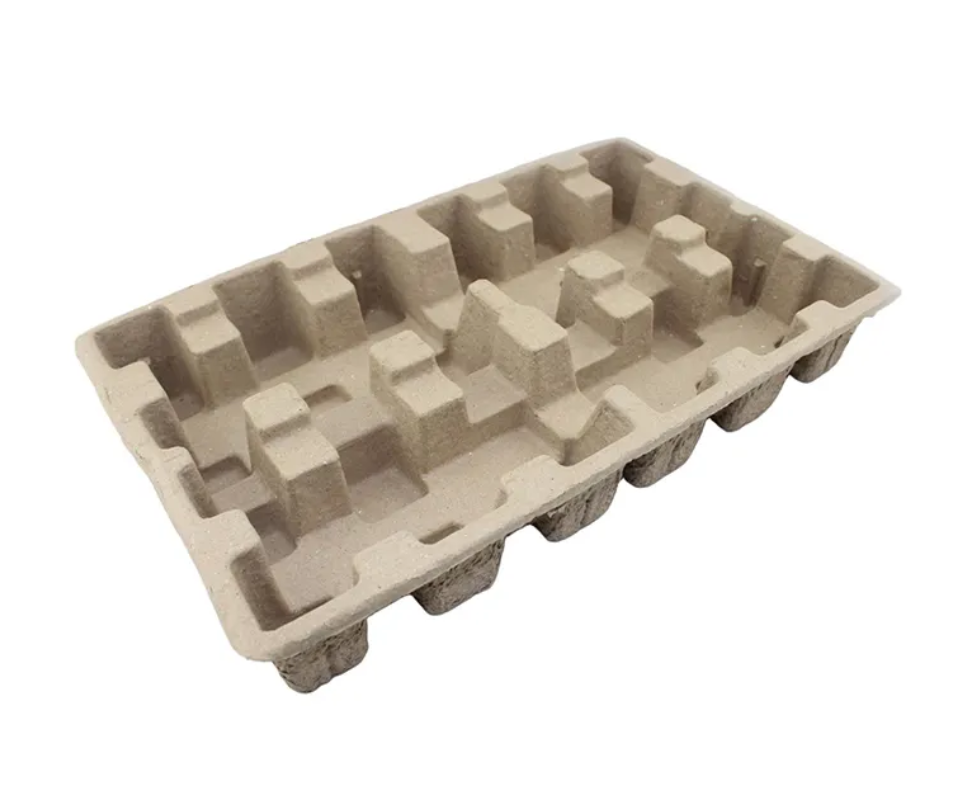
Material Choice And Total Cost: Buyers Should Evaluate Lifecycle Value, Not Just Unit Price
From a procurement perspective, the biggest mistake is to look at material choice only through unit price. In reality, the material used in molded pulp packaging affects tooling efficiency, production speed, reject rate, packing performance, shipping safety, and reorder consistency. These factors together determine the total cost of ownership.
For example, a lower-cost material may seem attractive in quotation, but if it creates more dimensional variation, rougher edges, weaker support, or higher moisture sensitivity, the buyer may face added costs later through slower packing, more rejected parts, damaged goods, customer complaints, or unstable repeat orders. By contrast, a better material system may increase the tray price slightly while reducing hidden costs across the packaging process. That includes lower damage rates, smoother line operation, better stackability, and more stable delivery performance.
This is why professional buyers should ask suppliers not only what material is used, but why that material is recommended for the application. Is it selected to reduce cost only, or to balance protection, process stability, and export performance? A strong supplier should be able to explain the material logic behind the packaging design. The best procurement decision is usually not the lowest material cost option. It is the option that delivers the best balance between strength, manufacturability, consistency, and shipping reliability.
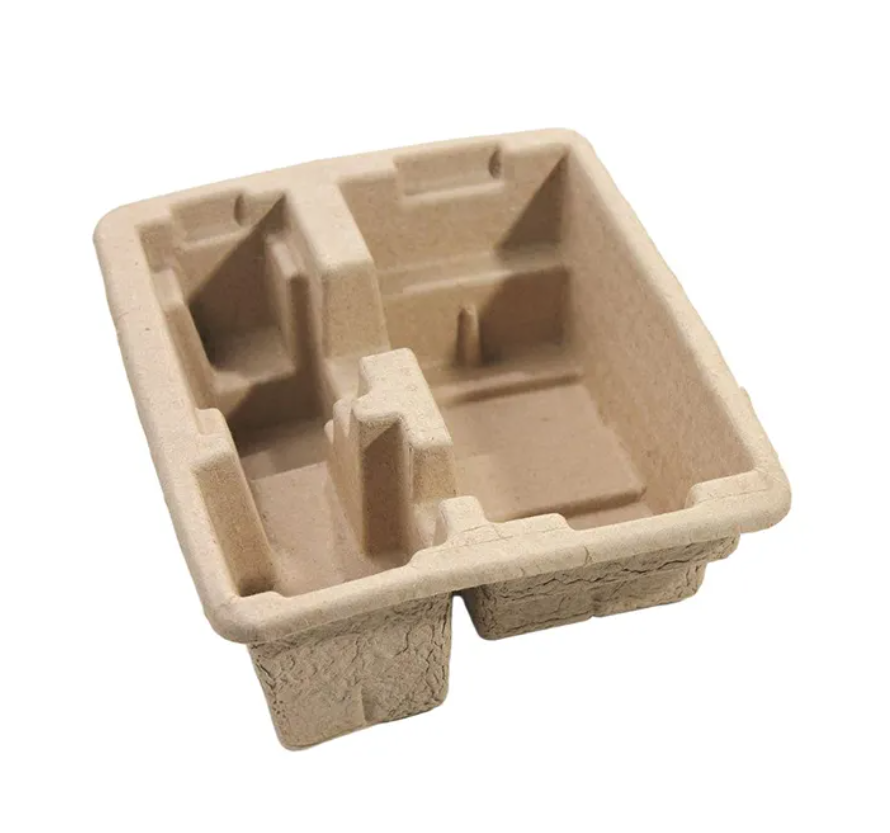
Related product and article resources
For procurement comparison and technical evaluation, readers can continue with these related product pages and supporting articles.
Material selection affects molded pulp packaging far beyond raw material price. It shapes the tray’s structural strength, dimensional stability, moisture performance, production consistency, and overall shipping reliability. For buyers, the right question is not simply which material is cheaper, but which material creates the best balance between protection and total cost. In practical procurement, the best molded pulp packaging solution is usually the one that uses the right material for the real product, shipping environment, and packaging process.