












For buyers, a reliable molded pulp packaging manufacturer is not defined by one good sample or one attractive quotation. It is defined by whether the factory has a repeatable quality control process that can protect product fit, structural strength, appearance consistency, and shipment reliability across every order. In practical sourcing, the strongest quality systems usually combine three layers: controlled incoming materials and production setup, disciplined in-process inspection, and final inspection with traceability and corrective action. That logic is closely aligned with the broader quality-management principles behind ISO 9001, which focuses on consistent delivery, documented control, and continual improvement.
Incoming Material Control And Production Setup: Quality Should Start Before Mass Production Begins
A reliable molded pulp packaging manufacturer should begin quality control at the incoming-material stage. Buyers should expect the factory to verify pulp source, fiber consistency, moisture-related behavior, additives, and any surface-treatment materials before they enter production. For food-contact applications, this stage becomes even more important because the supplier should also control the compliance status of paper, paperboard components, additives, coatings, and related contact substances rather than relying on generic claims. EU food-contact rules and FDA food-contact guidance both reflect the importance of controlled material selection and documented compliance support.
Before full production starts, the factory should also control the setup stage carefully. That means checking mold condition, confirming approved drawings, verifying trial output against key dimensions, and conducting first-article approval before releasing the job into full production. In procurement terms, this is where many future problems can be prevented. If the mold is worn, the setup is unstable, or the first pieces are not measured against the approved specification, dimensional drift and structural inconsistency are much more likely to appear later. A strong manufacturer should therefore treat startup verification as a formal quality gate, not an informal production habit. This expectation is a procurement inference grounded in ISO 9001’s emphasis on controlled processes and documented consistency.
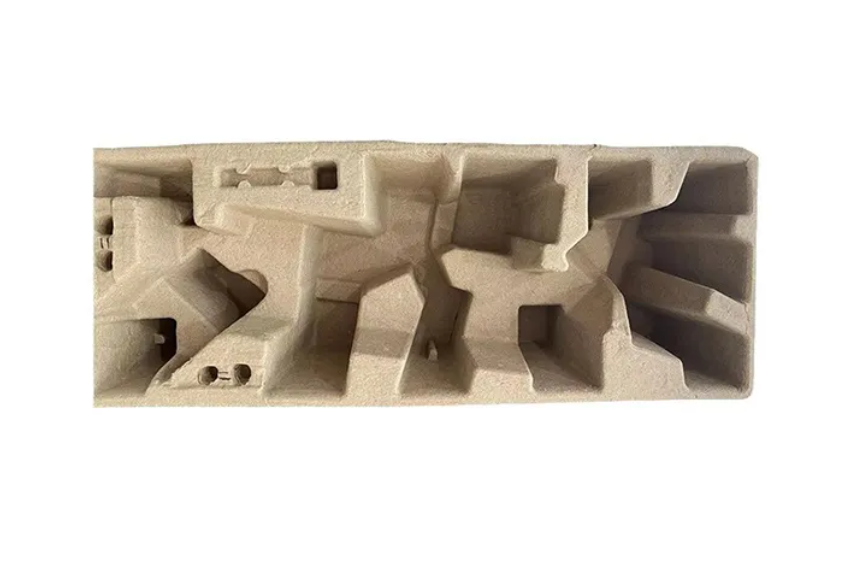
In-Process Inspection: Reliable Manufacturers Control Dimensions, Moisture, Shape, And Defects During Production
During production, quality control should move beyond occasional visual checks. A reliable manufacturer should have in-process inspection points that monitor dimensions, wall thickness, tray shape, warping, surface condition, moisture status, and overall structural consistency. In molded pulp packaging, process variation can come from pulp concentration, forming pressure, drying conditions, trimming, and handling. If these variables are not monitored during the run, the factory may produce a large number of parts before realizing that fit or strength has already shifted out of spec. ISO’s quality-management framework supports this kind of process-based control rather than relying only on end-of-line sorting.
For buyers, the most useful question is not “Do you inspect quality?” but “What do you inspect during production, how often, and against what standard?” A reliable manufacturer should be able to identify critical dimensions and key appearance or protection features, then measure them at defined intervals. For food-contact packaging, controlled manufacturing is also reinforced by EU GMP rules for food-contact materials, which require documented quality assurance and quality control systems. That means a serious supplier should not only monitor output but also maintain evidence that the process stayed under control during the order.
Just as important, defective parts should be identified and isolated during production instead of being mixed into finished stock. Warped trays, weak corners, rough edges, uneven trimming, or abnormal shrinkage should trigger containment and review. In real procurement, this is one of the clearest differences between a weak factory and a reliable one: a weak factory tries to sort quality at the end, while a reliable factory tries to stop variation as soon as it appears. That conclusion is an operational inference supported by the process-control logic reflected in ISO 9001 and food-contact GMP documentation requirements.
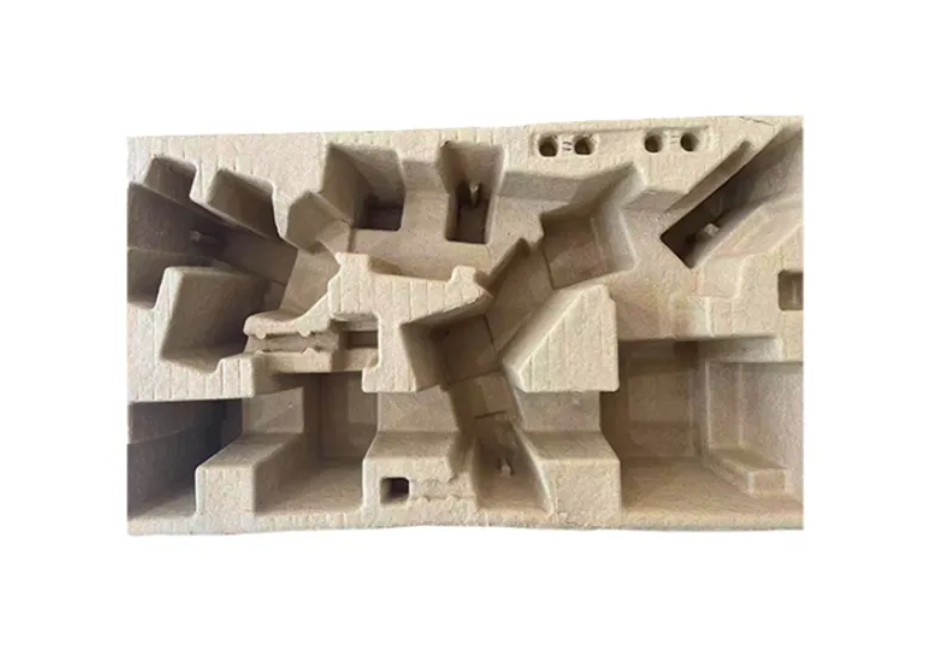
Final Inspection, Traceability, And Corrective Action: Good Quality Control Must Continue After Production Ends
A reliable molded pulp packaging manufacturer should finish with a controlled final-inspection stage before shipment. Buyers should expect checks on key dimensions, tray nesting or stacking condition, visual defects, dryness, carton condition, packing quantity, and shipment readiness. But final inspection alone is not enough. The factory should also be able to trace finished goods back to raw-material lots, mold identification, production date, shift, and inspection records if a complaint appears later. ISO 9001 emphasizes documented systems and continual improvement, while EU food-contact rules also refer to traceability and compliance documentation as important parts of control.
For buyers, traceability is what turns quality control from a promise into a manageable system. If the supplier cannot identify which batch was affected, which mold was used, or which inspection record applied, then problem resolution becomes slow and uncertain. A reliable manufacturer should also have a corrective-action process that investigates root cause, implements containment, and prevents recurrence. In practical terms, that means customer complaints, shipment defects, or repeat-order variation should not only be fixed for one batch. They should trigger changes in process control, work instructions, tooling maintenance, or inspection criteria where needed. This is consistent with ISO’s focus on continual improvement and systematic control.
The best manufacturers also manage change formally. If raw material, tooling, structure, coating, or production method changes, the buyer should be notified before silent variation reaches the next shipment. This expectation is especially important in packaging projects tied to precise fit, food-contact use, or stable repeat orders. In procurement, change control is often overlooked until a shipment fails. But a factory that controls change well is usually far more dependable than one that only reacts after complaints. That conclusion is a procurement inference supported by the broader documentation and control principles in ISO 9001 and EU compliance frameworks.
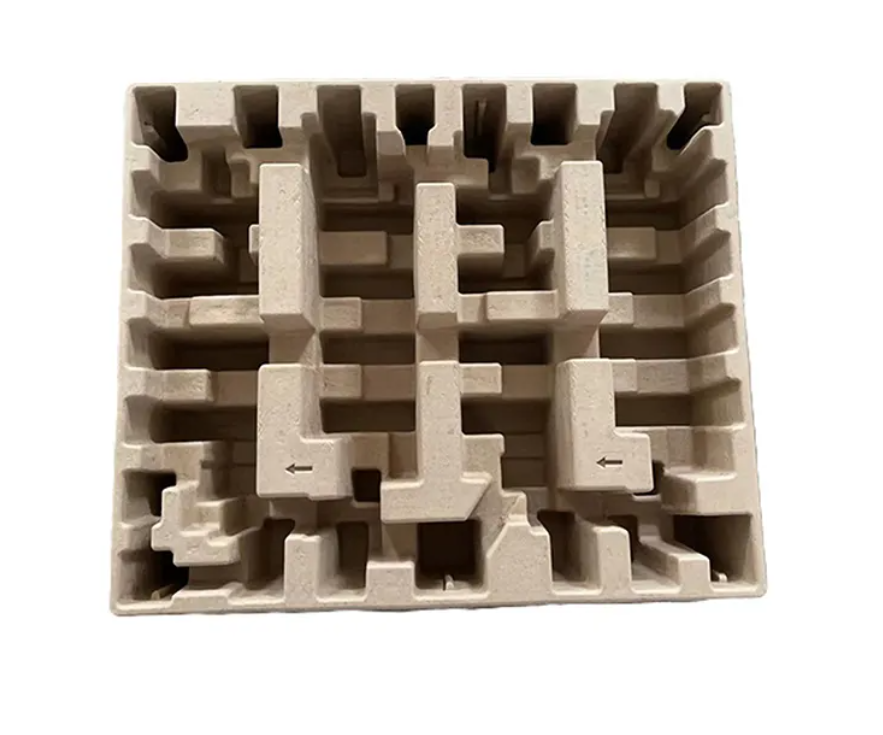
A reliable molded pulp packaging manufacturer should not depend on final sorting alone. Buyers should look for a full quality control process that starts with incoming-material verification and setup approval, continues with disciplined in-process inspection, and ends with final inspection, traceability, corrective action, and change control. That kind of system is what makes repeat orders safer, complaint handling faster, and long-term supply more dependable. In real procurement, a manufacturer becomes trustworthy not when it says quality is stable, but when it can show how stability is built and maintained in every stage of production.