












Custom Molded Pulp Inserts For Electronics: Buyer Guide
Custom molded pulp inserts are widely used for electronics packaging because they provide product positioning, cushioning protection and sustainable material advantages. For buyers, the key is to choose the right structure, material, mold design and testing process before mass production.
Get Quote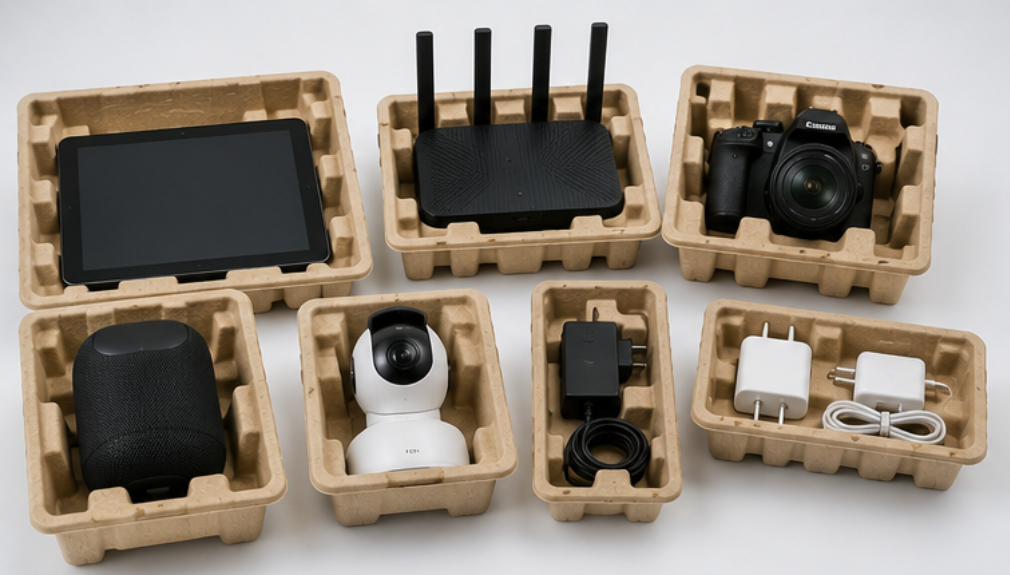
1. Confirm Product Size, Weight And Fragile Areas
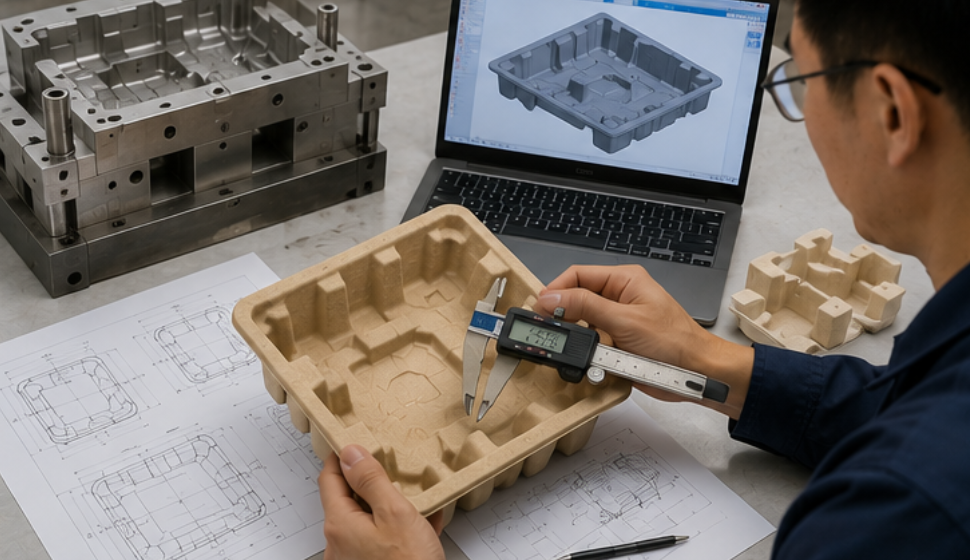
Electronics products often have screens, corners, ports, lenses, buttons, circuit areas or accessories that need extra protection. Before developing custom molded pulp inserts, buyers should provide accurate product size, weight and fragile points.
If 3D files, drawings or physical samples are available, the manufacturer can design the cavity and support structure more accurately. This reduces repeated revisions and helps the insert fit the product securely.
2. Design Proper Positioning And Cushioning Structure
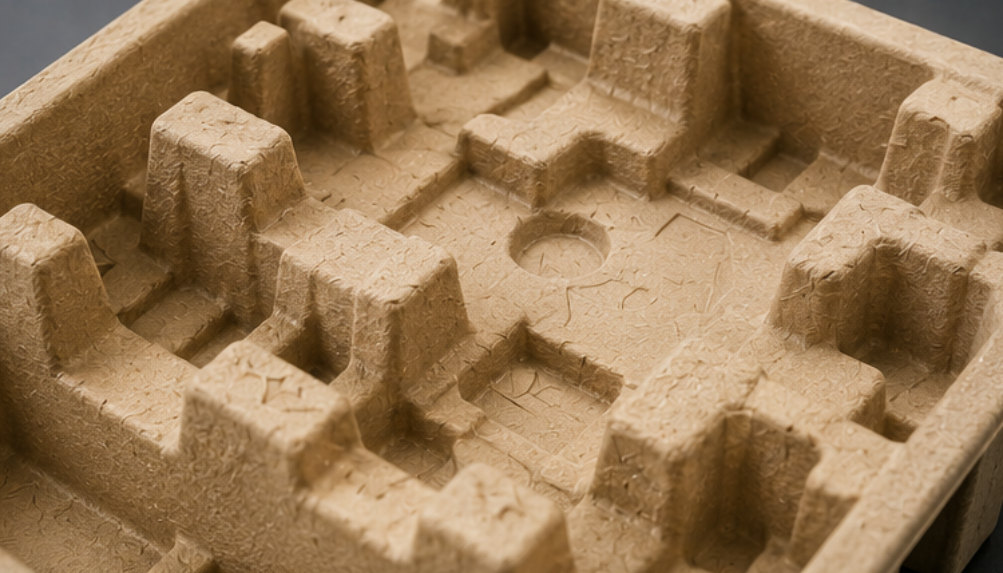
A good molded pulp insert should hold the electronic product firmly while leaving enough buffer space around sensitive areas. The design should include support ribs, raised points, reinforced corners and cushioning zones.
The product should not move freely inside the carton. At the same time, the insert should not apply too much pressure on fragile parts. Good structure design is the foundation of damage reduction during export shipping.
3. Choose Suitable Material And Surface Quality
Electronics packaging may require better surface cleanliness, stable shape and controlled moisture. Molded pulp inserts can be made from recycled pulp, virgin pulp, bamboo pulp, sugarcane bagasse or mixed fiber materials.
For standard protective packaging, recycled pulp is often cost-effective. For higher-end electronics, buyers may prefer cleaner color, smoother surface and better appearance to match the product image.
4. Consider Anti-Static And Additional Protection
Some electronic components may need anti-static bags, protective films or additional inner packaging. Standard molded pulp inserts mainly provide cushioning and positioning, so buyers should explain whether the product has special ESD or cleanliness requirements.
For sensitive components such as circuit boards, sensors or precision modules, the molded pulp insert should be evaluated together with other protective materials to create a complete packaging solution.
5. Match The Insert With Carton And Accessories
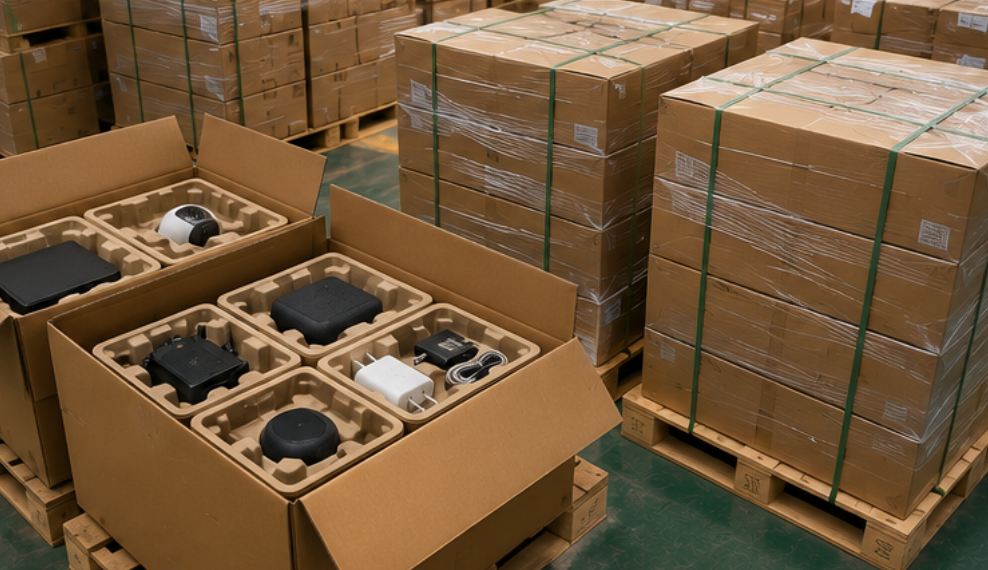
Electronics packaging often includes the main product, cables, chargers, manuals and other accessories. The molded pulp insert should be designed together with the outer carton and accessory layout.
A well-planned insert can improve packing efficiency, reduce missing accessories and keep the final package neat. It also helps control carton size and shipping cost.
6. Test Samples Before Bulk Production
Before mass production, buyers should test the molded pulp insert under real shipping conditions. Drop testing, compression testing and vibration testing can help verify whether the insert provides enough protection.
Testing is especially important for cameras, small appliances, routers, speakers, smart devices and other electronics products. It helps identify weak points before bulk production begins.
Need Custom Molded Pulp Inserts For Electronics?
Hanyang Paper provides custom molded pulp inserts for electronics, accessories, small appliances, industrial components and export packaging projects.
Contact Us Get QuoteRelated product and article resources
For procurement comparison and technical evaluation, readers can continue with these related product pages and supporting articles.