












Sustainable Packaging Materials Buyers Should Compare Before Replacing Plastic
Replacing plastic packaging has become an important sourcing objective for many electronics brands, appliance manufacturers, food companies and consumer product businesses. However, choosing a sustainable packaging material is not as simple as replacing plastic with paper.
Buyers need to compare protection performance, moisture resistance, surface quality, tooling requirements, order volume, recycling options and total packaging cost. A material that works well for a lightweight retail product may not be suitable for a heavy home appliance or a fragile glass bottle.
Before changing an existing plastic tray, EPS cushion or thermoformed insert, procurement teams should understand the strengths and limitations of the main sustainable packaging materials available today.
Compare Materials Based on Real Packaging Performance
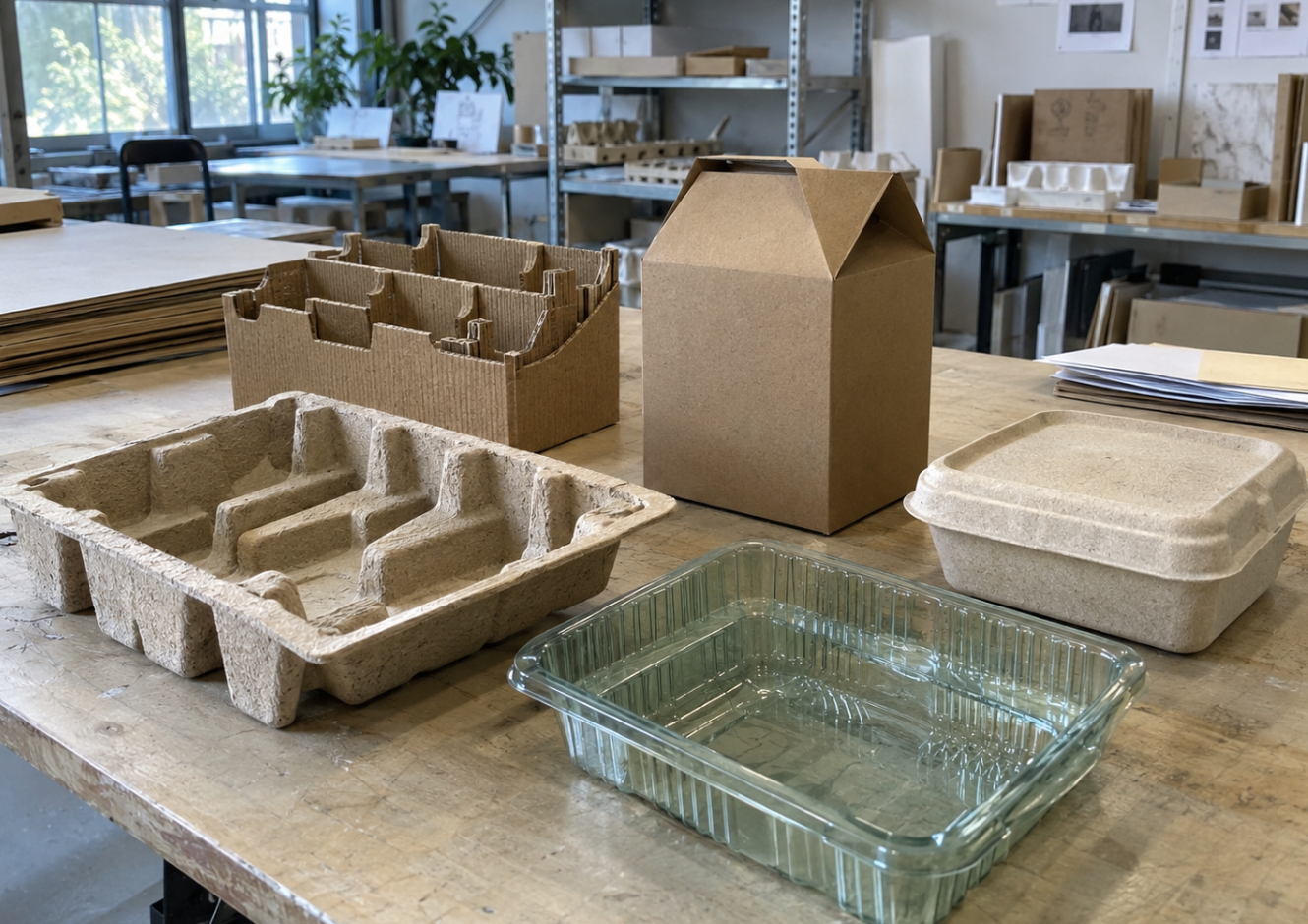
Corrugated paper is one of the most widely used packaging materials because it is economical, recyclable and easy to print. It performs well for outer cartons, partitions and some internal structures. However, corrugated inserts may become bulky when complex three dimensional product support is required.
Paperboard is suitable for folding cartons, sleeves and presentation packaging. It provides a clean printable surface and works well for lightweight products, but it normally offers less cushioning than molded protective packaging.
Bagasse and other plant fiber materials are frequently used for food containers and disposable packaging. These materials can support sustainability goals, but their suitability for durable industrial protection depends on product shape, load requirements and manufacturing process.
Recycled plastic can reduce the use of virgin plastic while retaining many of the performance advantages of traditional plastic trays. However, it is still a plastic based solution and may not meet the objectives of buyers seeking plastic free packaging.
Molded pulp offers a different balance. It can be formed into product specific cavities, support points and cushioning structures using recycled paper fiber or other plant based fibers. This makes it particularly useful for protective packaging applications where buyers want to reduce EPS foam or thermoformed plastic.
Evaluate Protection Cost Appearance and Supply Chain Needs
Protective performance should be the first consideration. Packaging must control product movement, protect fragile areas and withstand expected handling conditions. A sustainable material is not useful if product damage increases during transportation.
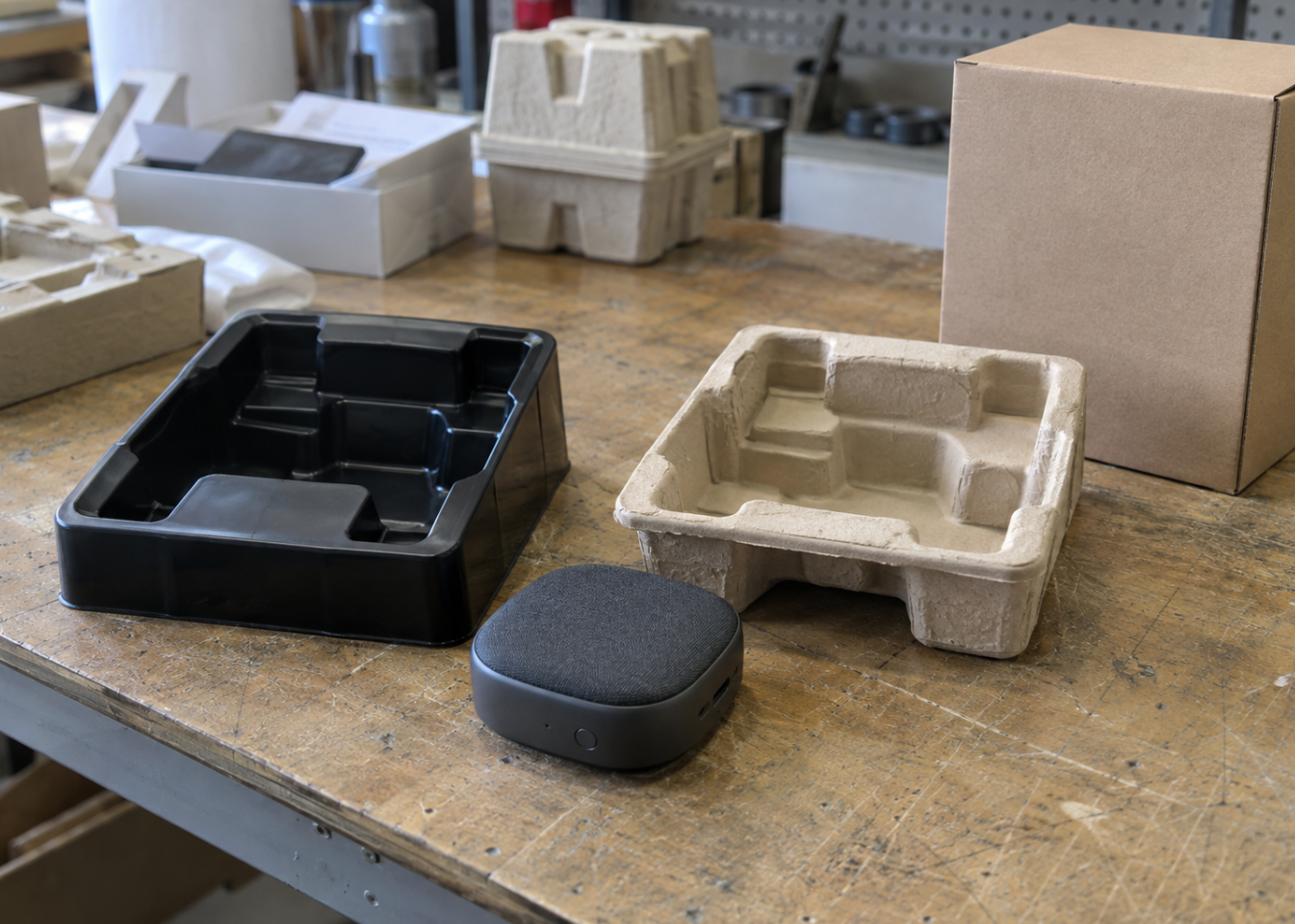
Product weight is especially important. Lightweight electronics may need accurate positioning and a refined surface, while appliances and industrial components may require thicker cushioning zones and reinforced support areas.
Buyers should also consider appearance. Premium electronics, cosmetics and branded consumer products often require packaging that contributes to the unboxing experience. Wet press molded pulp can offer smoother surfaces and cleaner details, while dry press molded pulp is often selected for protective applications where cost and strength are more important than presentation.
Tooling and order volume are another part of the decision. Custom molded pulp packaging normally requires a dedicated mold, so buyers should consider annual demand and product life cycle before starting development.
Logistics should also be included in the calculation. Tray nesting, carton dimensions, pallet loading and shipping volume all affect total landed cost. A packaging material with a slightly higher unit price may still create lower total cost if it uses less storage and shipping space.
Identify Where Molded Pulp Can Replace Plastic More Effectively
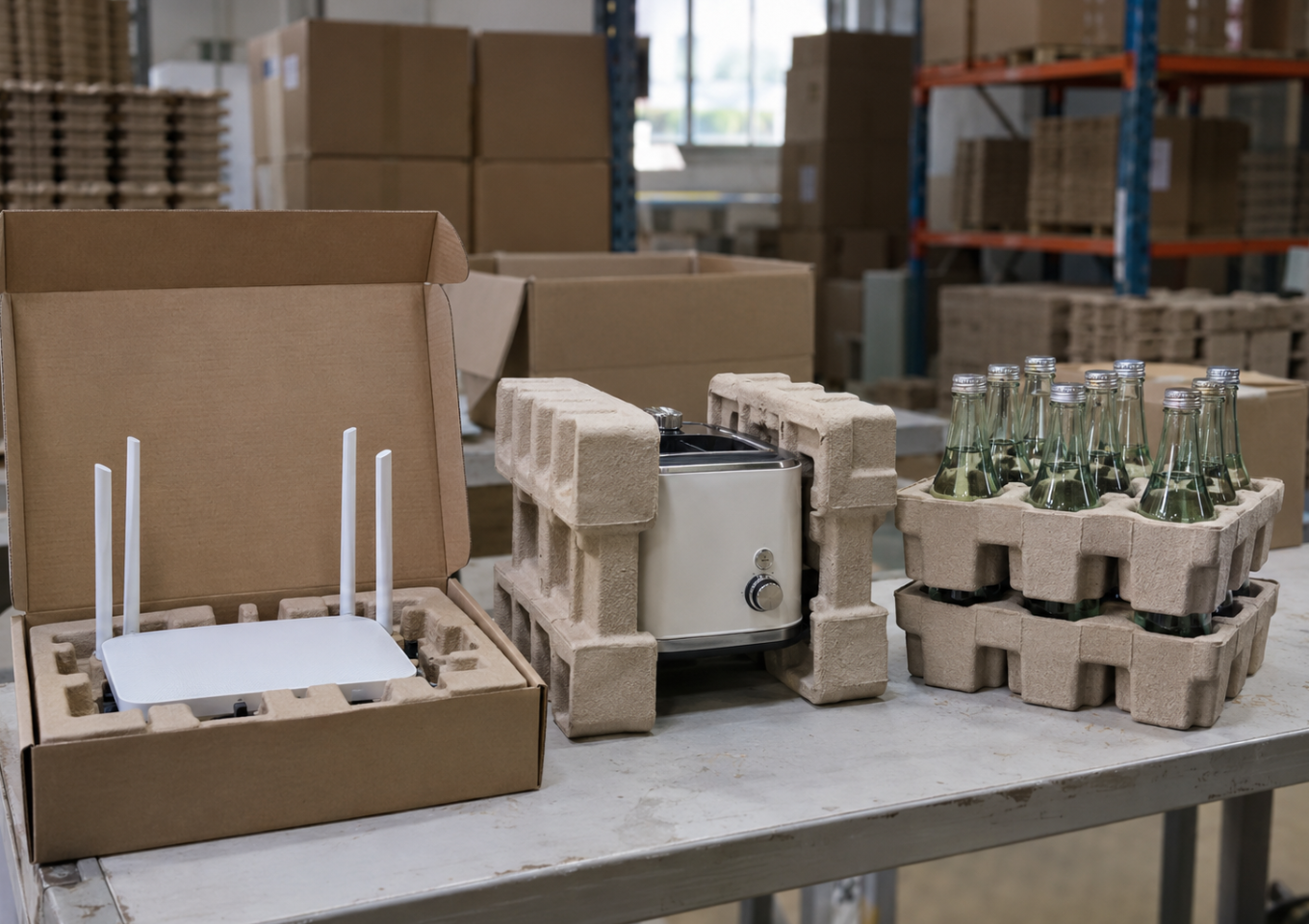
Molded pulp is especially suitable when buyers need custom protective structures without relying on plastic inserts. Electronics, home appliances, wine bottles, cosmetics, tools and other products can all use fiber based packaging designed around the shape of the product.
In electronics packaging, molded pulp can replace thermoformed plastic trays while maintaining separate cavities for devices, cables and accessories. For home appliances, reinforced molded pulp cushions can support heavier products and protect corners during transportation.
For glass bottles and fragile containers, molded fiber structures can separate products and reduce direct contact. In industrial packaging, molded pulp can also be used to locate parts and reduce movement inside the outer carton.
However, buyers should not assume that every plastic component can be replaced by fiber without testing. Products exposed to high moisture, liquid leakage or unusual mechanical loads may require additional evaluation.
The best development process begins with the existing packaging. Buyers can provide the current plastic tray, EPS cushion, product drawing or physical sample so that the supplier can evaluate which functions must be maintained in the new fiber based design.
Sample testing should confirm fit, stacking, compression resistance and transportation performance before mass production. This approach allows sustainability goals to be achieved without sacrificing the practical requirements of the supply chain.
Choose Sustainable Packaging Around Product Requirements
There is no single sustainable packaging material that is ideal for every product. Corrugated paper, paperboard, plant fiber, recycled plastic and molded pulp all serve different functions within modern packaging systems.
For buyers replacing plastic protective packaging, molded pulp can provide a strong combination of product specific design, cushioning, recyclability and reduced plastic use. The best results come from comparing materials based on actual product weight, protection requirements, appearance, logistics and total cost before selecting a final solution.