












What Buyers Should Test Before Replacing Plastic Packaging With Molded Pulp Trays
Replacing plastic packaging with molded pulp trays can improve sustainability and reduce plastic use, but buyers should test protection, strength, moisture resistance, product fit and shipping performance before mass production. Proper testing helps avoid product damage, tray deformation and unexpected packaging failures.
Get Quote1. Product Fit And Positioning Test
The first test is whether the molded pulp tray can hold the product correctly. The product should fit securely without moving too much inside the tray, but the tray should not press too tightly on fragile areas.
Buyers should test the tray with the real product, accessories and outer box. This helps confirm cavity size, support points, loading direction and overall packaging layout before opening bulk production.
2. Drop Test For Shipping Impact
Plastic trays and molded pulp trays may behave differently during impact. Before switching materials, buyers should perform drop testing to check whether the molded pulp tray can protect the product during handling and transportation.
Drop tests help identify weak points such as corners, edges, screens, glass surfaces and product contact areas. If damage occurs, the tray structure should be adjusted before mass production.
3. Compression And Stacking Test
Molded pulp trays must resist pressure during warehouse storage, carton stacking and export shipping. Compression testing helps verify whether the tray can maintain its shape under load.
Buyers should test both the individual tray and the complete carton packing system. This is especially important for ocean shipping, large-volume export orders and products packed in multiple layers.
4. Moisture And Deformation Test
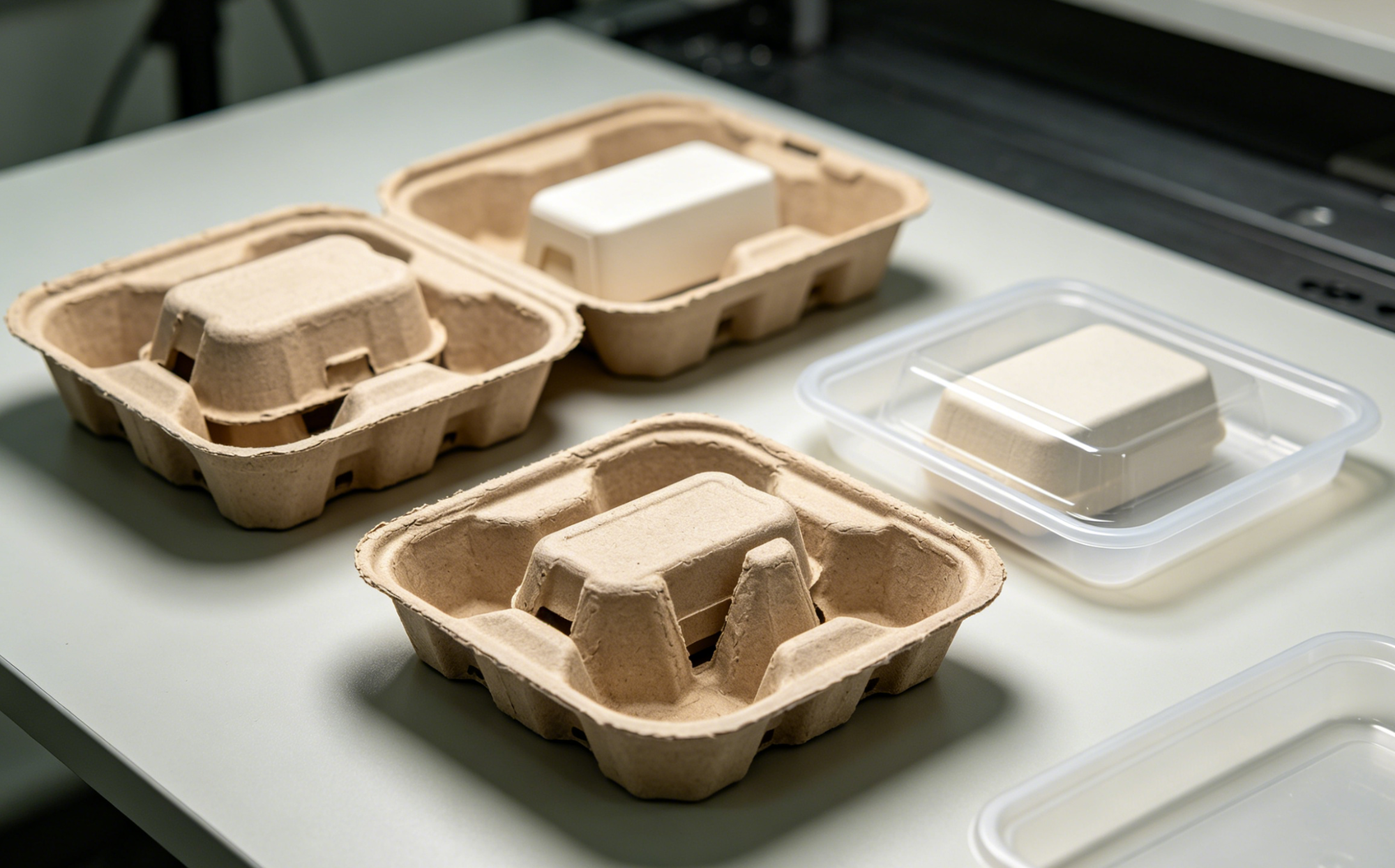
Molded pulp packaging is fiber-based, so moisture control is important. Buyers should check whether the tray deforms, softens or loses strength under humid storage or long-distance shipping conditions.
For sea freight or humid destination markets, moisture testing, drying control and proper carton packing should be confirmed before replacing plastic packaging.
5. Surface Quality And Cleanliness Test
When molded pulp trays are used for electronics, cosmetics, food packaging or retail products, surface quality matters. Buyers should check fiber shedding, rough edges, odor, color consistency and surface cleanliness.
For premium products, smoother molded pulp material and better edge finishing may be required. The packaging should protect the product without reducing the brand’s visual quality.
6. Carton Compatibility And Packing Efficiency Test
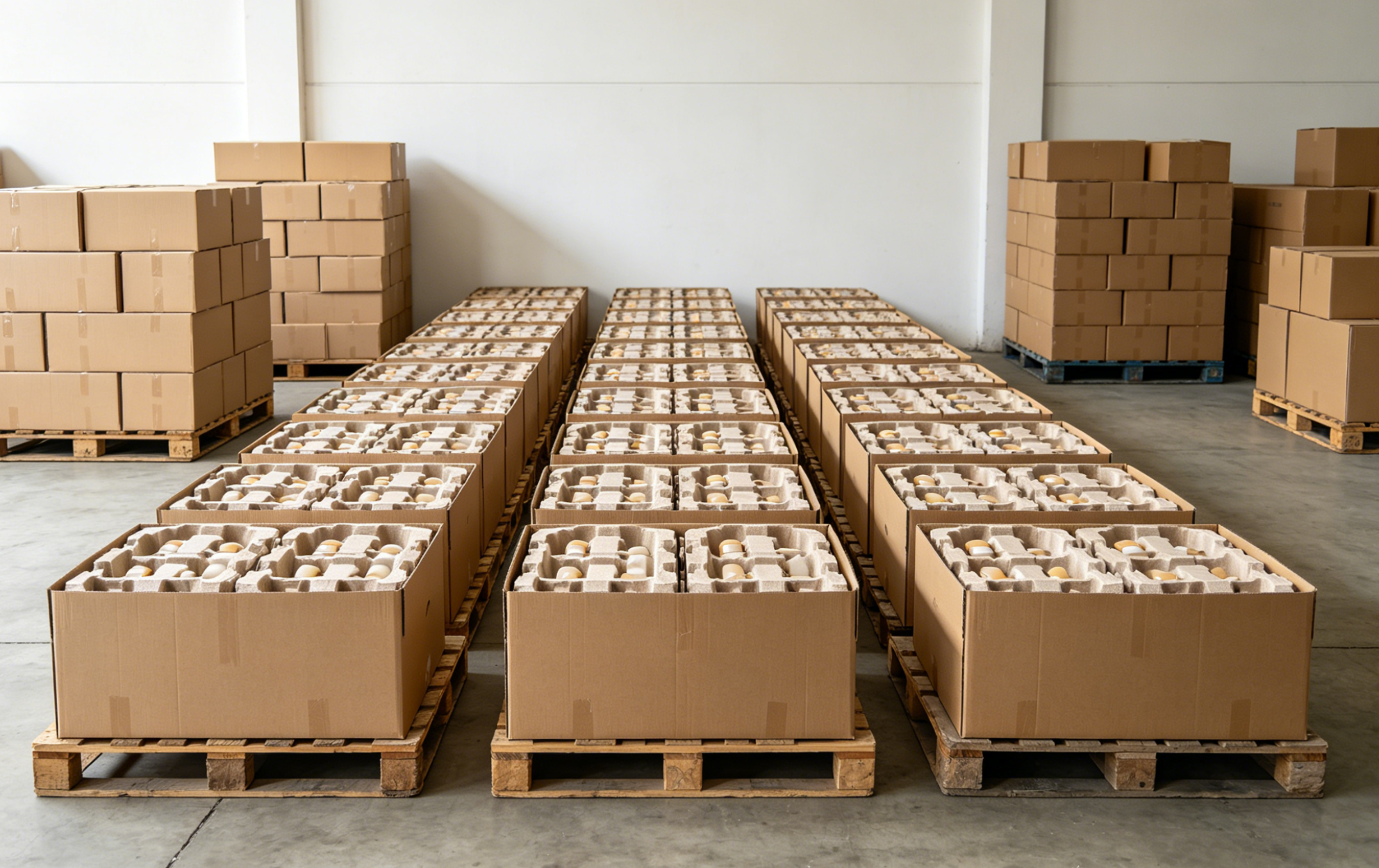
A molded pulp tray should work with the outer carton, pallet layout and shipping method. Buyers should check whether the new tray changes carton size, pieces per carton, pallet loading or container utilization.
The best packaging solution should reduce plastic use while maintaining protection, packing efficiency and total logistics cost. A reliable molded pulp packaging supplier can help optimize tray structure before bulk orders.
Need To Test Molded Pulp Trays Before Replacing Plastic Packaging?
Hanyang Paper provides custom molded pulp trays, protective inserts, sample development and export-ready packaging support for buyers replacing plastic trays and foam inserts.
Contact Us Get Quote