












Molded Pulp Packaging For Export: How To Prevent Product Damage During Shipping
Export shipping exposes products to vibration, impact, stacking pressure, humidity and repeated handling. Molded pulp packaging can reduce product damage by providing stable positioning, cushioning protection and a more sustainable alternative to plastic trays and EPS foam.
Get Quote1. Identify The Main Damage Risks During Export Shipping
Before designing export packaging, buyers should understand how product damage usually happens. Common risks include drop impact, vibration, carton compression, product movement, corner damage and collision between products inside the carton.
Different products require different protection strategies. Electronics need stable positioning and shock absorption. Glass products need impact separation. Food and beverage packaging needs stacking stability, while industrial components may need stronger load-bearing support.
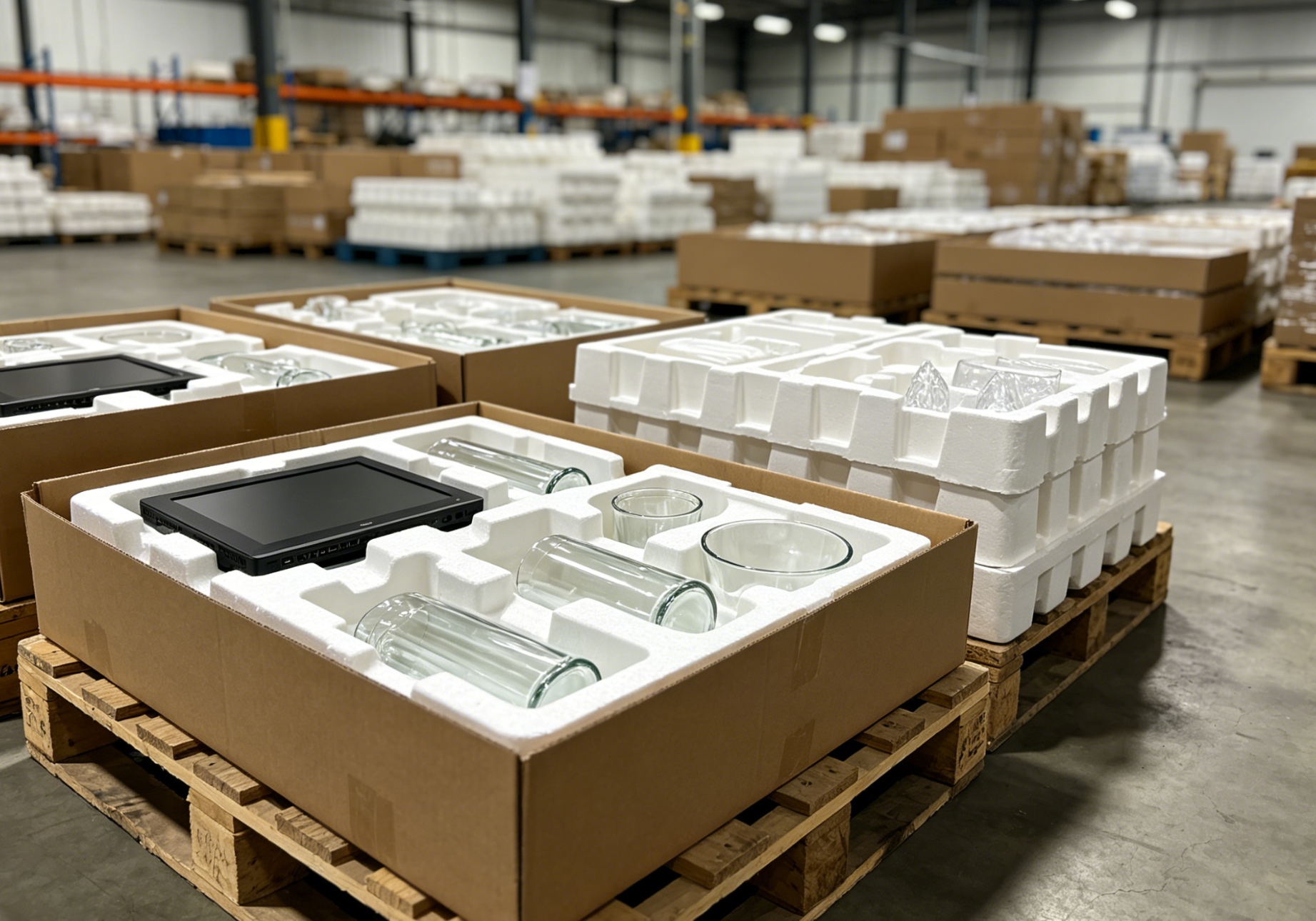
2. Use Custom Molded Pulp Inserts To Fix Products In Position
Product movement inside the carton is one of the main causes of shipping damage. Custom molded pulp inserts can be designed according to the product’s exact size, shape, weight and fragile points.
Proper cavities, support ribs and contact points help hold the product securely. This reduces movement during ocean shipping, air freight, warehouse handling and last-mile delivery.
3. Design Cushioning Zones Around Fragile Areas
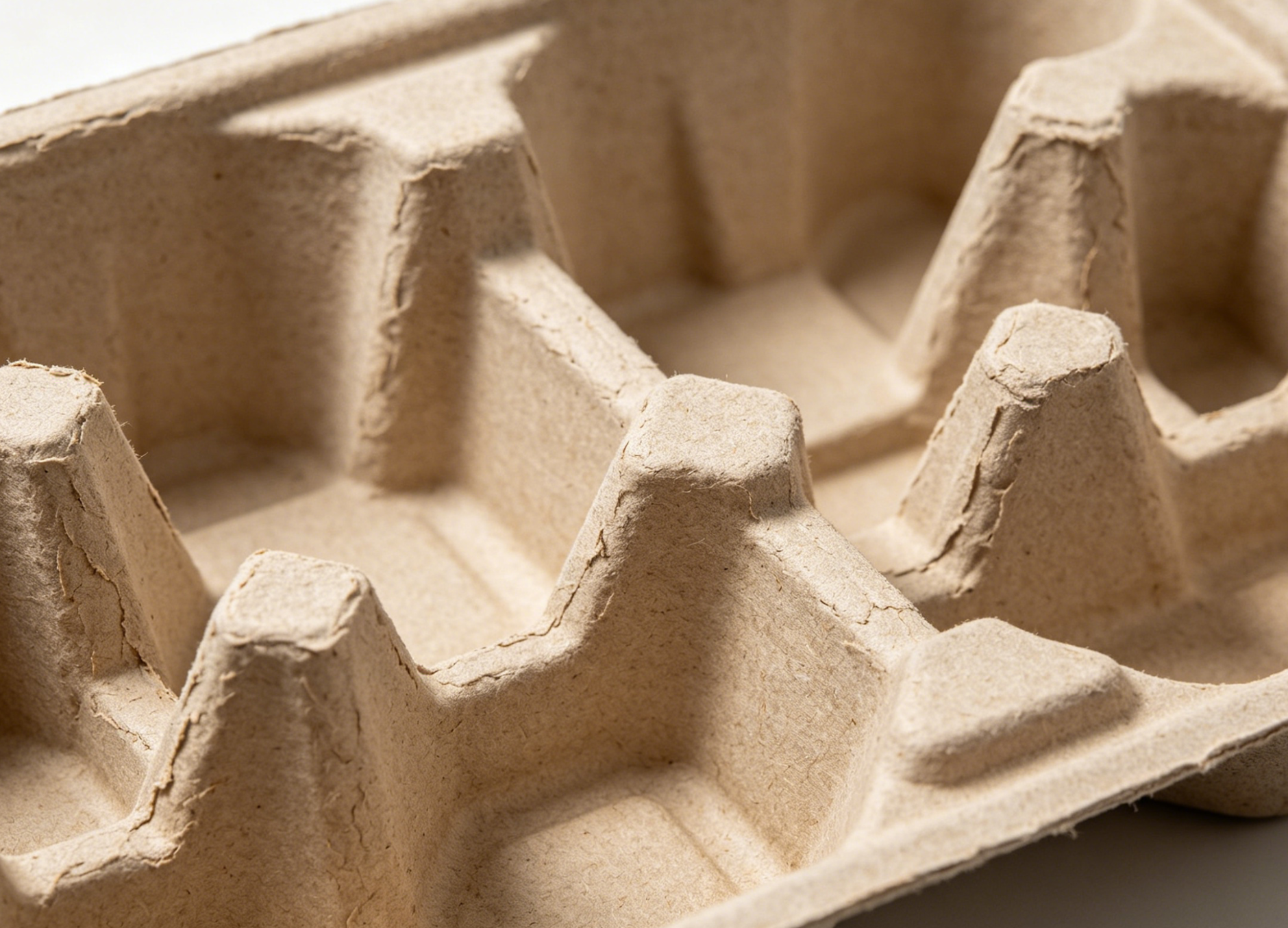
A molded pulp tray should not only hold the product; it should absorb impact energy before it reaches fragile areas. For export packaging, cushioning zones should be designed around corners, edges, screens, lenses, glass surfaces and sensitive components.
Reinforced ribs, raised support points and buffer gaps between the product and outer carton can help reduce direct impact. This is especially important for electronics, glass bottles, cosmetics, appliances and high-value retail products.
4. Match Molded Pulp Packaging With The Outer Carton
Molded pulp packaging should be designed together with the outer carton. If the carton is too large, the insert may shift. If the carton is too tight, the product may receive direct pressure.
Buyers should confirm carton size, tray stacking direction, pieces per carton, pallet loading and container utilization. A complete packaging system helps reduce product damage and control total logistics cost.
5. Control Moisture And Deformation During Shipping
During ocean shipping, molded pulp packaging may face humidity, temperature changes and long transit time. If the material is not properly dried or packed, trays may soften, deform or lose stacking strength.
Buyers should confirm drying process, moisture control, material density and warehouse storage conditions. For humid destinations or long sea freight routes, carton protection and pallet wrapping should also be planned carefully.
6. Test Packaging Before Bulk Export Orders
Before mass production, buyers should test molded pulp packaging under realistic shipping conditions. Drop testing, compression testing, vibration testing and stacking tests can help verify whether the packaging provides enough protection.
Testing helps identify weak points before bulk production and reduces risk during export shipment. A reliable molded pulp packaging manufacturer should help buyers optimize structure, material density and packing method based on actual product requirements.
Need Export-Ready Molded Pulp Packaging?
Hanyang Paper provides custom molded pulp packaging, protective inserts, tray design, sampling, testing support and export packing solutions for international buyers.
Contact Us Get Quote