












The Science of Static Dissipation: Integrating ESD Protection at the Material Level
Creating reliable ESD (Electrostatic Discharge) protection from a material as natural as molded pulp requires foundational innovation. At Hanyang, the process begins with the formulation of conductive pulp compounds. The base material—often high-quality recycled paper fiber—is uniformly infused with specially selected carbon-based additives or conductive polymers during the pulping stage. This ensures the antistatic properties are not a superficial coating but an intrinsic characteristic distributed evenly throughout the entire three-dimensional matrix of the tray. The result is a material with a precisely engineered surface resistivity, typically within the 10^3 to 10^6 ohms/square range, which qualifies it as static-dissipative. This controlled conductivity allows any static charge that accumulates on a sensitive component—such as a PCBA, semiconductor wafer, or hard drive—to bleed off safely and gradually to ground, preventing a sudden, damaging discharge. This inherent ESD safety is durable and consistent, unaffected by surface abrasion or humidity variations during transit, providing a fundamental safeguard that plastic trays with topical coatings cannot match.
Precision by Design: Structural Engineering for Secure and Safe Handling
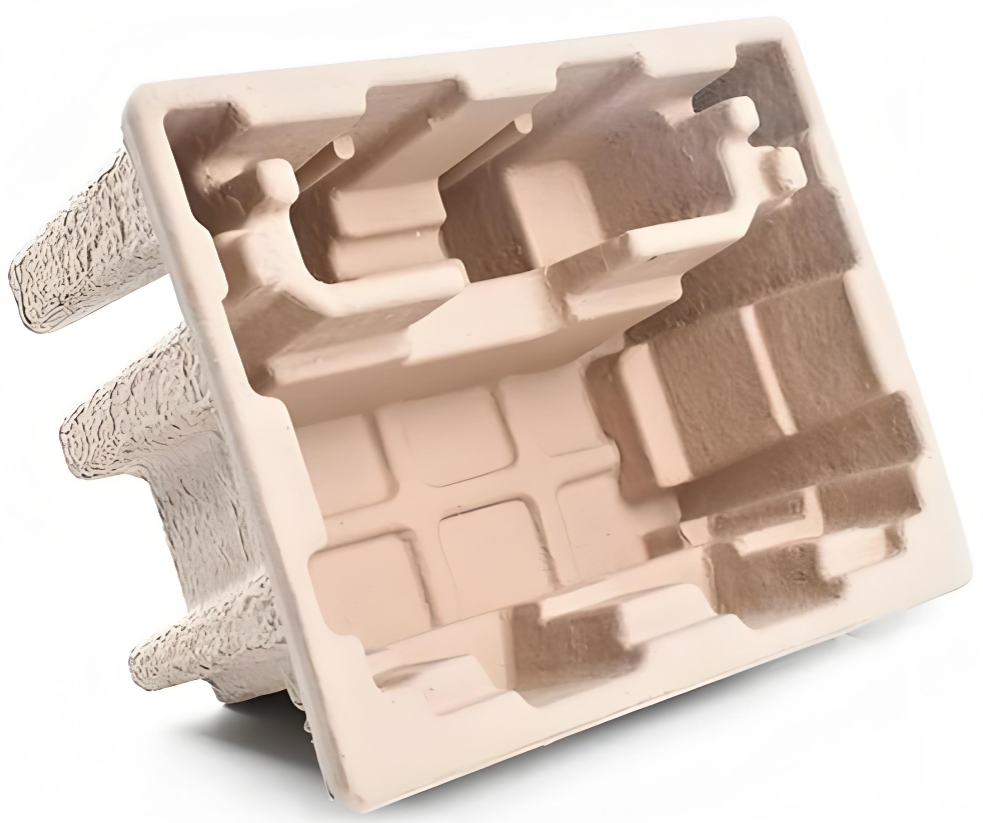
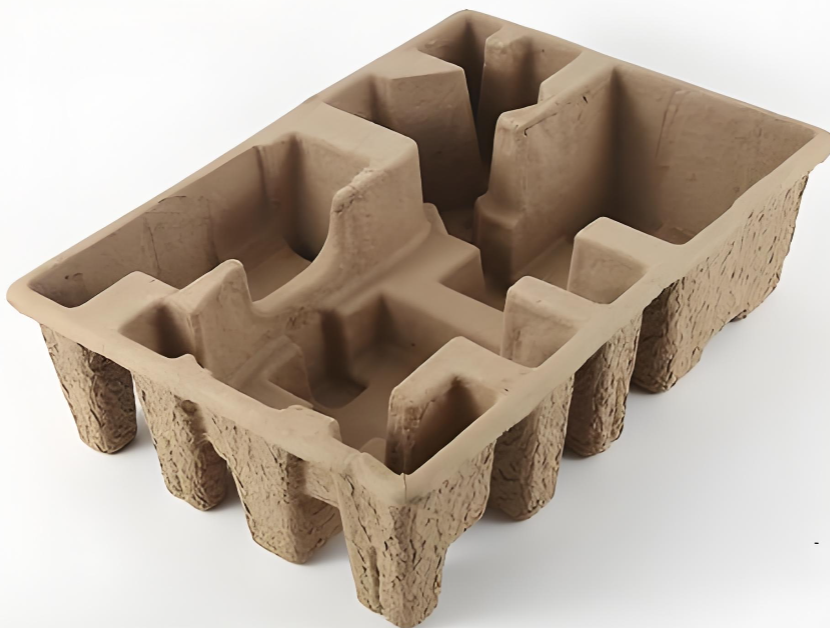
Inherent conductivity alone is insufficient; the tray's physical design is equally critical. Hanyang leverages advanced structural simulation to engineer trays that marry protection with precision. Each cavity is designed with custom-fit geometry, snugly cradling components to eliminate movement that could generate friction-induced triboelectric charging. Strategic features like integrated ribs, flanges, and interlocking posts are modeled to provide multi-axis shock and vibration dampening, preventing physical damage. Crucially, the design ensures that the component maintains continuous electrical contact with the conductive pulp surface, creating a Faraday cage-like effect that shields it from external electrostatic fields. For high-value or complex assemblies, Hanyang can incorporate conductive foam inserts or static-shielding films within the pulp structure, creating a multi-layered, high-shield package. This precision-molded design achieves two goals: supreme physical protection and a controlled electrostatic environment, ensuring components arrive in the same pristine, functional state as when they left the production line.
Validating Reliability: From Rigorous Testing to Certified Production
Confidence in ESD safety is earned through empirical validation. Hanyang’s design process is underpinned by a robust quality control and testing protocol. Prototype trays undergo a battery of tests that simulate real-world supply chain hazards. This includes electrostatic decay testing to measure discharge speed, surface and volume resistivity testing to verify conductivity levels, and charge generation testing to quantify triboelectric effects. Physical integrity is verified through drop tests, vibration tests, and compression tests. Once validated, production batches are subject to stringent in-process inspections to ensure consistency. The final products are backed by international compliance certifications such as ESD S20.20, IEC 61340, and ANSI/ESD S541. This end-to-end commitment to verifiable ESD performance transforms the molded pulp tray from a passive container into an active, certified protective system. For procurement specialists, this translates to mitigated risk, fewer DOA (Dead-On-Arrival) components, and a streamlined audit process, knowing their sensitive electronics are protected by a solution that meets the highest industry standards for electrostatic control.
Related product and article resources
For procurement comparison and technical evaluation, readers can continue with these related product pages and supporting articles.
Hanyang’s approach to ESD-safe molded pulp trays demonstrates that true protection is engineered, not applied. By fusing conductive material science with precision structural design and validating every step with rigorous testing, they create a packaging solution that is fundamentally safe. This process addresses the core vulnerabilities of sensitive electronics in transit, offering a reliable, sustainable, and high-performance alternative to traditional plastic ESD packaging. In an industry where a single electrostatic event can mean catastrophic failure, Hanyang’s designs provide the essential assurance that quality and functionality are preserved from factory floor to final assembly.