












Why Cheap Molded Pulp Trays Deform During Sea Freight And How To Avoid It
Cheap molded pulp trays may look acceptable before shipment, but deformation can happen during sea freight because of humidity, weak material density, poor drying, incorrect stacking and long transit time. For export buyers, understanding these risks helps prevent tray collapse, carton instability and product damage after arrival.
Get Quote1. Low Material Density Reduces Tray Strength
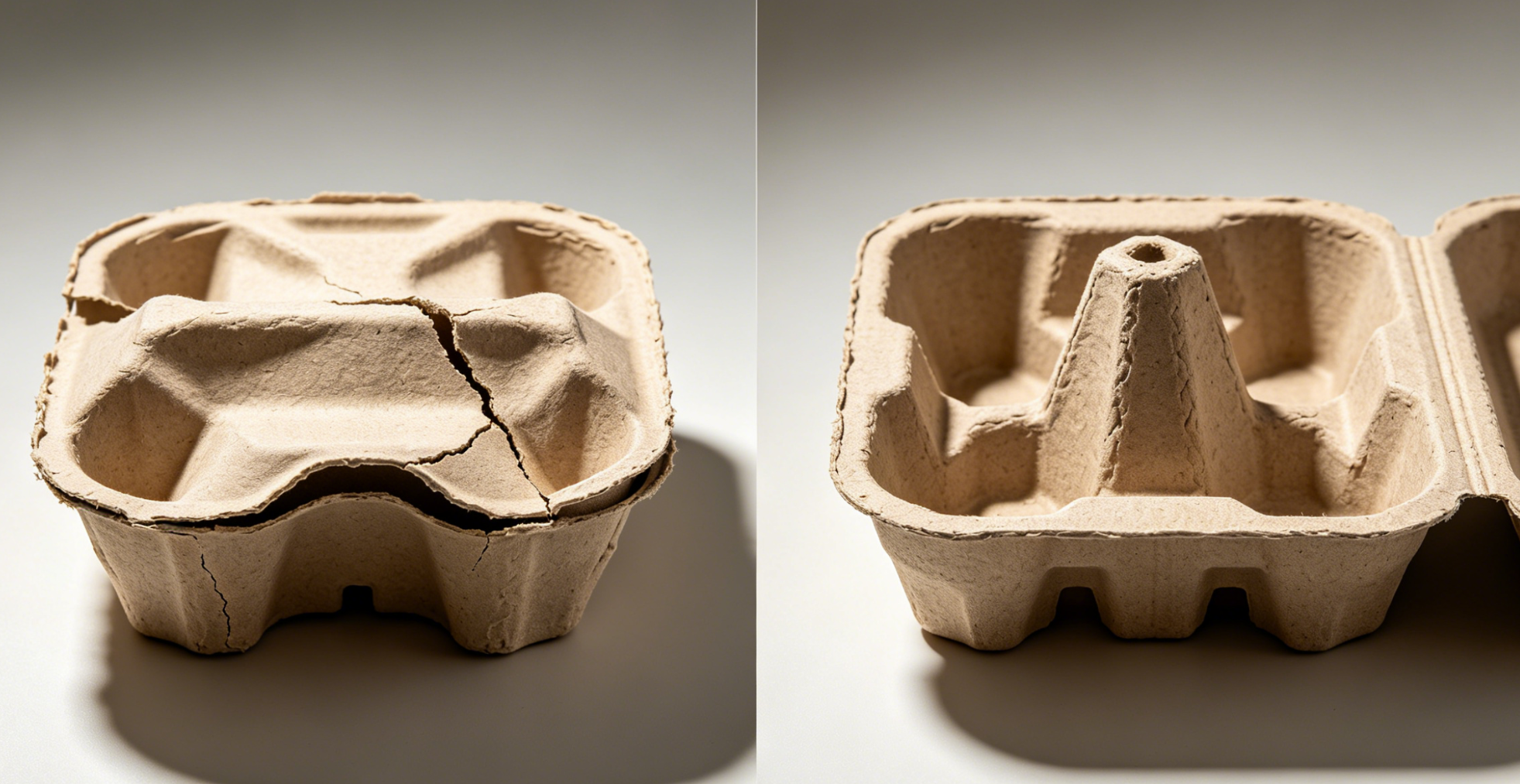
One major reason cheap molded pulp trays deform is low material density. When the tray wall is too thin or the fiber structure is loose, the tray may not have enough strength to resist pressure during shipping.
During sea freight, cartons are stacked for long periods. Weak trays can gradually lose shape, especially when products are heavy or the carton is under pressure from other goods.
2. Poor Drying Causes Moisture Problems
Moisture is one of the biggest risks for molded pulp trays during ocean shipping. If trays are packed before they are fully dried, they may soften, warp or deform inside cartons.
Buyers should confirm whether the manufacturer controls drying time, moisture level and storage conditions before packing. For export orders, moisture control is not optional; it directly affects tray stability and product protection.
3. Weak Structural Design Cannot Handle Stacking Pressure
Cheap trays often reduce material usage by removing support ribs, lowering wall height or simplifying cavity structure. This may reduce cost, but it also weakens load-bearing performance.
A good molded pulp tray should include reinforced ribs, stable wall thickness, support points and proper cavity depth. These details help the tray resist pressure from stacking and protect the product during long-distance transportation.
4. Incorrect Carton Packing Makes Deformation Worse
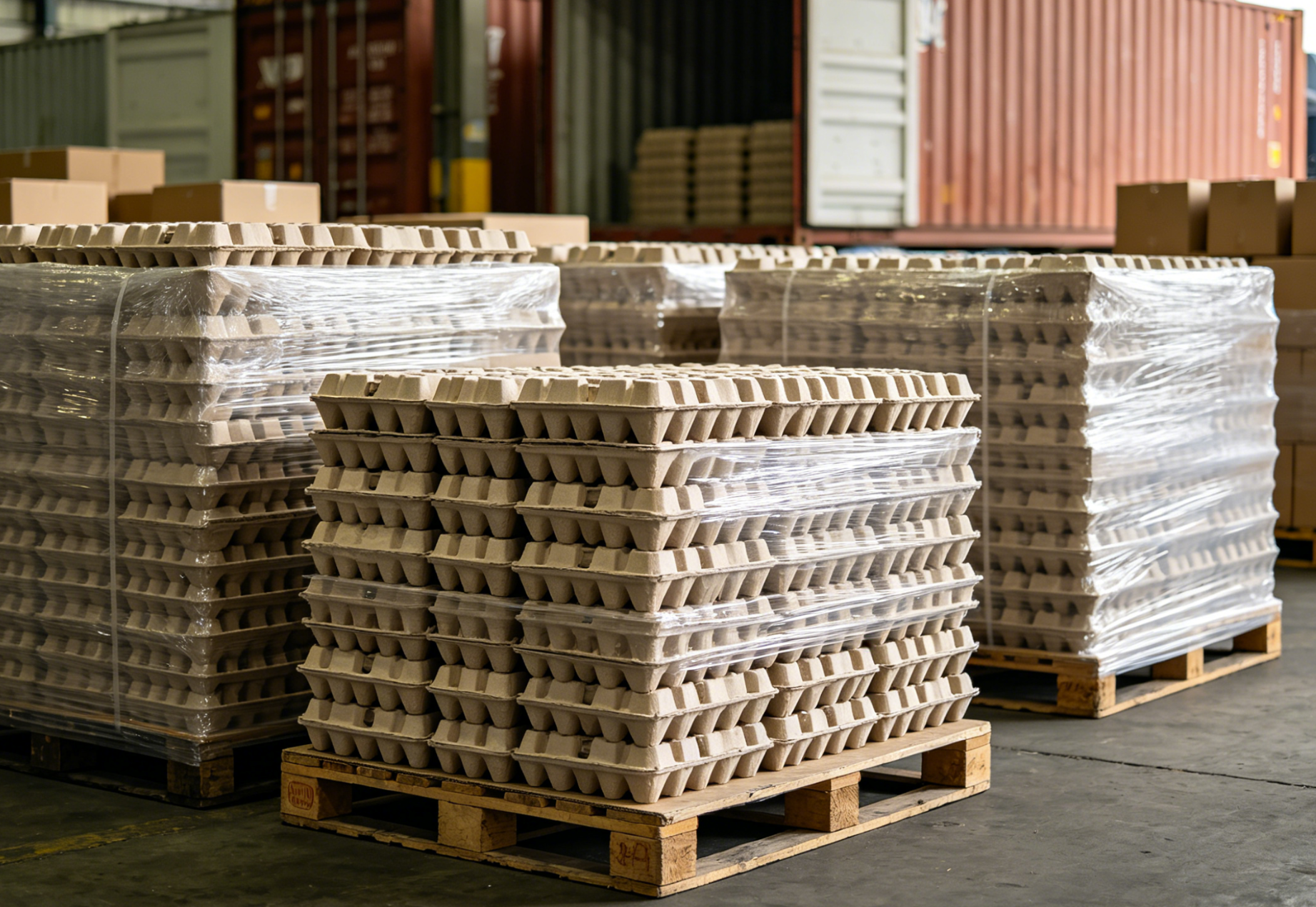
Even if the tray itself is acceptable, poor carton packing can still cause deformation. Overfilled cartons may compress trays, while loose cartons allow movement and friction during transportation.
Buyers should confirm pieces per carton, carton strength, stacking direction, pallet loading and container arrangement. Proper packing helps molded pulp trays keep their shape during sea freight.
5. Long Transit Time And Humid Containers Increase Risk
Sea freight often involves long transit time, temperature changes and humid container environments. Low-cost molded pulp trays may not maintain their shape if the material, drying and packing are not properly controlled.
For humid destinations or long shipping routes, buyers should consider pallet wrapping, carton protection, desiccants and warehouse storage conditions after arrival.
6. How Buyers Can Avoid Deformation Problems
To avoid tray deformation, buyers should not compare suppliers only by unit price. They should review sample strength, tray thickness, material density, drying process, moisture control, stacking performance and export packing method.
Before bulk shipment, compression testing, stacking tests and real carton packing trials are recommended. A reliable molded pulp packaging supplier can help optimize tray structure and packing method based on sea freight conditions.
Need Export-Ready Molded Pulp Trays?
Hanyang Paper provides custom molded pulp trays, protective inserts, moisture control, sampling, testing support and export packing solutions for international buyers.
Contact Us Get Quote