












Quality Inspection Checklist For Molded Pulp Packaging Orders
Quality inspection is essential before shipping molded pulp packaging orders. Buyers should check dimensions, material density, surface quality, moisture level, strength, stacking performance and packing condition to avoid deformation, product damage and export delivery problems.
Get Quote1. Dimension And Product Fit Inspection
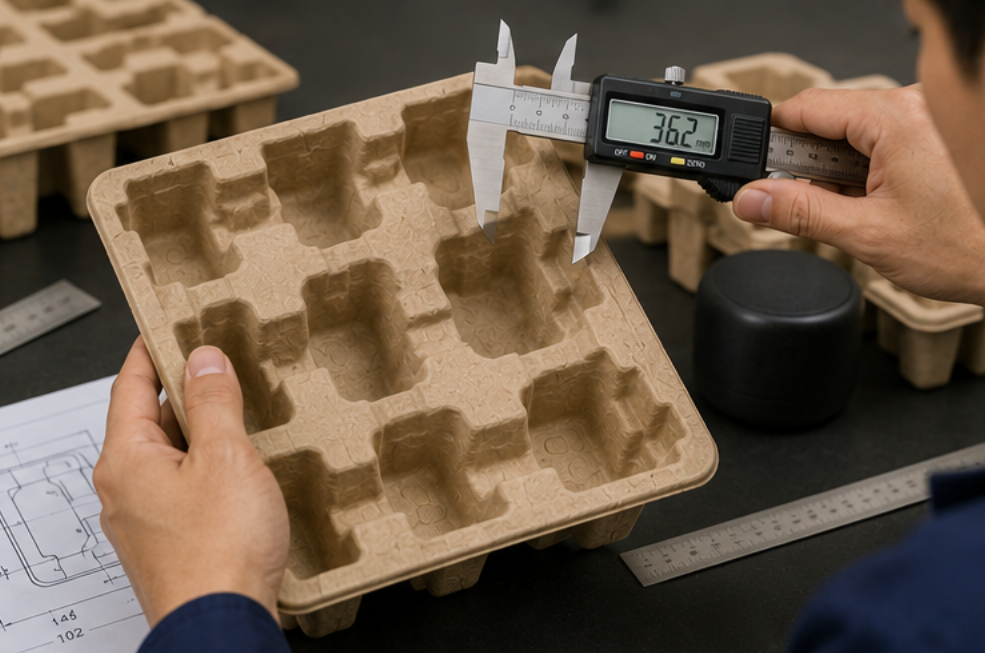
The first inspection point is whether the molded pulp packaging matches the approved sample and product size. Incorrect dimensions may cause loose fitting, difficult loading or poor product protection.
Buyers should check cavity size, overall tray length, width, height, wall thickness and product fit. For custom inserts, the tray should hold the product securely without pressing on fragile areas.
2. Material Density And Structural Strength
Material density affects strength, cushioning and stacking performance. Low-density trays may look acceptable at first, but they can deform during packing, storage or sea freight.
Buyers should check tray thickness, support ribs, reinforced corners, bottom structure and load-bearing areas. For electronics, glass bottles and export products, structural strength is especially important.
3. Surface Quality And Edge Finishing
Surface quality is important for retail products, electronics packaging, food packaging and premium product packaging. Buyers should check roughness, fiber shedding, burrs, stains, cracks and uneven color.
Edge trimming should be clean and consistent. Poor finishing may affect product appearance, packing efficiency and customer perception after opening the box.
4. Moisture Level And Deformation Risk
Molded pulp packaging is fiber-based, so moisture control is critical. If trays are packed before proper drying, they may soften, warp or lose strength during ocean shipping.
Buyers should check moisture level, drying condition, storage environment and carton protection. For humid destinations or long sea freight routes, moisture inspection should not be ignored.
5. Stacking, Compression And Shipping Test
Molded pulp packaging should keep its shape during carton packing, pallet stacking and export shipping. Buyers should check stacking stability, compression resistance and whether trays collapse under pressure.
For fragile products, drop testing, vibration testing and carton compatibility checks are recommended before mass shipment. Testing helps reduce product damage and after-sales complaints.
6. Final Packing And Export Inspection
Before shipment, buyers should check pieces per carton, carton size, pallet loading, carton label, wrapping condition and container loading plan. Poor export packing can damage even good-quality trays.
A complete inspection should confirm that molded pulp packaging matches the approved sample, order quantity, packing requirement and destination shipping condition.
Need Stable Quality Molded Pulp Packaging Orders?
Hanyang Paper provides custom molded pulp packaging, protective inserts, tray inspection, sampling support and export-ready packaging solutions for global buyers.
Contact Us Get QuoteBuyer focused specification notes
This added guide expands the article for molded pulp packaging importers. The main topic is quality inspection. In real sourcing work, buyers usually need more than a short product description. They need to know whether the tray can hold the product safely, whether the surface meets the brand requirement, whether the molded pulp structure can replace plastic or EPS foam, and whether the supplier can control tooling, samples, quality inspection and export packing.
Information to prepare before quotation
A strong RFQ should include dimension, weight, density, strength, moisture, appearance, stacking and packing condition. Buyers should also send product dimensions, product weight, photos or drawings, quantity forecast, retail box size, outer carton requirement, loading method, shipping destination, sustainability target and any testing expectation. If the product is fragile, has a polished surface, includes accessories or needs a premium unboxing experience, those details should be shown before mold design starts.
Product pages worth reviewing
Useful internal pages include molded pulp packaging product range, pulp tray products, electronics molded pulp trays, electrical pulp packaging tray, camera pulp tray, molded pulp packaging cases, product testing center, factory capability. These pages help visitors compare different molded pulp tray structures and move from a buying question to a suitable product category. For electronics and digital products, the cavity design and accessory layout matter most. For food and beverage trays, stacking, moisture response and handling strength are important. For egg cartons and agricultural trays, production consistency and packing efficiency are often the main concerns.
Sample approval and tooling control
Sample approval is one of the most important steps in a custom molded pulp packaging order. The buyer should check whether the product fits the cavity without shaking, whether removal is easy, whether the tray edge is clean, whether the color and surface are acceptable, and whether the tray works with the retail box or outer carton. If changes are needed, record each revision clearly so the final mold does not repeat an old issue.
Quality inspection before shipment
Before shipment, the inspection should include dimensions, tray weight, material density, moisture level, stacking test, compression performance, surface appearance and packing condition. Photos should cover the top view, side view, cavity detail, product fit, carton label and pallet condition. For export buyers, these checks reduce claims and help the warehouse confirm that the packaging is ready for long distance transport.
Related capabilities and case references
Buyers can continue with molded pulp packaging product range, home appliance molded pulp trays, industrial agricultural molded pulp trays, daily necessities molded pulp trays, 12 egg carton, 10 cell molded pulp egg tray, product testing center, factory equipment to review related products, cases and factory information. A packaging supplier should be able to discuss not only the tray shape but also mold development, drying stability, packing method and repeat order consistency. Factory equipment and testing information also supports trust when the buyer is comparing several suppliers in China.
Common sourcing mistakes
The first mistake is asking for the lowest unit price before confirming the structure. The second mistake is sending only a product photo without dimensions. The third mistake is ignoring carton fit and shipping route. The fourth mistake is approving a sample without checking how the product will be removed by the end user. The fifth mistake is not confirming the acceptable color range and surface texture. These mistakes can make a tray look acceptable in photos but perform poorly in shipping or retail handling.
Conversion advice for import buyers
For faster communication, buyers should send one message with the product model, dimensions, weight, target quantity, packaging goal, delivery country and required timeline. If they are replacing plastic, EPS foam or a paper insert, they should explain the current problem and target improvement. The article connects these buying questions with Hanyang pages such as pulp tray products, electronics molded pulp trays, electrical pulp packaging tray, camera pulp tray, paper shoe trees, pulp seedling pots, molded pulp packaging cases, factory capability, helping the visitor move from research to a concrete molded pulp packaging inquiry.