












Molded Pulp Packaging For Cosmetic Glass Jar Shipping
Cosmetic glass jars need packaging that protects fragile glass, lids, labels and premium surface finishes during export shipping. Custom molded pulp packaging provides stable positioning, cushioning protection and a plastic-free alternative to foam inserts and plastic trays for skincare jars, cream jars and cosmetic gift sets.
Get Quote1. Why Cosmetic Glass Jars Need Protective Packaging
Cosmetic glass jars are fragile and often used for skincare cream, masks, balm products and premium beauty sets. During export shipping, jars may face vibration, compression, dropping, carton movement and repeated handling.
If glass jars are not separated properly, they may collide, crack, scratch or damage labels and lids. Molded pulp packaging can create stable cavities for each jar and reduce direct contact during transportation.
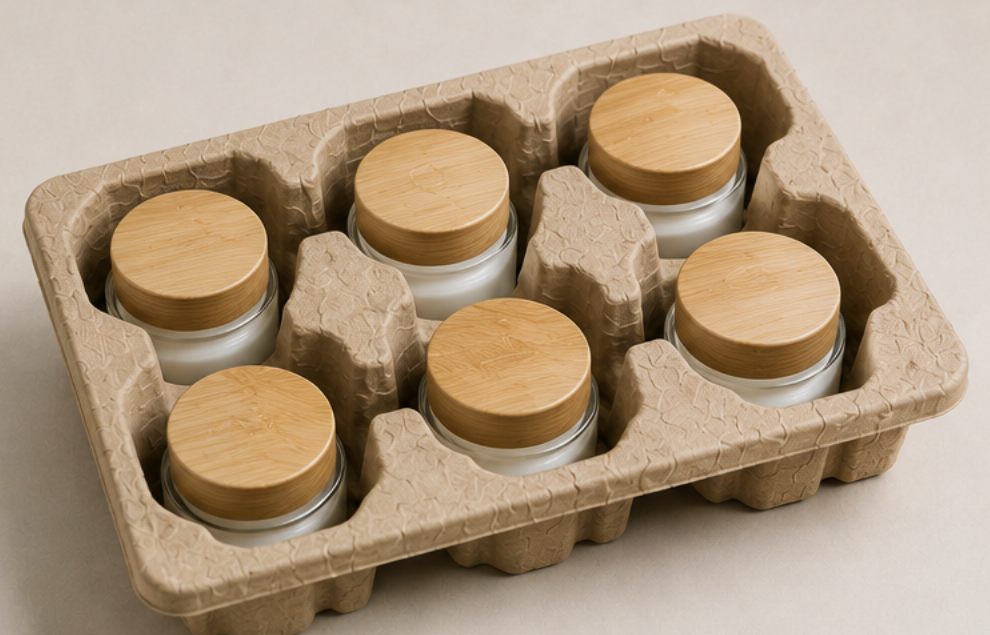
2. Protect Glass, Lids, Labels And Surface Finishes
Cosmetic packaging is not only about safety. The jar surface, logo label, coating and lid appearance must arrive clean and undamaged. A good molded pulp insert should support the jar body without pressing too hard on the lid or label area.
For premium skincare brands, smooth contact areas, accurate cavity depth and stable side support help protect both product safety and retail presentation.
3. Replace Foam And Plastic Trays With Sustainable Packaging
Many beauty brands and cosmetic importers are reducing plastic trays and foam inserts because buyers prefer recyclable and plastic-free packaging. Molded pulp packaging offers a natural paper fiber solution for protective cosmetic packaging.
Compared with plastic trays, molded pulp packaging gives cosmetic products a softer, cleaner and more sustainable packaging image.
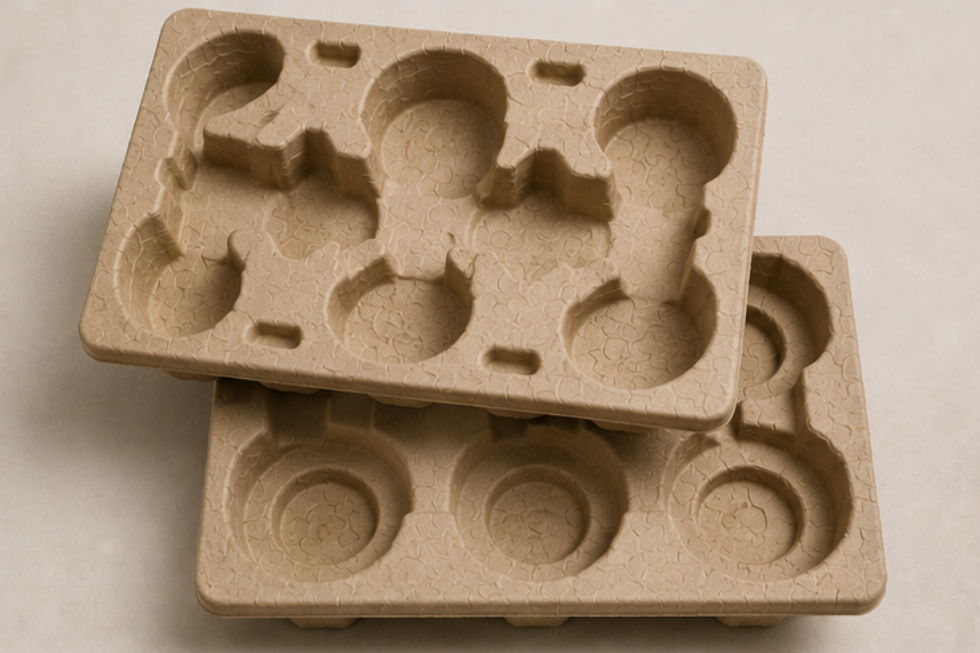
4. Custom Designs For Different Jar Sizes
Cosmetic glass jars can be round, square, short, tall, thick-bottomed or irregular in shape. Some jars have large lids, decorative coatings or outer sleeves that need extra clearance.
Buyers should provide jar diameter, jar height, jar weight, lid size, carton layout and shipping method before mold development. This helps the manufacturer design accurate cavities and proper support areas.
5. What Buyers Should Test Before Bulk Orders
Before mass production, buyers should test product fit, jar stability, lid clearance, label protection, drop resistance, compression strength, vibration performance and carton compatibility.
For export orders, pallet loading, moisture control and stacking performance should also be reviewed. Testing helps reduce jar breakage, leakage, packaging deformation and customer complaints.
6. Information Needed For Quotation
To quote molded pulp packaging for cosmetic glass jar shipping, buyers should provide jar dimensions, jar weight, lid size, jar quantity per box, outer carton size, order quantity, material preference and shipping destination.
Product drawings, 3D files or physical jar samples can help the manufacturer design the packaging more accurately and reduce sample revision time.
Need Molded Pulp Packaging For Cosmetic Glass Jars?
Hanyang Paper provides custom molded pulp packaging and protective inserts for cosmetic glass jars, skincare jars, cream jars, beauty sets and export shipping projects.
Contact Us Get QuoteBuyer focused specification notes
This added guide expands the article for cosmetic packaging buyers. The main topic is cosmetic glass jar shipping. In real sourcing work, buyers usually need more than a short product description. They need to know whether the tray can hold the product safely, whether the surface meets the brand requirement, whether the molded pulp structure can replace plastic or EPS foam, and whether the supplier can control tooling, samples, quality inspection and export packing.
Information to prepare before quotation
A strong RFQ should include glass jar protection, lid clearance, label surface, tray tolerance, retail box fit and export carton strength. Buyers should also send product dimensions, product weight, photos or drawings, quantity forecast, retail box size, outer carton requirement, loading method, shipping destination, sustainability target and any testing expectation. If the product is fragile, has a polished surface, includes accessories or needs a premium unboxing experience, those details should be shown before mold design starts.
Product pages worth reviewing
Useful internal pages include pulp tray products, electronics molded pulp trays, electrical pulp packaging tray, camera pulp tray, paper shoe trees, pulp seedling pots, molded pulp packaging cases, factory capability. These pages help visitors compare different molded pulp tray structures and move from a buying question to a suitable product category. For electronics and digital products, the cavity design and accessory layout matter most. For food and beverage trays, stacking, moisture response and handling strength are important. For egg cartons and agricultural trays, production consistency and packing efficiency are often the main concerns.
Sample approval and tooling control
Sample approval is one of the most important steps in a custom molded pulp packaging order. The buyer should check whether the product fits the cavity without shaking, whether removal is easy, whether the tray edge is clean, whether the color and surface are acceptable, and whether the tray works with the retail box or outer carton. If changes are needed, record each revision clearly so the final mold does not repeat an old issue.
Quality inspection before shipment
Before shipment, the inspection should include dimensions, tray weight, material density, moisture level, stacking test, compression performance, surface appearance and packing condition. Photos should cover the top view, side view, cavity detail, product fit, carton label and pallet condition. For export buyers, these checks reduce claims and help the warehouse confirm that the packaging is ready for long distance transport.
Related capabilities and case references
Buyers can continue with molded pulp packaging product range, pulp tray products, electronics molded pulp trays, electrical pulp packaging tray, camera pulp tray, molded pulp packaging cases, product testing center, factory capability to review related products, cases and factory information. A packaging supplier should be able to discuss not only the tray shape but also mold development, drying stability, packing method and repeat order consistency. Factory equipment and testing information also supports trust when the buyer is comparing several suppliers in China.
Common sourcing mistakes
The first mistake is asking for the lowest unit price before confirming the structure. The second mistake is sending only a product photo without dimensions. The third mistake is ignoring carton fit and shipping route. The fourth mistake is approving a sample without checking how the product will be removed by the end user. The fifth mistake is not confirming the acceptable color range and surface texture. These mistakes can make a tray look acceptable in photos but perform poorly in shipping or retail handling.
Conversion advice for import buyers
For faster communication, buyers should send one message with the product model, dimensions, weight, target quantity, packaging goal, delivery country and required timeline. If they are replacing plastic, EPS foam or a paper insert, they should explain the current problem and target improvement. The article connects these buying questions with Hanyang pages such as molded pulp packaging product range, pulp egg tray products, food beverage molded pulp trays, single cup pulp tray, double cup pulp tray, molded pulp packaging cases, factory equipment, factory capability, helping the visitor move from research to a concrete molded pulp packaging inquiry.