












For buyers placing large molded pulp packaging orders, lead time and production capacity are not just operational details. They are major risk factors that can affect product launch schedules, container loading plans, warehouse efficiency, and customer delivery commitments. A supplier may offer an attractive quotation and produce a good-looking sample, but if the factory cannot maintain realistic lead times or stable output at scale, the order can quickly become a supply chain problem. This is especially important for buyers sourcing molded pulp trays, inserts, protective end caps, and industrial packaging components for electronics, appliances, tools, glass parts, and other export products. To evaluate a supplier correctly, buyers must look beyond the promised delivery date and examine how the supplier actually manages tooling, production flow, drying capacity, labor, quality control, and peak-season scheduling.
Check The Full Lead Time Structure, Not Just The Final Delivery Promise
The first step in evaluating lead time is to break it into stages. Many suppliers only provide one total lead time number, but for large molded pulp packaging orders, that is not enough. Buyers should ask how long each stage takes: design confirmation, sample development, mold making, sample revision, pilot run, mass production, drying, trimming, inspection, and export packing. Only when these stages are separated can buyers see where the real schedule risk exists.
Tooling time is especially important. For custom molded pulp packaging, mold readiness often determines the true starting point of production. Buyers should ask whether molds are developed in-house or outsourced, how many tooling projects the supplier handles at the same time, and how design changes affect the schedule. If mold development is delayed, the whole project moves backward. For repeat orders, buyers should also confirm whether existing molds are stored properly, maintained regularly, and ready for immediate reuse.
Another key point is whether the lead time quoted reflects normal conditions or ideal conditions. Buyers should ask what happens during peak season, holiday periods, or when multiple urgent orders arrive at the same time. A reliable supplier should be able to explain the scheduling logic clearly instead of only giving a best-case answer. In large procurement projects, realistic lead time transparency is more valuable than a short but unreliable promise.

Evaluate Real Production Capacity By Looking At Bottlenecks, Not Just Monthly Output Claims
When suppliers talk about capacity, they often give a large monthly output number. But buyers should not rely on that figure alone. Real production capacity depends on where the bottlenecks are. In molded pulp packaging production, capacity is influenced by forming machines, mold quantity, drying capacity, trimming and finishing speed, inspection throughput, packing space, and labor availability. If one of these areas is limited, the total production capacity may be far lower than the supplier claims.
For large orders, drying and finishing are often critical constraints. A factory may be able to form a large number of parts quickly, but if drying space is insufficient or trimming speed is slow, finished goods output will lag behind. Buyers should therefore ask how many lines the factory runs, how many molds can operate at the same time, what the daily finished output is for similar products, and whether capacity data refers to formed parts or fully packed finished goods. The difference matters a great deal in procurement planning.
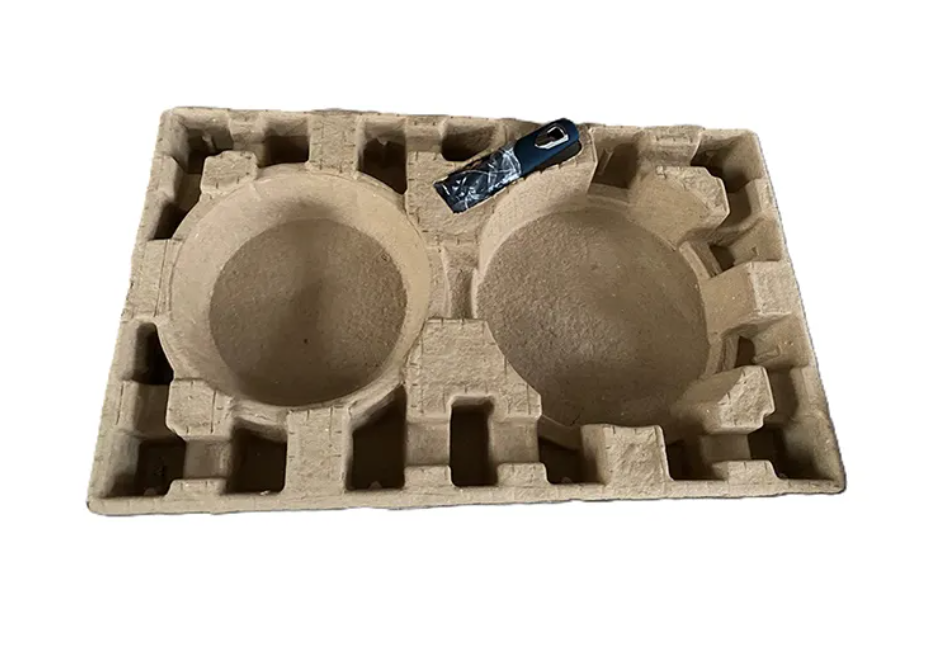
Product complexity also affects capacity. A simple egg tray or cup tray may run much faster than a precision industrial insert with tighter dimensions, deeper cavities, or more manual finishing. Buyers should ask for capacity estimates based on products similar to their own rather than general factory numbers. A serious supplier should be able to explain how product size, wall thickness, geometry, drying time, and inspection standards influence actual throughput. This is how buyers distinguish between nominal capacity and usable capacity.
Confirm Scalability, Peak Season Readiness, And Order Stability For Long-Term Supply
For large molded pulp packaging orders, buyers should not only ask whether the supplier can produce one order. They should ask whether the supplier can support repeated large orders without losing delivery stability. A supplier that can manage one successful shipment may still fail when order volume increases, when several SKUs run together, or when peak season pressure rises. Scalability is therefore a core part of capacity evaluation.
Buyers should ask whether the supplier has reserved capacity for key customers, how production priority is handled, and whether the factory can add shifts, lines, or molds when order volume grows. It is also important to understand how the supplier manages labor during peak periods and whether subcontracting is used. If subcontracting is involved, buyers should confirm who controls quality, tooling, and delivery responsibility. For many buyers, hidden subcontracting is one of the biggest sources of schedule and consistency risk.
Order stability also depends on internal management. A capable supplier should be able to show how orders are tracked, how delays are escalated, and how quality problems are handled without affecting the full shipment. In large export projects, buyers benefit most from suppliers that combine reasonable capacity with strong planning discipline. The safest partner is usually not the one with the biggest number on paper, but the one that can scale output while maintaining quality, communication, and realistic delivery performance over time.
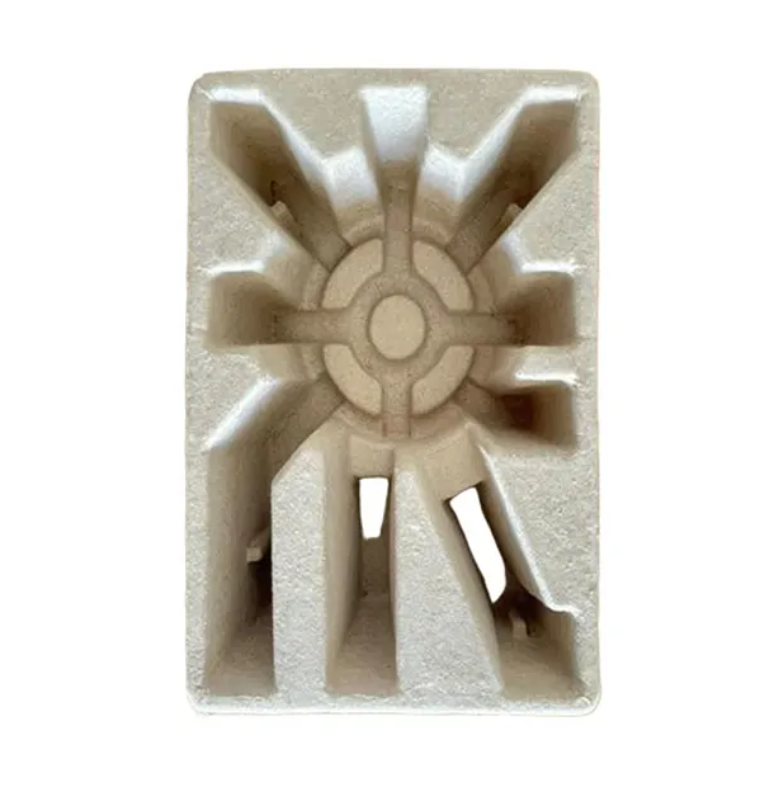
To evaluate lead time and production capacity for large molded pulp packaging orders, buyers should focus on three things: the real structure behind the quoted lead time, the true capacity bottlenecks inside the factory, and the supplier’s ability to scale without losing stability. A good supplier does not just promise a fast delivery date or a large monthly output. A good supplier can explain how the order moves from tooling to shipment, where the capacity limits are, and how delivery reliability will be maintained when order volume increases. In practical procurement, that level of transparency is what turns a factory into a dependable long-term packaging partner.