
Related Products: 12 Cell Molded Pulp Egg Carton | 10-Cell Molded Pulp Egg Tray | Quail Egg Pulp Tray
This 8-egg paper tray provides an eco-friendly packaging solution crafted from 100% recycled paper pulp. Designed for optimal protection and sustainability, it ensures eggs remain secure during transport and storage. The precise compartment design and compact dimensions make it ideal for both commercial and domestic applications.


Material: Manufactured from 100% recycled paper pulp, sturdy and durable
Design: Features eight precisely molded compartments to cradle eggs individually
Dimensions: Compact size 17.2cm x 13.5cm for easy storage and handling
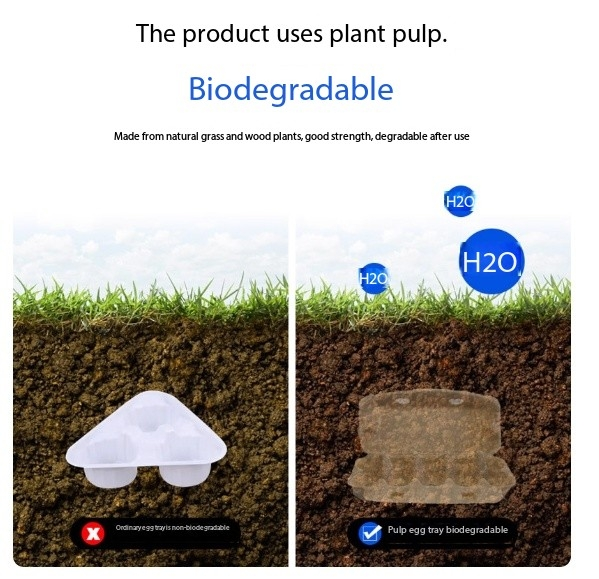
Eco-Friendly: Fully biodegradable and compostable, supporting zero-waste initiatives
Specification | Details |
|---|---|
Material | Recycled Paper Pulp |
Capacity | 8 Eggs |
Dimensions | 17.2cm x 13.5cm |
Weight | ~55g |
Color | Natural Kraft Brown |
Biodegradability | 100% Biodegradable |
Enhanced Protection: Minimizes egg movement and reduces breakage during transit
Environmental Sustainability: Supports circular economy with compostable materials
Space Optimization: Compact design maximizes storage efficiency in various settings
Cost Effectiveness: Lightweight construction reduces shipping costs and environmental impact
Retail supermarkets and grocery stores for egg packaging
Farmers markets and local produce vendors
Food service industry and restaurant suppliers
Household storage and organization solutions

Egg trays are commonly made from paper pulp, plastic (like PP, PVC, or PET), and foam materials such as EPE (expanded polyethylene) . Paper pulp trays are eco-friendly and cost-effective, plastic trays are durable and reusable, while foam trays offer excellent cushioning for protection . The choice depends on usage needs like transport or retail display.
Egg trays are primarily made from two types of materials: Paper pulp: Sourced from recycled paper (e.g., newspapers, cardboard) or natural fibers like sugarcane pulp. These are eco-friendly, biodegradable, and cost-effective, ideal for transportation. Plastic: Such as PVC, PP, or PET, which are durable, waterproof, and often transparent, making them suitable for retail display. The choice depends on needs like sustainability or durability.
Pulp molded products are versatile and used in various sectors: Industrial Packaging: Protective cushioning for electronics, appliances, and fragile items like glass and ceramics. Food Service: Plates, bowls, cups, and takeaway containers as eco-friendly alternatives to plastic. Agriculture: Egg trays, fruit pads, and seedling pots for plant growth and transport. Healthcare: Disposable medical trays, bedpans, and packaging for sterile devices. Emerging Applications: Horticulture pots, creative crafts, and even insulation materials for batteries.
he essential equipment for producing pulp molded products includes: Pulping Equipment: Hydraulic pulper and slurry mixing tanks for preparing pulp . Molding Machine: The core equipment, often using vacuum suction molding (e.g., rotary drum or reciprocating type) to form wet pulp into the desired shape . Drying & Shaping Equipment: Dryer (e.g., tunnel-type) and hot press machine to remove moisture and set the final form . Post-processing Equipment: Trimming machine for neat edges, and often automated systems for inspection, stacking, and packaging .


