


Why Molded Pulp Samples Can Differ From Mass Production and How to Control Consistency
For buyers developing custom molded pulp packaging, an approved sample is often the key reference before mass production begins. However, one of the most common concerns during procurement is whether large volume production will look and perform exactly like the sample.
Molded pulp is made from fiber based materials and involves forming, moisture control, drying, pressing, trimming and packing. Each of these stages can influence the final dimensions, surface appearance, weight and structural performance of the tray.
For procurement teams and packaging engineers, controlling consistency requires more than keeping one physical sample. Critical product requirements should be defined clearly before mass production so that both buyer and supplier understand which characteristics must remain within an acceptable range.
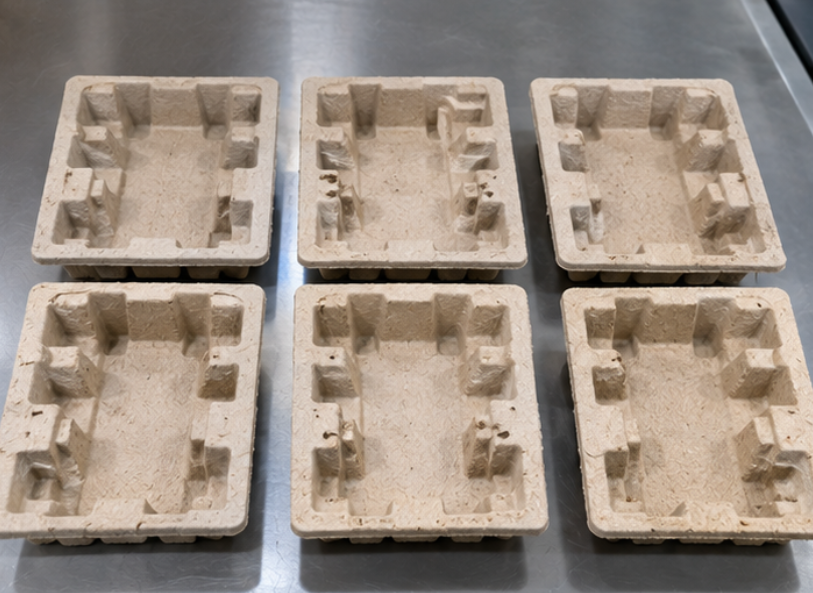
Why Samples and Production Parts Can Show Differences
Sample production and mass production are not always completed under exactly the same operating conditions. During development, a small number of trays may receive more manual attention, while mass production depends on stable process settings across thousands of pieces.
Fiber preparation is one important factor. Changes in pulp composition, fiber length or moisture level can influence surface texture and forming behavior. Even when the same general material specification is used, production batches need controlled preparation to maintain repeatable results.
Forming conditions also matter. Vacuum level, pulp distribution and mold drainage can affect wall thickness and material distribution. If one area receives more fiber than another, the tray may become heavier or show slight dimensional variation.
Drying is another critical stage. Molded pulp contains moisture after forming, and uneven drying can create shrinkage or deformation. Tray depth, wall thickness and reinforced sections can all affect how moisture leaves the part during production.
For products requiring accurate fit, even small changes around locating points or contact areas may become noticeable when the final product is placed inside the tray. This is why critical dimensions should be identified before the mold is approved.
What Buyers Should Define Before Mass Production
A physical sample is useful, but it should not be the only quality reference. Buyers should define the characteristics that are most important to packaging performance and convert them into measurable requirements wherever possible.
These requirements may include overall dimensions, critical fitting dimensions, tray weight, wall thickness, moisture level, surface condition, stacking stability and product fit.
For electronic products or other items with precise locating features, buyers may need to identify a small number of critical dimensions that directly affect assembly or product positioning. These dimensions should receive more attention than cosmetic areas that do not influence performance.
A golden sample can also be retained by both buyer and supplier. This sample acts as a visual and functional reference during production, inspection and future repeat orders.
Packaging approval should also include carton packing requirements. Stack height, pieces per carton and packing direction can influence whether trays become compressed or deformed during storage and transportation.
How Suppliers Can Maintain Better Production Consistency
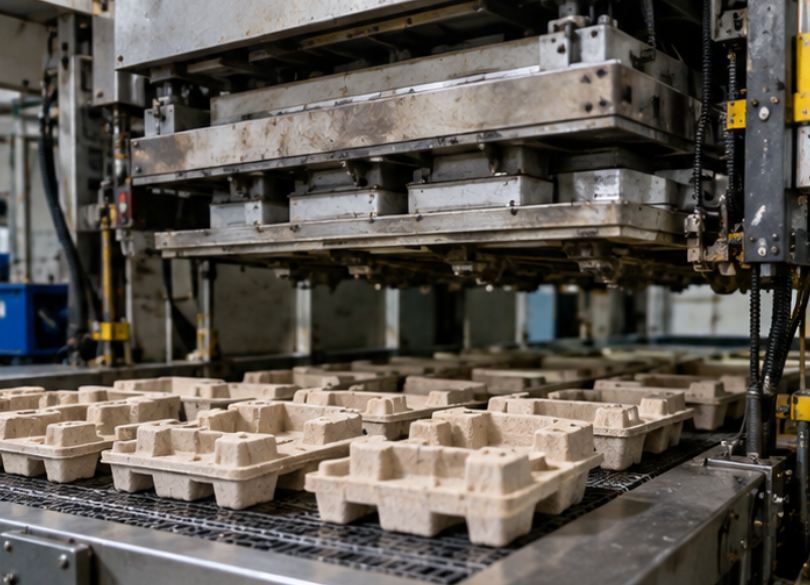
Stable mass production begins with controlled process parameters. Material preparation, forming conditions, drying temperature, pressing conditions and trimming should follow repeatable production settings once the packaging design has been approved.
In process inspection is also important. Rather than waiting until the complete order has been produced, suppliers can check representative pieces during production. This allows dimensional or weight variation to be detected earlier.
For molded pulp trays used to protect valuable electronics, appliances or industrial products, functional checks can be especially useful. The supplier may place the actual product or a checking fixture into the tray to confirm fit and support.
Moisture control should also be considered before packing. If molded pulp products are packed before reaching a stable moisture condition, the parts may continue changing during storage or transportation. Proper conditioning and packaging can help reduce this risk.
Buyers placing repeat orders should also ask whether the same tooling and approved specifications will continue to be used. Tool wear, process adjustments and material changes should be reviewed if they could affect the approved packaging performance.
For large programs, a simple inspection report covering critical dimensions, weight, appearance and packing condition can make quality communication clearer and reduce disputes after shipment.
Control Consistency With Clear Standards and Stable Production
Some variation between molded pulp samples and mass production can occur because fiber packaging is influenced by material preparation, forming, drying and other manufacturing conditions. The goal is not to assume that every part will be visually identical, but to control the characteristics that affect packaging performance.
Buyers can reduce risk by approving critical dimensions, weight, moisture, surface expectations and packing requirements before mass production begins. Combining a golden sample with measurable specifications and regular production inspection creates a much stronger quality standard and helps ensure that repeat orders remain consistent over time.