


An approved molded pulp sample is only the beginning of quality control. During mass production, forming, drying, pressing, handling and packing can all affect fit, strength and dimensional stability. Buyers should therefore evaluate the complete production process rather than judging one finished sample.
Design around the product and shipping risk
A molded pulp tray should do more than match the product's outline. Ribs, cavities and support points must limit movement, distribute pressure and protect fragile areas. The design should also consider carton size and nesting efficiency.
Buyers can improve the design process by providing product dimensions, weight, fragile zones, accessories, outer-carton limits and expected shipping conditions before tooling begins.
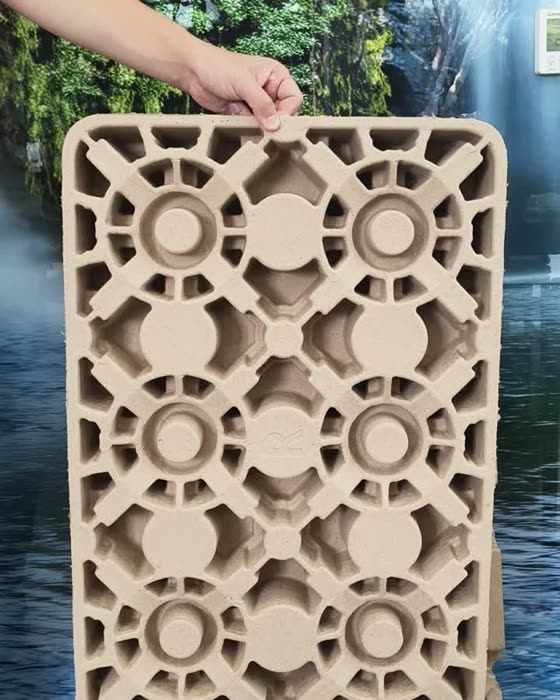
Check tooling before production
The mold controls the shape of every part. Worn surfaces, blocked vacuum points or the wrong mold revision can create uneven fiber distribution and dimensional variation.
Before production, the supplier should verify the mold version, clean the critical areas and compare the first pieces with the approved sample and drawing. For repeat orders, tooling maintenance and change records help protect consistency.
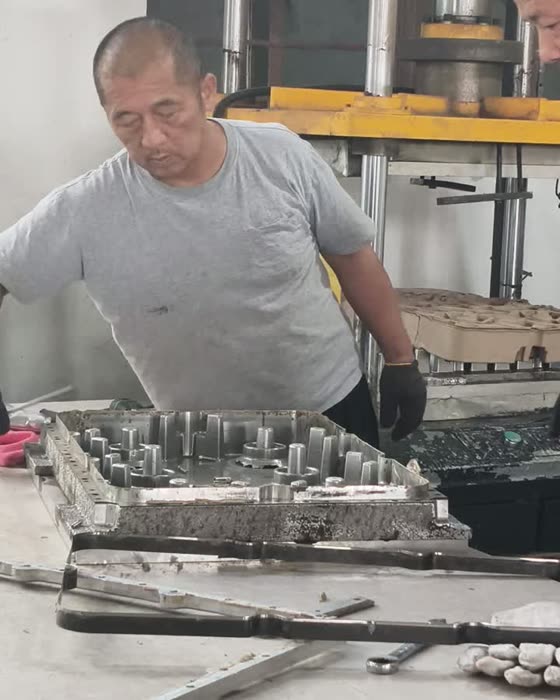
Control forming and material distribution
During forming, pulp fibers collect on the mold while water is removed. Stable settings help control part weight, wall thickness and fiber coverage. Uneven forming can create thin corners, heavy edges or weak ribs even when the tray looks acceptable at first glance.
In-process checks should focus on critical support zones rather than appearance alone. Automated equipment improves repeatability only when material preparation and cycle settings remain controlled.
Dry for dimensional stability
Drying affects shrinkage, flatness and strength. A part may feel dry on the surface while deeper areas still hold moisture. If it is stacked too early, it may continue to change during storage or shipping.
Rack spacing, airflow, temperature and time should match the product geometry. Deep cavities and reinforced sections usually need more attention than open, thin areas. Buyers shipping by sea should also define how moisture condition will be checked before packing.
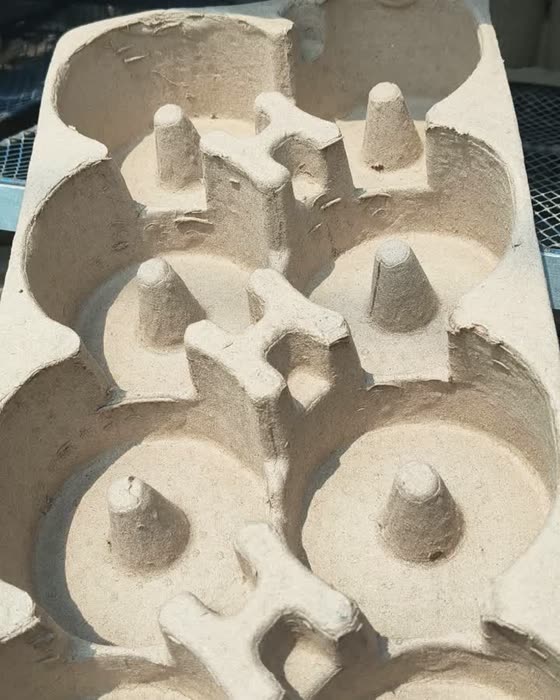
Use pressing to improve fit and finish
Secondary pressing can improve flatness, surface definition and dimensional repeatability when a tray must fit a retail box or another packaging component.
The process should preserve cushioning performance. Excessive pressure can create thin spots or reduce resilience, so the finished part should be checked against functional requirements, not only visual appearance.
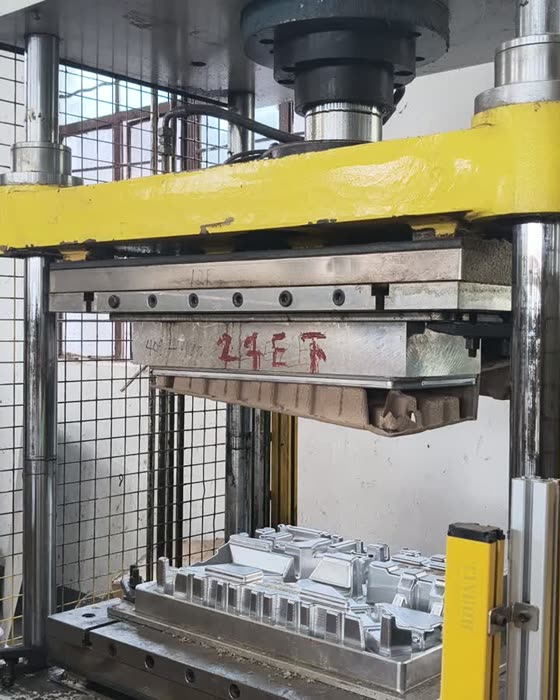
Inspect during the production run
Waiting until the complete order is finished makes correction more difficult. Representative pieces should be checked during production for critical dimensions, weight, wall condition, damaged edges, moisture, nesting and product fit.
An actual product or checking fixture can confirm whether the tray supports the correct areas. Early inspection also helps identify changes caused by tooling, material or process drift.
Protect quality during nesting and handling
Nesting reduces shipping volume, but excessive compression may lock trays together or deform the stack. Workers should be able to separate each part without tearing the edges. The supplier should define pieces per stack, stack orientation and the maximum pressure placed on the parts during storage.
Pack for the complete shipping route
Finished products need protection from dust, moisture and unstable movement. Pallet configuration, wrapping, labels and forklift handling should keep stacks secure from the warehouse to the customer's packing line.
For export orders, buyers should review storage time, destination humidity and container conditions. Packing is part of product quality, not a separate final activity.
Buyer checklist before mass production
Approve a dated golden sample and drawing revision.
Define critical dimensions, weight and fit requirements.
Confirm material, color and surface expectations.
Agree on moisture checks before packing.
Set an in-process inspection frequency.
Test nesting and de-nesting performance.
Confirm stack, carton and pallet configuration.
Require notice before material, tooling or process changes.
Build quality across the complete process
Reliable molded pulp packaging comes from connected control of design, tooling, forming, drying, pressing, inspection and packing. When these stages work together, buyers receive a packaging component that fits the product, supports efficient packing and performs more consistently during transport.
Suzhou Hanyang Paper Plastic Products Co., Ltd. provides design, mold development, production and technical support for molded pulp products. Buyers can also review the company's electronics packaging applications before discussing a custom project.
To request an initial packaging review, prepare the product dimensions and weight, photos or 3D drawings, estimated quantity, carton limits, destination market and testing requirements.