


How to Design Molded Pulp Packaging for Home Appliances
Home appliance packaging has to do more than hold a product inside a carton. Coffee machines, air fryers, vacuum cleaners, electric fans, juicers and other appliances often combine heavy components, fragile plastic housings, protruding parts and uneven centers of gravity.
For buyers replacing EPS foam or plastic inserts with molded pulp packaging, the challenge is to achieve reliable protection without creating excessive packaging volume or unnecessary material cost. The molded pulp structure must support the appliance during handling and transportation while remaining practical for packing lines and export logistics.
Good packaging therefore starts with understanding the appliance itself. Product weight, fragile areas, accessories, carton dimensions and transportation conditions should all be considered before tooling begins.
Start With Product Weight and Critical Support Areas
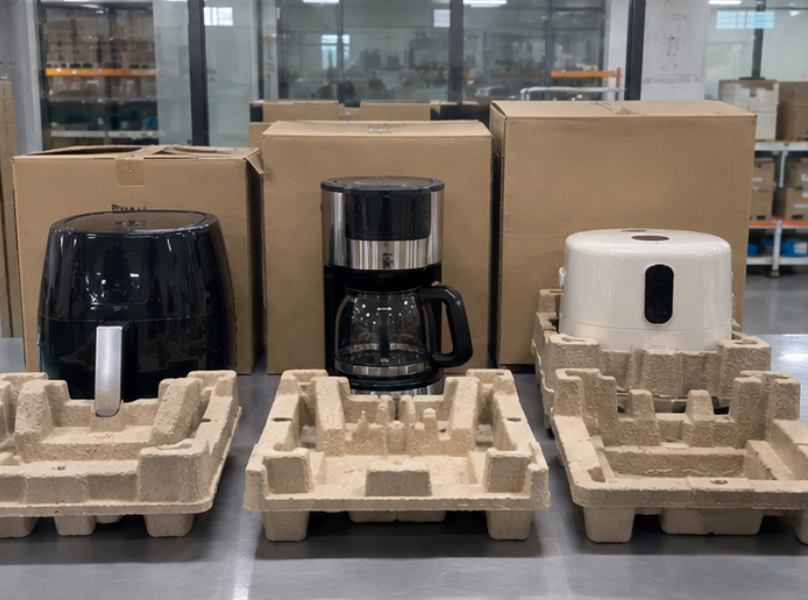
Home appliances usually require more structural support than small consumer electronics. A coffee machine may contain a heavy internal pump and water system, while an air fryer may have a large body with a removable basket and handle. Vacuum cleaners may include long accessories and uneven load distribution.
The first step is to identify where the product actually carries weight. Molded pulp should support strong structural areas rather than pressing against decorative panels, control buttons, handles or fragile covers.
Packaging engineers can use raised support blocks, ribs, reinforced corners and shaped contact zones to distribute load across the tray. These structures help prevent the appliance from moving or sinking into the packaging during stacking and transportation.
The center of gravity is also important. If the appliance is heavier on one side, the tray must control that weight without allowing the product to tilt. An uneven support structure may increase pressure on one corner of the carton and create damage during repeated handling.
For heavier products, buyers should provide accurate product weight and preferably a physical sample or 3D drawing. This allows the packaging supplier to locate the correct support points before mold development.
Protect Fragile Areas Without Creating Excess Pressure
Many home appliances contain parts that should not carry packaging pressure. Handles, display panels, control knobs, glass components and removable accessories can be vulnerable during compression or impact.
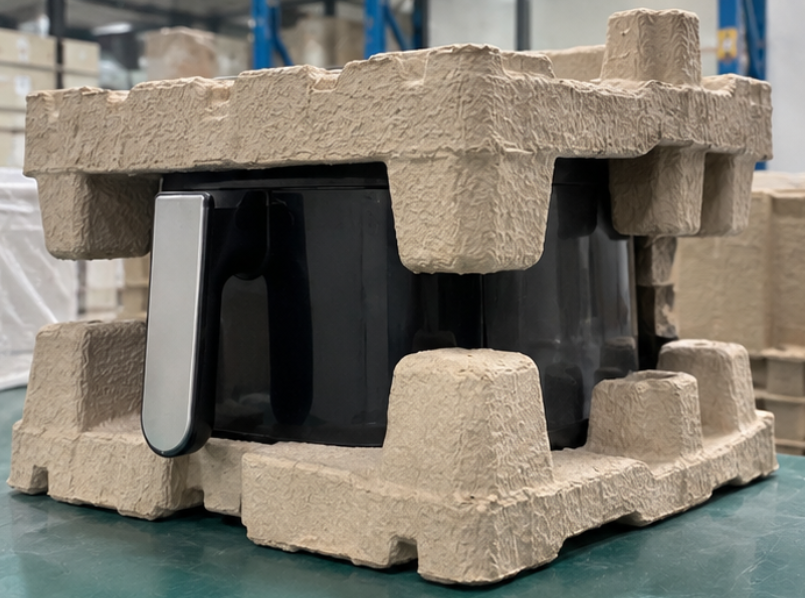
Molded pulp packaging should create clearance around these areas while transferring force to stronger sections of the appliance. For example, an air fryer tray should avoid using the basket handle as a main support point. A coffee machine package should protect water tanks, control panels and external fittings from direct compression.
Accessories also need clear positioning. Power cords, adapters, filters, trays and removable components can move during transportation if they are not separated from the main appliance. Dedicated molded cavities can keep accessories organized and reduce surface contact between parts.
Surface protection should also be reviewed if the appliance has glossy plastic, painted metal or decorative finishes. Contact areas can be adjusted to reduce rubbing and concentrated pressure during vibration.
Before final approval, buyers should check the actual appliance inside the tray rather than evaluating the packaging by itself. Product fit and clearance are more important than the appearance of an empty molded pulp insert.
Balance Protection Carton Size and Shipping Efficiency
Packaging dimensions have a direct impact on logistics cost. Oversized molded pulp structures can increase carton dimensions, pallet space and container volume even if the product itself has not changed.
This is particularly important for home appliances because the products are already relatively large. Buyers should avoid adding excessive cushioning simply to make the packaging appear stronger. The goal is to create enough energy absorption and structural support while keeping the total package compact.
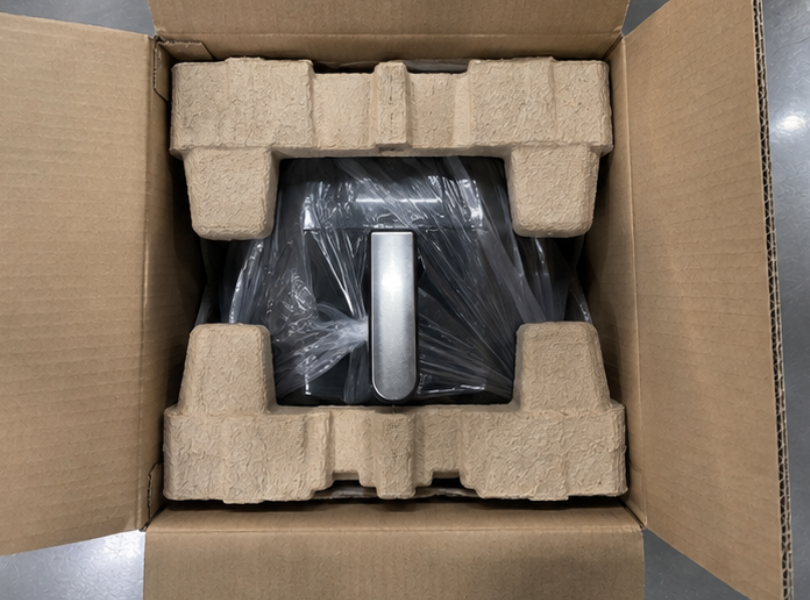
Upper and lower molded pulp cushions can often be designed to match the appliance shape closely. This helps control movement while reducing unnecessary empty space inside the carton.
Packaging should also be designed around actual shipping conditions. Products sold domestically may experience different handling from appliances exported by sea and transferred through multiple warehouses. Long distance programs may require more attention to vibration, carton stacking and humidity.
Sample testing should include more than a visual inspection. Drop testing, vibration evaluation, compression checks and repeated packing trials can help identify weak support areas before mass production.
Procurement teams should also ask for final carton dimensions, gross weight and recommended pallet configuration. These figures make it easier to calculate total packaging and freight cost before approving the project.
A well designed molded pulp solution should therefore protect the appliance without making the export carton unnecessarily large. This balance is especially important for high volume products where even a small reduction in carton size can create meaningful annual logistics savings.
Design Packaging Around the Appliance and the Real Supply Chain
Molded pulp packaging for home appliances should be designed around product weight, support points, fragile areas, accessories and transportation conditions. Simply using thicker material or larger cushions does not automatically create better protection.
For buyers, the most effective approach is to work with the packaging supplier during the early development stage and provide complete product information. A well engineered molded pulp structure can reduce product movement, protect sensitive components, control carton size and create a more efficient packaging solution for mass production and export shipping.