


Drying does more than remove water from molded pulp packaging. It helps set the shape, strength and fit of the finished part. If moisture leaves too slowly, the tray may remain soft or continue changing after packing. If drying is too fast or uneven, different areas can shrink at different rates and create warping, twisted edges or unstable stacking.
For international buyers, the important question is not whether a supplier has a drying area. The real question is whether the molded pulp drying process is matched to the material, geometry and performance requirements of each packaging design.
Drying builds the final fiber structure
Freshly formed molded pulp still contains moisture throughout its fiber network. As moisture leaves, the fibers settle and bond into a more stable structure. This change influences stiffness, compression response and the dimensions that control product fit.
A part that feels dry on the surface may still hold moisture in thick ribs, deep corners or reinforced zones. If the part is pressed, nested or packed before those areas stabilize, the shape can continue changing during storage. Buyers should therefore evaluate drying as a controlled production stage rather than a simple waiting period.
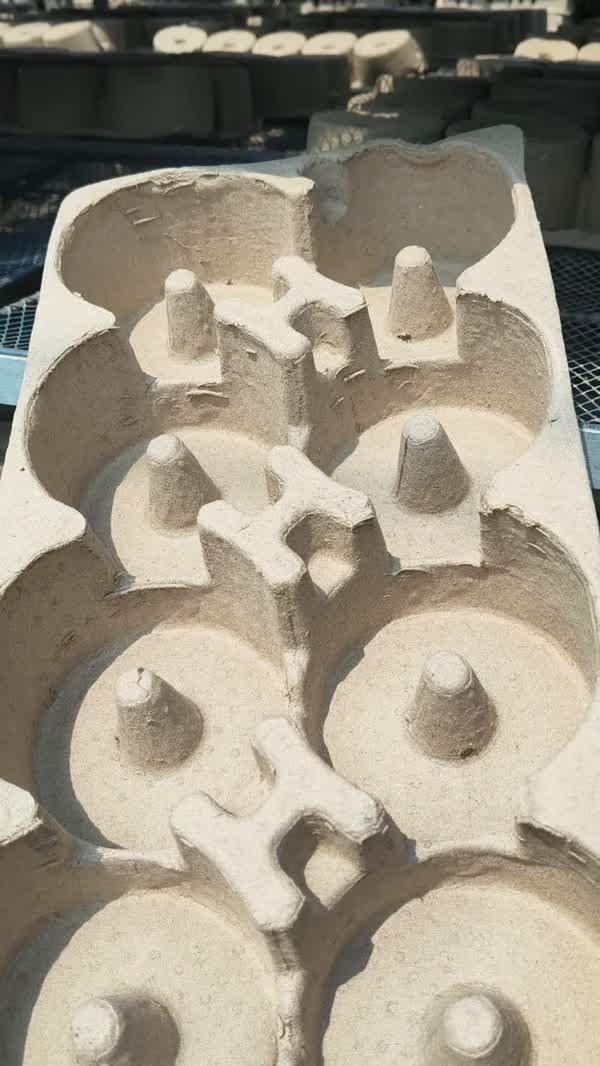
Temperature must match the product geometry
Higher temperature does not automatically produce better molded pulp packaging. Rapid surface drying can create a large difference between exposed areas and thicker internal sections. Gentle drying may reduce that difference, but it also needs enough time and airflow to reach a stable condition.
The suitable temperature profile depends on wall thickness, cavity depth, material distribution and whether the part will receive secondary pressing. A broad appliance tray and a compact electronics insert may need different process settings even when both are made from molded fiber.
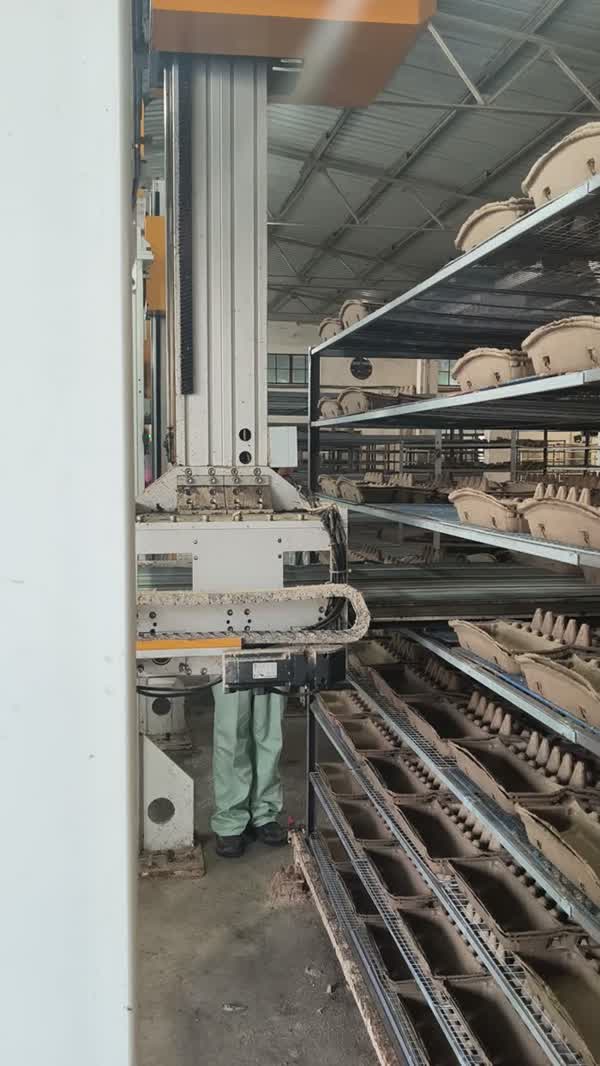
Airflow and rack spacing support even moisture removal
Air must reach the top, bottom and side surfaces of the part. Trays placed too closely together can block circulation, while overcrowded racks may create dry zones and damp zones within the same batch. Consistent rack loading and spacing help reduce this variation.
Airflow should also match the direction in which moisture can leave the product. Deep cavities, enclosed corners and wide flat panels may behave differently. A stable process keeps the loading pattern repeatable so the first rack and the final rack are treated under comparable conditions.
Part geometry changes the drying requirement
Structural ribs, support posts and protective corners improve cushioning, but these features can also concentrate material. Areas with more fiber usually need more attention during drying than open sections with thinner walls.
This is one reason buyers should review the design together with the production process. A tray should not be made uniformly thick simply to appear stronger. Well-placed ribs can provide support while allowing a more balanced structure. Buyers can learn more about design tolerance in the guide to molded pulp packaging dimensional accuracy.
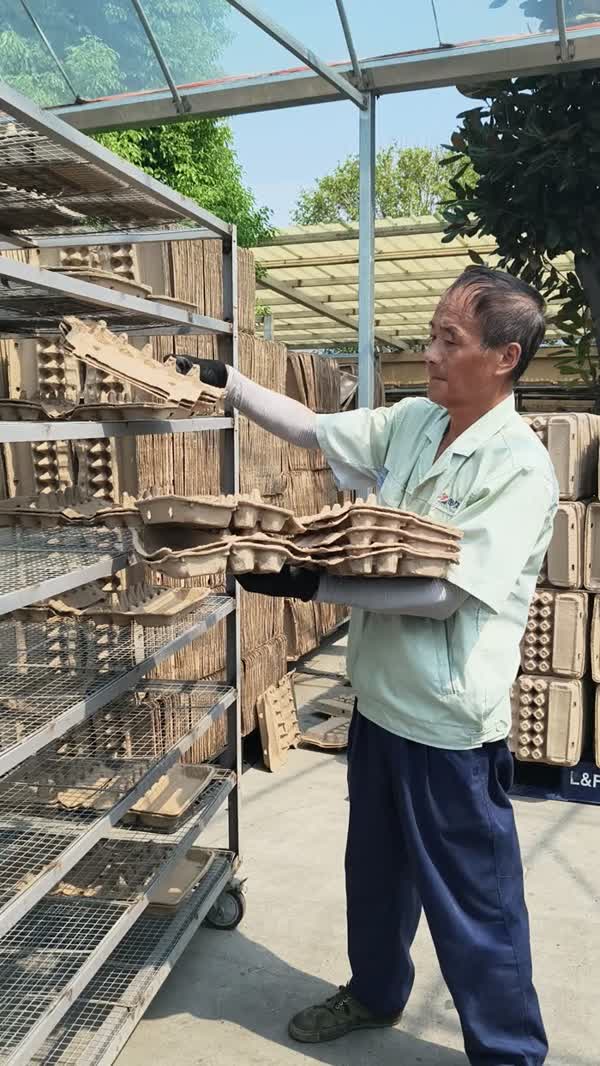
Handling and conditioning reveal hidden instability
After drying, parts should be handled and allowed to reach a stable condition before final packing. If trays are nested while still warm or uneven in moisture, stack pressure can lock parts together or change the edges. A short conditioning stage also gives operators an opportunity to notice softness, distortion or inconsistent weight.
The same attention is important for export orders. Molded pulp can respond to humidity during warehousing and sea transport, so drying quality must work together with protective packing. The article on humid shipping conditions explains this logistics risk in more detail.
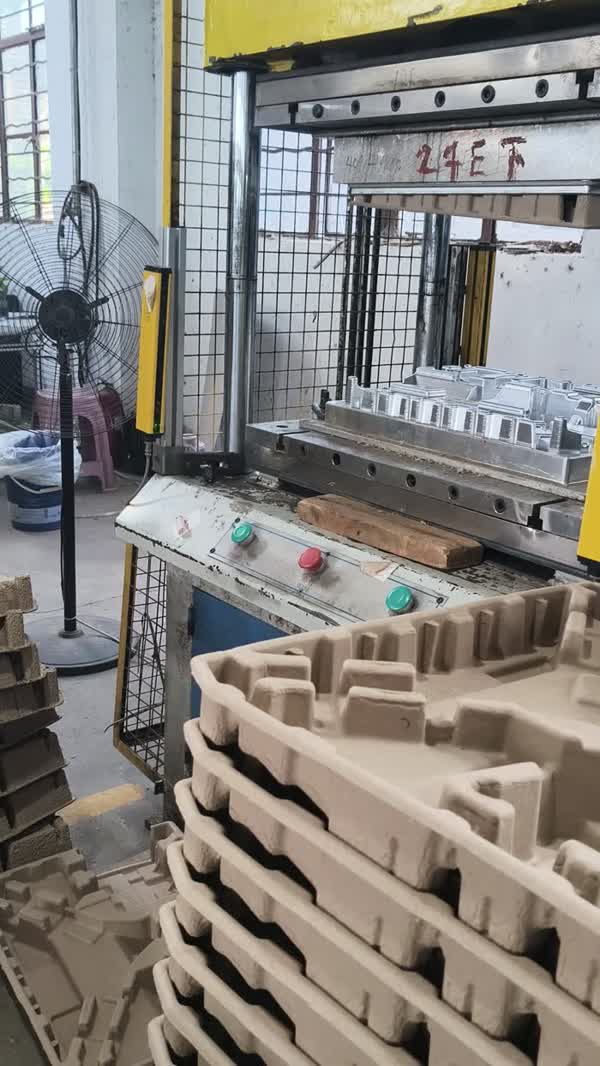
Secondary pressing works best after stable drying
Secondary pressing can improve surface definition, flatness and dimensional repeatability. However, pressing should not be used to hide an unstable drying process. If moisture remains inconsistent, a part may look correct immediately after pressing and then change again later.
The supplier should confirm that the part is ready for pressing and then check critical dimensions, stacking and product fit after the process. This connects drying control with the final function of the molded pulp packaging, rather than judging appearance alone.
What buyers should confirm before mass production
Buyers do not need to prescribe one universal temperature or drying time. Those settings depend on the product. Instead, the purchasing specification should define the results that matter.
Identify critical fitting dimensions and flatness areas.
Agree on how moisture condition will be checked before packing.
Confirm the rack loading pattern and stack quantity.
Inspect parts from different points in the production run.
Check product fit after drying and secondary pressing.
Review storage, carton and pallet protection for the destination climate.
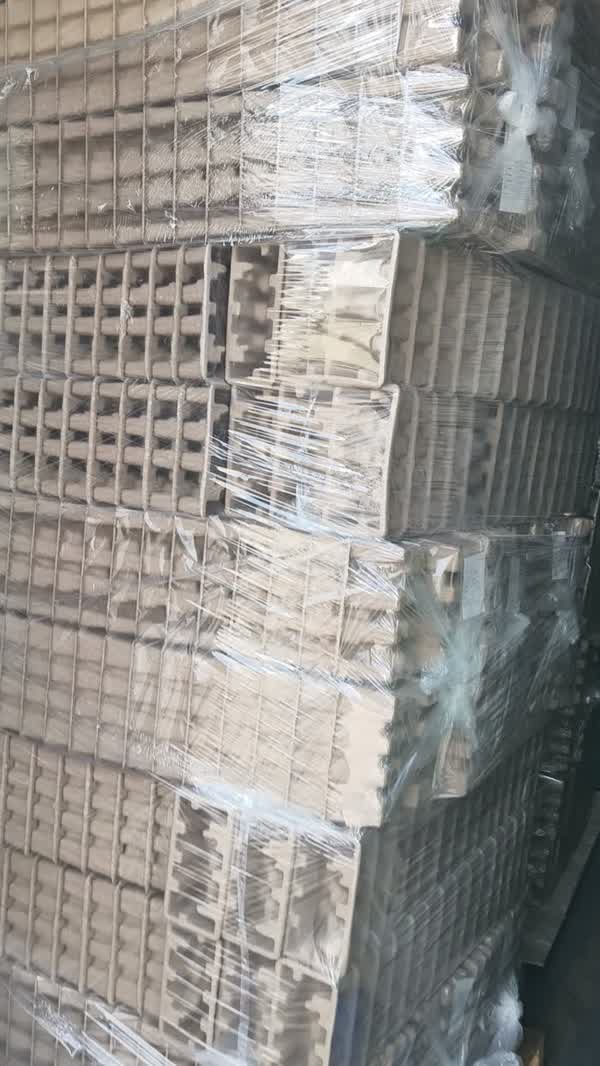
Reliable molded pulp packaging strength and dimensional stability come from a repeatable process that connects forming, drying, conditioning, pressing and packing. To discuss a custom tray, send Suzhou Hanyang Paper Plastic Products Co., Ltd. the product dimensions and weight, photos or 3D drawings, expected quantity, carton limits, destination market and testing requirements through the contact page.