News

  • How to Control Moisture Before Exporting Molded Pulp Packaging
    A practical pre-shipment moisture control workflow covering final drying, conditioning, sampling, release checks, warehouse storage and export packing for molded pulp packaging.
    2026-10-07
    More
  • How Secondary Pressing Improves the Finish and Fit of Molded Pulp Packaging
    Secondary pressing can improve the surface, dimensions and product fit of molded pulp packaging. This guide explains what buyers should check before mass production.
    2026-10-06
    More
  • How Drying Conditions Affect Molded Pulp Packaging Strength and Dimensional Stability
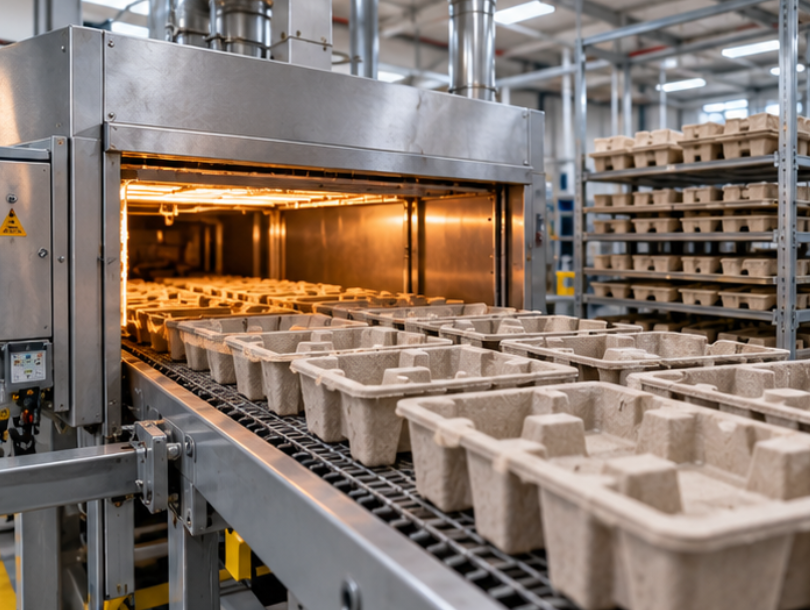
    Drying does more than remove water from molded pulp packaging. This guide shows buyers how temperature, airflow, rack spacing, geometry and conditioning affect strength, fit and batch consistency.
    2026-10-03
    More
  • Inside Molded Pulp Packaging Production and Seven Quality Controls
    Molded pulp packaging quality depends on more than one approved sample. This guide explains how design, tooling, forming, drying, pressing, inspection and packing work together to improve consistency.
    2026-10-02
    More
  • How to Design Molded Pulp Packaging for Home Appliances
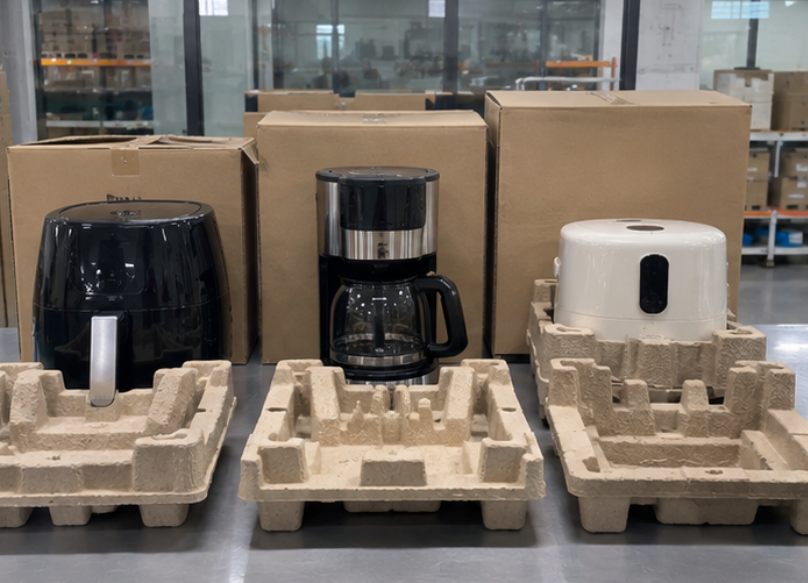
    Molded pulp packaging for home appliances should be designed around product weight, support points, fragile areas, accessories and transportation conditions. Simply using thicker material or larger cushions does not automatically create better protection. For buyers, the most effective approach is to work with the packaging supplier during the early development stage and provide complete product information. A well engineered molded pulp structure can reduce product movement, protect sensitive components, control carton size and create a more efficient packaging solution for mass production and export shipping.
    2026-09-21
    More
  • Why Molded Pulp Samples Can Differ From Mass Production and How to Control Consistency
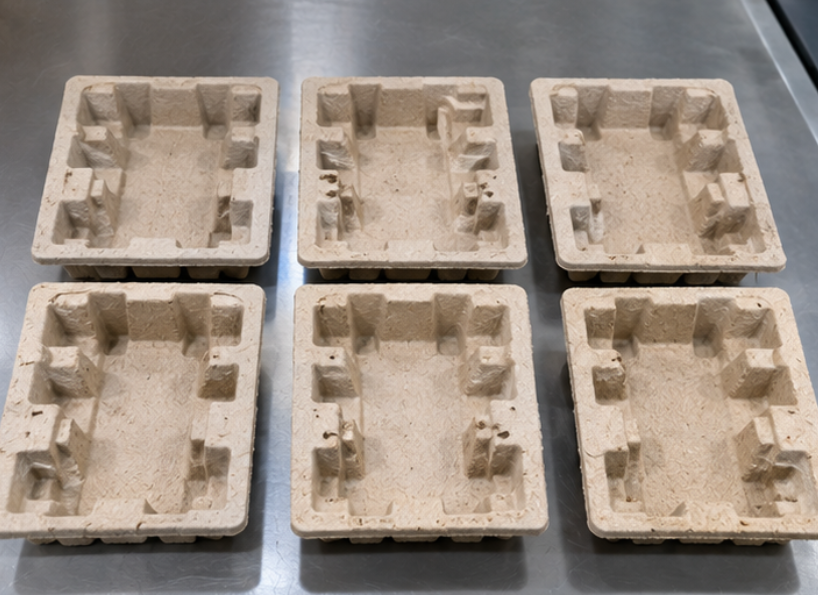
    Some variation between molded pulp samples and mass production can occur because fiber packaging is influenced by material preparation, forming, drying and other manufacturing conditions. The goal is not to assume that every part will be visually identical, but to control the characteristics that affect packaging performance. Buyers can reduce risk by approving critical dimensions, weight, moisture, surface expectations and packing requirements before mass production begins. Combining a golden sample with measurable specifications and regular production inspection creates a much stronger quality standard and helps ensure that repeat orders remain consistent over time.
    2026-09-21
    More
  • How Molded Pulp Tray Nesting Design Affects Carton Size and Shipping Cost
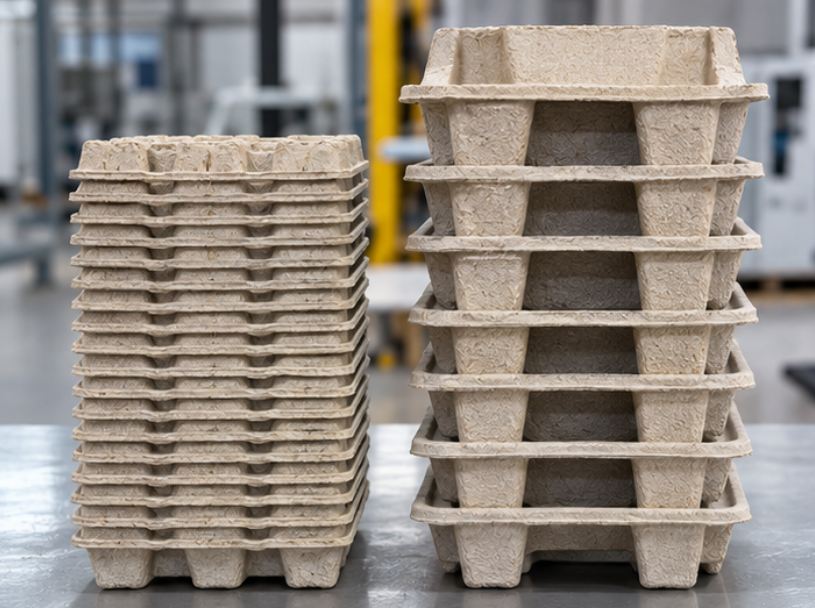
    Molded pulp tray nesting design affects much more than appearance. It can influence carton size, warehouse utilization, pallet quantity, container loading and the final shipping cost of the packaging. For buyers, the best approach is to evaluate packing density during the early packaging development stage. A well designed molded pulp tray should protect the product, nest efficiently and remain easy to separate during actual production. Working with the supplier on tray geometry, carton quantity and pallet configuration before mass production can help reduce hidden logistics costs and improve the total value of the packaging project.
    2026-09-21
    More
  • How Wall Thickness Affects Molded Pulp Packaging Strength Drying Time and Cost
    Wall thickness plays an important role in molded pulp packaging strength, production efficiency and cost, but thicker packaging is not automatically better packaging. The most effective structure places material where protection is actually required and uses thoughtful geometry to improve rigidity and product support. For buyers, the best approach is to evaluate wall thickness together with product weight, support points, drying requirements, nesting efficiency and transportation conditions. Early cooperation with an experienced molded pulp packaging manufacturer can help reduce unnecessary material, improve production consistency and create a more economical packaging solution for mass production.
    2026-09-21
    More
  • Wet Press vs Dry Press Molded Pulp Packaging for Different Product Applications
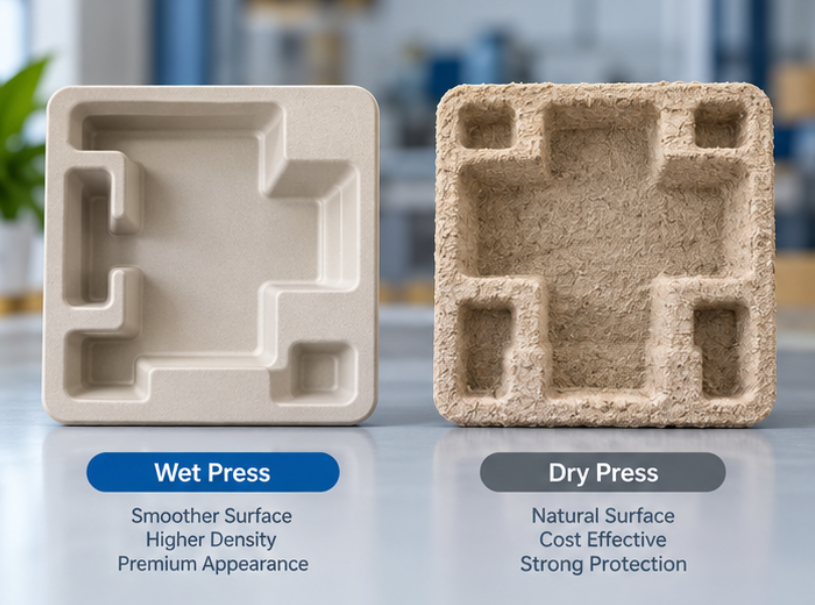
    Wet press and dry press molded pulp both have important roles in sustainable protective packaging. Wet press is generally more suitable for products requiring a smooth surface, refined presentation and controlled dimensional appearance. Dry press is often better suited to larger products and industrial applications where protection and cost efficiency are the main priorities. For procurement teams, the correct choice should be based on product structure, transportation risk, customer expectations and total packaging cost rather than appearance alone. Working with an experienced molded pulp packaging manufacturer during the early design stage can reduce tooling revisions and create a more reliable path from sampling to mass production.
    2026-09-21
    More

Get the latest price? We will reply as soon as possible (within 12 hours)

Contact us